Can Alphabet's AI spending pay it back?
Only through the cloud. Alphabet guides $195 to $205 billion of spending this year on five horses at once: search, the Gemini model, Google Cloud, its own TPU chip and the data centers. That is more than a year's operating profit. Today search pays for the bet, and the stake comes back only as cloud profit. Alphabet's reported profit is $19.16 a share over twelve months, but $8.21 of it is paper gains on shares it owns, mostly SpaceX. The businesses earned $10.95, and per quarter they went from $2.67 to $2.67 in a year. Gus's 2031 math: if the cloud keeps 30 cents of every dollar it sells (36.21 today) and Services grows 8% a year, a share earns $18.97 in 2031 and is worth $474. The S&P 500's last five years, put on the stock from $279.84, give $485. Right around the index. To beat it, the cloud has to keep 31.9 cents with Services at 8%.
Price: Yahoo Finance close, Oct 30, 2026. "Napkin math" = Gus's calculation on the filed numbers. The index bar is the S&P 500's price over the last five years, put on Alphabet from $279.84. The 2031 table assumes the cloud sells $365.8 billion in 2031, the shared AI research and the moonshots cost what they cost today, and the share count grows 1.70% a year.
What is Alphabet betting on in AI?
Every horse in the race at once. Gus counts five: the chip (the TPU), the model (Gemini), the cloud (Google Cloud), the way it reaches users (search and the default deals) and the data centers. The stake is known: $195 to $205 billion this year, and next year's will "increase significantly." The video asks three questions about it. Is it enough if only some of the horses win? If the chip goes bust, does that loss eat the win on the others? And what has to be true for you to make money on the stock?
Why did Alphabet stock drop after earnings?
Because of the spending. Alphabet fell 12.64% in one day, its biggest drop since 2004. The report came out after the close on Oct 28, 2026. That evening's low came during the call, when the CFO said next year's spending will "increase significantly." The press put the loss at about $482 billion of market value.
- Anat Ashkenazi, Alphabet's CFO, Q3 2026 earnings call, Oct 28, 2026
next year's spending will "increase significantly."
What are Alphabet's earnings per share without the SpaceX gain?
$10.95 over twelve months. The reported number is $19.16 a share. $8.21 of that is the market writing up shares Alphabet owns in other companies, mostly SpaceX: a paper gain on shares Alphabet still holds. The holdings are real and on the books. But the businesses didn't earn it. Search, YouTube, the cloud and the rest earned $10.95 a share.
Which parts of Alphabet make the money?
Search pays for the bet today. Two businesses report an operating profit, what a business keeps from its sales after the cost of running it, before tax and before the paper gains. Services, which is search and YouTube, made $39.16 billion last quarter. Google Cloud made $11.12 billion. The other three horses have no line of their own: Gemini and the TPU report nothing, the chip's loss lands in the cloud's number, and the data centers are the cost every horse runs on. If the cloud wins, the stake comes back as cloud profit.
| Horse | Own line? | Operating profit, Q3 2026 |
|---|---|---|
| The way it reaches users (Services: search, YouTube) | Yes | $39.16B |
| The cloud (Google Cloud) | Yes | $11.12B |
| The model (Gemini) | No | No number |
| The chip (TPU) | No, its loss lands in the cloud's number | No number |
| The data centers | No, the cost every horse runs on | No number |
Source: Alphabet earnings release, Q3 2026
Watch this part 1:26How much is Alphabet spending on AI data centers?
$195 to $205 billion this year, Alphabet's guidance, and next year's will "increase significantly." Against a full year: the last twelve months of operating profit, all five horses together, after the losses in Alphabet's other bets and the costs it carries for the whole group, were $156.98 billion. So the stake is 124.22% to 130.59% of a year's profit. More than the stable makes, on every horse at once.
Is Alphabet's profit per share growing?
Not for a year. The stake comes back out of what the businesses earn, so Gus counts per share and without the paper gains. The latest quarter against the same quarter a year ago, with last year's EU fine taken out of the base: up 8.10%. The whole rise is one step, into the first of the last four quarters. Since then, $2.67 to $2.67 a quarter. For you to make money on the stock, and for the stake to come back sooner, that number has to climb. The video keeps it all the way to the end.
Is Google Search losing to AI?
Not today. Search brought in under half of Alphabet's sales last quarter for the first time, and still grew: $63.35 billion, up 11.99%. Sundar Pichai on the call: "Our year-over-year query growth rate is the highest it's been in the last five years." The court last year: "No existing rival has wrested market share from Google." What speaks against it is Meta: its ads brought in $63.06 billion, up 25.92%. Meta sells to people scrolling; search sells to people looking to buy. Where Gus lands: the road holds today. More searches, and no rival has taken share.
- Sundar Pichai, Alphabet's CEO, Q3 2026 earnings call
Our year-over-year query growth rate is the highest it's been in the last five years.
- US District Court, remedies opinion in United States v. Google, 2025
No existing rival has wrested market share from Google.
What did the Google antitrust ruling decide about default search deals?
Google may keep paying, one year at a time. Part of the road to users is bought: the default spot in browsers and phones. In 2024 the judge in Washington wrote: "Google is a monopolist, and it has acted as one to maintain its monopoly." The court found the default deals carried roughly 50% of US searches. In the remedies ruling it let the payments continue, but every deal now runs one year at a time. If the deals renew, Alphabet keeps the income behind all five horses. If the iPhone deal goes, Google's own forecast in court says 60% to 80% of iPhone searches go with it.
- Judge Amit Mehta, United States v. Google, 2024
Google is a monopolist, and it has acted as one to maintain its monopoly.
Is Google Search growth slowing because of AI Mode?
Yes, three quarters in a row. Search grew 19.13% in the first quarter of 2026, then 16.76%, then 11.99%. Asked about it on the call, ads chief Philipp Schindler said "the strong growth in AI mode queries had an impact because of the lower monetization we were seeing in AI mode." So AI Mode brings more searches, and each one earns less. More searches is Pichai's record; less money per search is what AI Mode does to it. For the stake, holding isn't enough. Search is the income under it, so this pace has to turn back up from 11.99, and what each search earns has to grow too.
| Quarter | Growth |
|---|---|
| Q1 2026 | 19.13% |
| Q2 2026 | 16.76% |
| Q3 2026 | 11.99% |
Source: Alphabet earnings releases; Gus's count
- Philipp Schindler, Google's ads chief, Q3 2026 earnings call
the strong growth in AI mode queries had an impact because of the lower monetization we were seeing in AI mode.
Is Google Services profit growing?
Slower than its sales. Services' operating profit grew 5.88% last quarter, while its sales grew 10.63%. Costs grew faster than sales, so the margin fell, and two quarters in a row the profit came in below the quarter before while sales rose. Against that: this year's legal costs are inside the 5.88. Without them Services grew 9.5%, the upper case, on a split Alphabet doesn't give. Over twelve months, with the fine out of the base, it grew 17.60%. Gus reads 5.88 as the strict number and one quarter as one quarter. What can go wrong: the money per search falls faster than the searches grow, or a default deal goes. Either one hits the income every other horse eats from.
- Gus
In fifteen years of investing, the quarter where costs outrun sales is the one I circle. The next quarter tells you whether it's a habit.
In the video, at 6:28
How much does Gemini cost Alphabet?
Its sales have no line, its cost does. Gemini ships inside search, inside the cloud and inside the app, so whatever it earns hides in those lines. The report does show Alphabet's company-level costs, "primarily" its "shared AI research and development": $7.66 billion last quarter, up 71.36% on a year earlier. That line sits outside both Services and the cloud, so both their margins are counted before the model is paid for. It weighs on the pace: it grew 71.36% in a year, while the profit per share grew 8.10%. For the $2.67 to climb, either this line stops growing or the other horses outgrow it.
Is Gemini catching up with ChatGPT?
Google's own count, in court, from March 2025: Gemini at 140 million questions a day, ChatGPT at 1.2 billion. 8.57 times. Against that, Gemini does bring in money through the cloud. The CFO: "Google Cloud has generated tens of billions of dollars in AI revenues year-to-date." There is no split for Gemini. Win, and you see it in search and the cloud. Lose, and the cost line is still there, with nothing across from it.
- Anat Ashkenazi, Alphabet's CFO, Q3 2026 earnings call
Google Cloud has generated tens of billions of dollars in AI revenues year-to-date.
Is Anthropic a Google Cloud customer or a rival?
Both. Anthropic, the rival Alphabet has put money into, has filed to list. In its filing it has promised computing purchases of $510.6 billion, part of them conditional, against $131.7 billion in cash. Google is one of the sellers. A customer whose promises are bigger than its cash, and Alphabet has bet on the horse that could beat it. The cloud section comes back to how much of Google Cloud's order book that is.
How fast is Google Cloud growing?
Cloud sales grew 102.57% to $30.71 billion in the quarter. The lift search and Gemini didn't give came from here, and this is the line the whole stake lands on. What it keeps: operating profit of $11.12 billion. Of every dollar the cloud sold, 36.21 cents stayed as profit.
How big is Google Cloud's backlog?
$560.8 billion for the cloud alone. Backlog is contracts signed and not yet delivered, so not yet sales. The CFO, Anat Ashkenazi: "We expect to recognize just over 55% of the total backlog as revenues over the next 24 months." 55% of $560.8 billion is $308.44 billion over eight quarters. Spread flat, the signed work alone is 1.26 times last quarter's cloud sales, every quarter, for two years. So the case where the cloud doesn't grow and search carries the stake alone is the one this paper argues against for two years.
- Anat Ashkenazi, Alphabet's CFO, Q3 2026 earnings call
We expect to recognize just over 55% of the total backlog as revenues over the next 24 months.
How big can Google Cloud be in 2031?
$273.1 billion to $365.8 billion, depending on the base. Gus sets the bar at the growth rivals held from this size. Google Cloud's last twelve months of sales: $93.17 billion. AWS, Amazon's cloud, started from the same size in 2023 and has grown 23.28% a year since. Microsoft's cloud as a whole started there four years ago and grew 23.76% a year. Run that forward five years from the twelve months and the cloud sells $273.1 billion in 2031. From last quarter times four, $365.8 billion. $92.7 billion apart. For two years the signed work alone runs above the low curve. Past that, the quarter has hardware in it, in a lump.
| Base | Base sales | 2031 |
|---|---|---|
| Last twelve months | $93.17B | $273.1B |
| Last quarter times four | $122.8B | $365.8B |
Source: Gus's count on Alphabet, Amazon and Microsoft filings
How much of Google Cloud's growth is TPU sales?
Alphabet doesn't say. The CFO on the 102.57%: "TPU system sales were also a meaningful contributor." The chip, sold as hardware, is booked in the cloud's line when the systems are delivered, in lumps. What can be read is the quarter before TPU systems started selling: the first quarter of 2026, when cloud sales grew 63.36%. So the 102 has hardware in it, and the company won't say how much.
- Anat Ashkenazi, Alphabet's CFO, Q3 2026 earnings call
TPU system sales were also a meaningful contributor.
Is Google Cloud's margin higher than AWS's?
On the same measure, lower. Google Cloud keeps 36.21 cents of every dollar and AWS 38.65, but they count differently. Amazon's filing says depreciation on shared equipment is "allocated to all segments based on usage", so AWS carries its share of the common cost. Alphabet's shared AI research, the $7.66 billion, sits outside the cloud's line. Put it in by share of sales: the cloud is 24.07% of Alphabet's sales, so it carries that share. Then the margin is 30.22 cents, 8.43 points under AWS. The 36 is the line the company reports; the 30 is what it's worth next to AWS. The lift from 23.71 to 36.21 in a year came mostly from staff: compensation fell by 13.79 points of sales, while the other costs, where the machines and TPU inventory sit, rose 1.29 points.
| Cloud | As reported | With the shared AI research put in | Source |
|---|---|---|---|
| Google Cloud | 36.21¢ | 30.22¢ | Alphabet 10-Q |
| AWS | 38.65¢ | 38.65¢ (already carries its share) | Amazon 10-Q |
- Gus
When two companies print almost the same margin, the first thing I check is who left which cost outside the line.
In the video, at 12:50
Will Google Cloud's margin fall?
The company itself says headwind. Since the very end of last quarter the cloud runs partly on rented capacity. The CFO: "We expect margin headwinds in the near term as we utilize this capacity." The 36 cents are from before it; the next quarter is the first with the rented capacity in it for its full length. Rented racks are the most expensive capacity there is: you pay the landlord's margin on top of the power and the gear. Alphabet calls it a "bridging strategy". It can be held. Microsoft's cloud margin fell as its capacity came in. AWS held: depreciation went from 12.90% to 20.07% of its sales in two years, and its margin still rose, 38.06 to 38.65, because every other cost fell.
- Anat Ashkenazi, Alphabet's CFO, Q3 2026 earnings call
We expect margin headwinds in the near term as we utilize this capacity.
How much of Google Cloud's backlog is Anthropic?
Up to 20.42%. Anthropic's filing commits at least $114.5 billion to Google through 2033, "regardless of actual usage". If all of it sits in the cloud's backlog, that is 20.42% of it. The same company stands on three of Alphabet's lines. The order book. The holding: Google owns more than 5% of Anthropic and put in $10 billion in May. And the chip: Thomas Kurian on the call, "In addition to our work with Anthropic, both directly and via Broadcom." What can go wrong on the cloud: the sales come and the margin doesn't, on rented capacity; or the customer on three lines stops paying, and the order book, the holding and the chip's buyer fall on the same day. Cloud profit is sales times margin, and the margin is the open number.
| Line | What | Source |
|---|---|---|
| Customer | At least $114.5B to Google through 2033, in the order book | Anthropic S-1 |
| Holding | More than 5%; $10B put in in May | Anthropic S-1 |
| Chip buyer | TPUs "both directly and via Broadcom" (Kurian) | Q3 2026 call |
Is Alphabet stock cheap after the drop?
Depends on the day you asked. On October 21 The Motley Fool set a condition: if Google Cloud grows at a triple-digit rate, the stock could skyrocket. It also said "I wouldn't consider it cheap either." The cloud delivered 102%, and eight days later the stock had its biggest drop since 2004. The morning after, TipRanks called it the cheapest since 2012. Further down the same article, the low valuation is "artificially suppressed" by paper gains on shares Alphabet holds: the line under the profit, which the headline skips.
- The Motley Fool, Oct 21, 2026, one week before the report
If Google Cloud can grow at a triple-digit rate (which I think it will), the stock price could skyrocket, making Alphabet a phenomenal stock to buy now.
- Same article, a few lines up
I wouldn't consider it cheap either.
- TipRanks, Oct 30, 2026, the morning after the drop
Alphabet Stock Hits Cheapest Valuation Since 2012
- TipRanks, further down, on what makes it cheapest
is artificially suppressed due to non-cash investment gains over the past 12 months.
Three decades in eighteen months
- Apr 2025"A Once-in-a-Decade Opportunity"
- Jul 2025"A Once-in-a-Decade Opportunity"
- Oct 29, 2026The day of the drop: "a Once-in-a-Decade Buy on the Dip?"
Not cheap at the Fool on the 21st, cheapest since 2012 at TipRanks on the 30th. Same stock, nine days apart. Gus calls it willy-nilly recommendations. The 102% has a line under it too: TPU hardware, booked in lumps, amount not given.
Watch this part 15:42Can Google's TPU beat Nvidia?
On Google's side there is no number to say. The TPU, Alphabet's own chip, pays two ways: inside Alphabet's data centers, where Gemini and the cloud run on it, and as systems sold to customers. Both land in the cloud's line, and Google Cloud's boss Thomas Kurian told analysts "we don't break out margins for individual products." What the chip can win is in Nvidia's own filing: 75 cents of every dollar Nvidia sells for is left after the product is made. A cloud with its own chip doesn't pay those cents, and Alphabet is the only one of its rivals with a line of its own on all five layers, chip to cloud. How much that saves, Alphabet doesn't say.
- Thomas Kurian, Google Cloud, asked about TPU margins on the Q3 2026 call
we don't break out margins for individual products
The chip still pays for the design, and for the same factories and memory everyone buys from. Counting the five layers, own beside bought or rented still counts as a line of its own; a license doesn't.
Watch this part 17:31What are the risks of Google selling TPU systems?
Three, all in Alphabet's own words. The cost is in this year's margin, and the "significant majority" of the chip's sales is booked in 2027. The systems can come back: the Q3 10-Q has new words on "contingent repurchase obligations" at prices below original cost, with a number for one part only, $6.6 billion. And a chip you design yourself is only cheaper when it's busy: an idle rack bills like a busy one, and how full the racks are is one more number Alphabet doesn't give.
- Alphabet's 10-Q, Q3 2026, on the cloud's profit
partially offset by increases in inventory and related costs associated with the sale of TPU systems
- The risk section, words new this quarter
contingent repurchase obligations for certain hardware and embedded software at prices below original cost
- The company's answer, same filing
we do not believe counterparties have an economic incentive to exercise their option.
- The filing's words for chips that wait
excess capacity or inventory
The cost sits in the cloud's other-costs line, the one that rose. Which way the margin moves when the lumps come depends on what the systems are sold at, and nobody outside gets that number.
Watch this part 18:48How is Alphabet paying for its data centers?
Out of its own operations, so far. Over the first nine months of 2026, cash from operations was $127.15 billion and capital spending $131.95 billion, per the Q3 10-Q. Operations covered 96.36% of the build; the build needed $4.80 billion from outside. The profit it stands on is search's: last quarter the shared AI research and the moonshots cost $9.70 billion, 87.23% of the cloud's operating profit, per the earnings release. The money buys servers and network gear, and buildings, each written off over its own number of years.
The CFO's split of last quarter's spending: 65% servers and network gear, written off over six years; 35% buildings, over seven to forty (Q3 2026 call).
Watch this part 21:24How much will Alphabet's data centers cost in depreciation?
Each year of this build adds a second depreciation bill the size of today's. Depreciation starts the day a thing goes into service, and the balance sheet carries $145.27 billion of "assets not yet in service": 38.96% of all the buildings and machines Alphabet owns, with no depreciation on them yet. One year of build, $200 billion split the way the CFO split last quarter, is $23.42 to $31.67 billion a year in new depreciation. Alphabet's whole depreciation over the last twelve months was $28.0 billion. Against a year's operating profit of $156.98 billion, the new bill is 14.92% to 20.17%, every year, before the new data centers earn a dollar.
| $ per year | |
|---|---|
| New depreciation from one $200 billion year of build | $23.42B to $31.67B |
| Alphabet's whole depreciation, last twelve months | $28.0B |
| Operating profit, all five horses, last twelve months | $156.98B |
| The new bill as a share of that profit | 14.92% to 20.17% |
Source: Napkin math on the 10-Q
Gus's second clock: a data center is never full the day the power comes on. The racks arrive for months after, and the customers after them, while depreciation runs from day one at the full rate. The only thing that shortens that first year is customers signed before the concrete, and the order book says two years of them are. Next year's build is "significantly" bigger.
Watch this part 22:23Did Alphabet stop buying back shares?
This year, yes. Buybacks: zero. Over nine months Alphabet raised $147.15 billion in debt, common shares and preferred stock, against a build that needed $4.80 billion from outside. Debt went from $49.09 billion at the start of the year to $127.49 billion at the end of September, and the share count, flat since 2018, grew 1.70% in nine months. The annual report said "We engage in share repurchases"; the Q3 10-Q says "We have historically engaged in share repurchases." Cash and securities without the listed shares are still $47.22 billion more than the debt, so the lenders aren't the risk. The owners carry it: interest and a preferred dividend come out before the $2.67 a share, and more shares split it.
- Alphabet's 10-Q, Q3 2026, on the shares it sold
primarily intended to be used to meet tax obligations
- Annual report, fiscal 2025
We engage in share repurchases
- 10-Q, this quarter
We have historically engaged in share repurchases
Why it keeps going: the fourth quarter
The new paper includes a bond in sterling that matures a hundred years out, and preferred shares. The fourth quarter's build is bigger than any quarter's cash; it comes out of the cash, or out of more paper.
Watch this part 24:08What happens if Alphabet builds too many data centers?
A year of data centers that finds no customer at the price in the plan still gets depreciated for six years, at the full rate. The chip's cents never show up because the racks are empty, the rented capacity bills on top, and the cloud's margin takes it. The one case with a receipt is Meta: from 2021 to 2022 its purchases of plant went from $18.57 billion to $31.19 billion, profit per share fell 37.62% (10-K, 2022), and the share fell 76.74% from the top in September 2021 to the bottom in November 2022. Meta's fall had more in it than data centers. Spending still went up while profit per share went down.
Alphabet can afford the data centers: net cash, and a cloud with two years signed. What it risks is the margin and the owners' share: the new depreciation against a year's profit, per year of build, and the paper sold beside the build this year. The build has to come back on two lines: what the cloud keeps per dollar, and how fast Services grows.
Watch this part 26:02What is Alphabet stock worth in 2031?
Somewhere between $384 and $556 in Gus's table, depending on two dials. Today the stock is $279.84. The bar is the index: the S&P 500's price over the last five years, put on this stock from today, is $485 in 2031. Rows are what Google Cloud keeps of every dollar, columns how fast Services (search and YouTube) grows its profit. Every box is above today's price; six of the twelve clear the index, and the line between them runs through the margin. On Services at 8% a year, the cloud has to keep 31.9 cents. Gus built it on Alphabet's Q3 2026 numbers, from $2.67 a share a quarter without the paper gains.
| Google Cloud keeps of each $1 | Cloud profit, 2031 | Services +5.88% a year | Services +8% | Services +9.5% |
|---|---|---|---|---|
| 40¢ | $146.3B | $497 | $530 | $556 |
| 36.21¢, today | $132.5B | $475 | $509 | $535 |
| 30¢ | $109.7B | $441 | $474 | $500 |
| 20¢ | $73.2B | $384 | $418 | $444 |
| Margin needed for $485 | 38.0¢ | 31.9¢ | 27.4¢ |
Source: Napkin math on Alphabet's Q3 2026 earnings release
The assumptions, said out loud in the video: the cloud sells $365.8 billion in 2031, the high base from the cloud chapter. The shared AI research and the moonshots cost what they cost today. The share count keeps growing 1.70% a year, the rate of this year's nine months, with no buybacks. The shares Alphabet holds in other companies sit outside the table, both directions.
Watch this part 27:44Is Alphabet stock worth it if Google Cloud stops growing?
Not against the index, on the growth Gus believes. Take the cloud out of the race: it keeps selling what it sells today, and the rest carries the stake alone. With Services growing 5.88% a year, a share is worth $341 in 2031, above today's $279.84. At the last twelve months' 17.60%, $565. To reach the index's $485 with the cloud standing still, Services has to grow 14% a year for five years. Search's pace has fallen two quarters in a row, and last quarter Services' profit grew slower than its sales. Some horses winning is enough only if the cloud is one of them.
What happens to Alphabet stock if the TPU fails?
It eats the index. Going bust here means the chip's advantage never shows up: the systems sell thin, or come back below cost, or the cloud runs on bought GPUs and rented racks at the rented price. The table's bottom row has it: the cloud sells the same and keeps 20 cents instead of 36. A year ago its margin was 23.71 cents. On Services at 8%, that's $418 a share in 2031, above today's price and under the index's $485. Ten points of margin, the 30-cent row to the 20, are $56 a share, and every point between is $5.60, in either direction. The row counts the margin only; the chip's sales gone, and systems coming back, would make it worse.
Where does Gus land on Alphabet stock?
$474, right around the index's $485. The cloud wins the sales and keeps 30 cents of every dollar, down from 36. Services grows 8%, between the quarter's 5.88% with the legal costs in and 9.5% with them out. That's $18.97 a share in 2031. The sales: "just over 55%" of the order book is due within 24 months (Q3 2026 call), so Gus takes the quarter as the base, $122.8 billion a year, and from there the cloud has to grow 24.40% a year. The margin: the company itself says headwind, and Gus reads one good quarter as one good quarter. Against him: Google Cloud went from 23.71 to 36.21 cents in a year, and stands above the 31.9-cent line right now. Gus is calling it under a line it stands above. He'd like to be wrong.
| If | A share in 2031 |
|---|---|
| Gus's box: cloud keeps 30¢, Services +8% | $474 |
| It keeps going the way it is: 36¢, Services 8% to 9.5% | $509 to $535 |
| 36¢, but Services brakes to the quarter's 5.88% | $475 |
| Gus's 30¢, Services 5.88% to 9.5% | $441 to $500 |
| Gus's 30¢, Services 8.6% a year | $485, the index |
| Gus's row, plus one year of data centers with nothing coming back | $460 to $469 |
| Rivals' growth run from the last twelve months: the cloud sells $273.1 billion | $432 |
Source: Napkin math on Alphabet's Q3 2026 earnings release
Why 30 cents, the headwind in four parts: the rented racks bill from this quarter on, at the landlord's margin. The depreciation on this year's build hasn't started, and runs at the full rate from day one. The lift to 36 came out of the staff share, with TPU hardware in the sales line in lumps. And Microsoft's cloud margin fell when its capacity came in. The other side: AWS held its margin, 38.06¢ to 38.65¢, while its depreciation climbed 7.17 points of sales, 12.90% to 20.07%, because every other cost fell. One year of data centers with nothing coming back costs 22 to 56 cents a share a year, for six years.
Watch this part 31:04Will Alphabet's AI spending pay off?
Only as cloud profit, Gus says, and nowhere else. Today Google Cloud earns $44.5 billion a year. On the 30-cent row in 2031 it earns $109.7 billion. That's the payout on Gus's row, next to the stake: $195 to $205 billion of capital spending this year alone, per the CFO on the Q3 2026 call.
Can Alphabet stock fall even if profit holds up?
Every price in the table assumes the market keeps paying for profit close to what it pays today. Meta from 2021 to 2022 shows the other case: profit per share down 37.62% (10-K, 2022), the stock down 76.74%. The price fell twice as far as the profit.
Is Alphabet's AI strategy sound?
For the company, yes. Five horses, the build paid out of operations, net cash, two years of cloud signed. Alphabet can afford to back every horse in the AI race, and it's the only one with a line of its own on all five. Whether the stock pays its owners more than the index is the separate question the table answers: $474 on Gus's numbers, against $485.
When is Alphabet's next earnings report?
The fourth-quarter report. Alphabet hasn't set the day; since 2018 it has come between January 30 and February 4, last year on February 4. The number to watch: profit per share without the paper gains, against $2.67. Above it, the pace turned up. At it, no climb in a year. Below, two quarters down in a row. One quarter is a first reading and nothing more. Whether Gus was wrong shows slower: the cloud's margin against 31.9 cents, and Services' growth against 8%, report after report.
- Oct 28, 2026Q3 report: Google Cloud's sales up 102%, with TPU hardware in them. Profit per share without the paper gains: $2.67.
- Oct 29, 2026The biggest drop since 2004.
- Jan 30 to Feb 4, 2027Q4 report, day not set. Profit per share without the paper gains against $2.67: the first reading.
- 2027The "significant majority" of the TPU systems' sales is booked. The direction of the chip shows in the cloud's margin once the lumps land.
- Every report until 2031The cloud's margin against 31.9 cents. Services' growth against 8%.
What is behind Alphabet's earnings growth?
A different thing each time Gus looked. $19.16 a share had paper gains in it. The step up a year ago had fines in the base. The cloud's 102% has hardware in it, booked in lumps. The lesson Gus takes from this stock: read the line under the number before you believe the number.
Watch this part 34:49Is Gus buying Alphabet stock?
The Hype Fund buys Alphabet after the video, with the same money as every other pick, measured against the S&P 500 on the same days. Gus's math says $474 in 2031, right around the index's $485, and the fund buys it anyway. That's the experiment. If the cloud keeps more than 31.9 cents per dollar and Services grows more than 8%, the stock beats the index and the experiment earns. Both under, it trails the index, and that shows too. The fund's money is already tied to Alphabet from two sides: it owns SpaceX, and Alphabet's reported profit moves with that stock; and it owns Broadcom, which designs the chip with Alphabet.
Alphabet joins on Nov 4, 2026 at $289.93. Every trade is on the Hype Fund page. We set the plan before each one joined.
Watch this part 35:07Is Alphabet stock on track to beat the index?
Gus's conditions from the video, checked after every Alphabet report until 2031. Next: the fourth-quarter report, early February 2027, day not set. The number to watch is profit per share without the paper gains, against $2.67.
| What has to be true | Episode Nov '26 | 2026 | 2027 | 2028 | 2031 | ||||||
|---|---|---|---|---|---|---|---|---|---|---|---|
| Q4 | Q1 | Q2 | Q3 | Q4 | Q1 | Q2 | Q3 | Q4 | |||
| Profit per share without the paper gainsabove $2.67 a quarter, the Q3 2026 number; Q4 is the first reading | $2.67 | next | |||||||||
| The cloud keeps 31.9¢ of each dollarGoogle Cloud's operating margin, the line for the index; 23.71¢ a year before | 36.21¢ | next | |||||||||
| Services grows 8% a yearGoogle Services' operating profit against the same quarter a year before; 9.5% without the legal costs | +5.88% | next | |||||||||
| Cloud sales grow 24.40% a yearthe yearly pace from Q3 2026: $122.8B a year to $365.8B in 2031 | $30.71B | next | |||||||||
| The stake comes back as cloud profitthe cloud's operating profit on the 30¢ row; the stake is $195B to $205B this year | $44.5B | ||||||||||
| The 2031 math$474 a share on our row (Services 8%, cloud 30¢) against the index's $485 | $279.84 | Settled once, with the 2031 report. Three dials: the cloud's margin, Services' growth and the cloud's sales base. With Services between 5.88% and 9.5%: $475 to $535 at 36¢, $441 to $500 at 30¢. The line is 31.9¢. | 2031 | ||||||||
| Gus didn't sellThe Hype Fund still holds it. Biggest fall since it bought: −3% | $289.93 | next | |||||||||
From Alphabet's quarterly reports to the SEC (10-Q and 10-K): profit per share with the gains and losses on its stock holdings taken out (other income), Google Cloud's operating margin, Google Services' operating profit against the same quarter a year earlier, and Google Cloud's sales against the $30.71 billion of Q3 2026. Gus's trades are on the Hype Fund page.
More episodes
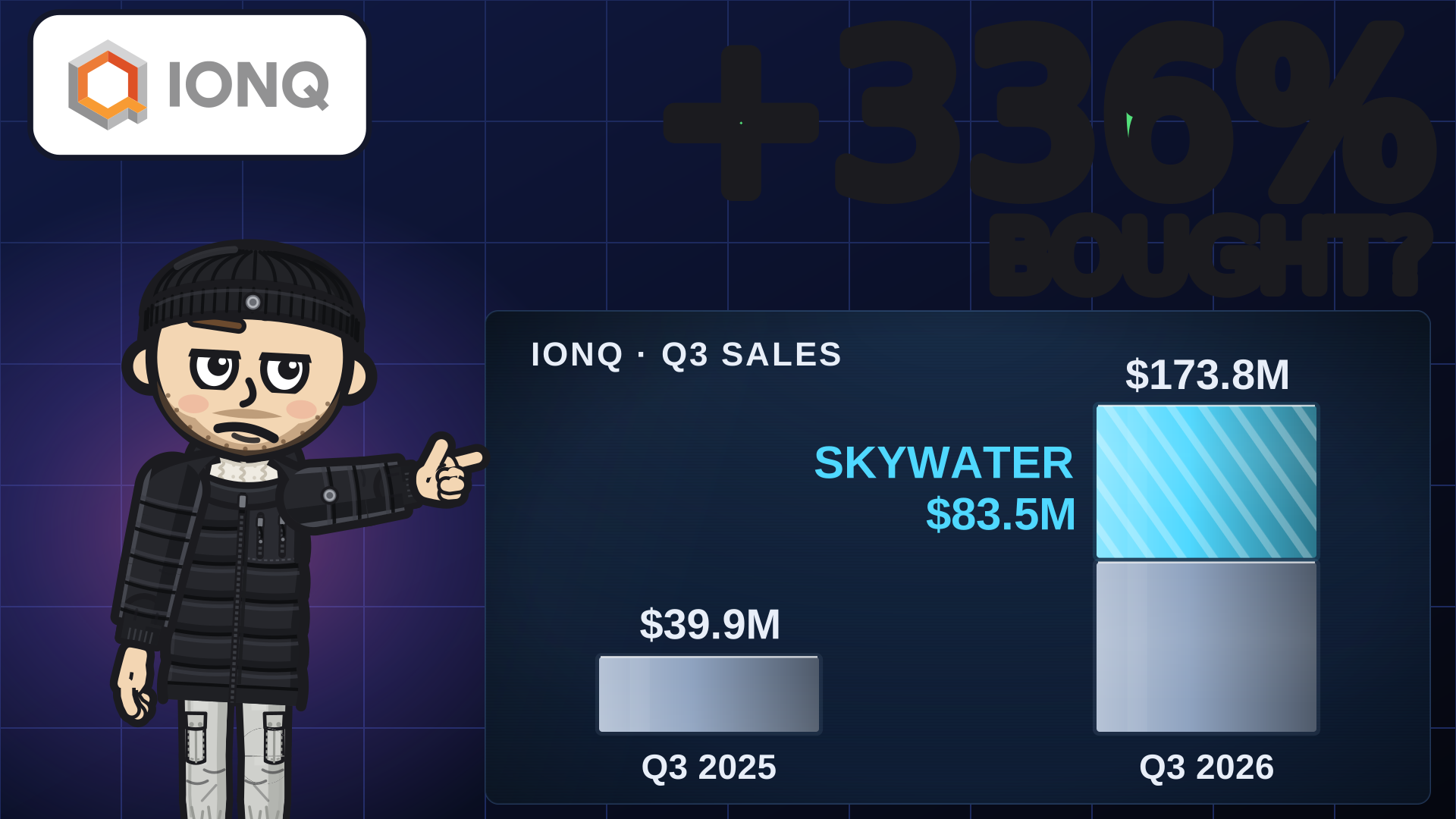 HYPE FUND #6 · $IONQ
IonQ Made $564 Million Because Its Stock Fell. Wait, What?
IonQ lost $433 million running its business in the third quarter and reported a $564 million profit, because its stock fell. Gus counted what $32.62 a share needs: 32% more sales a year for four years, none of it bought.
 HYPE CHECK #2 · $RDDT
Reddit (RDDT): Who Needs Enemies With Friends Like Google?
Reddit grew 53% and the stock fell 29% the next day. Google's AI summaries keep the click, and Reddit answers with a login wall. Gus read the filings.
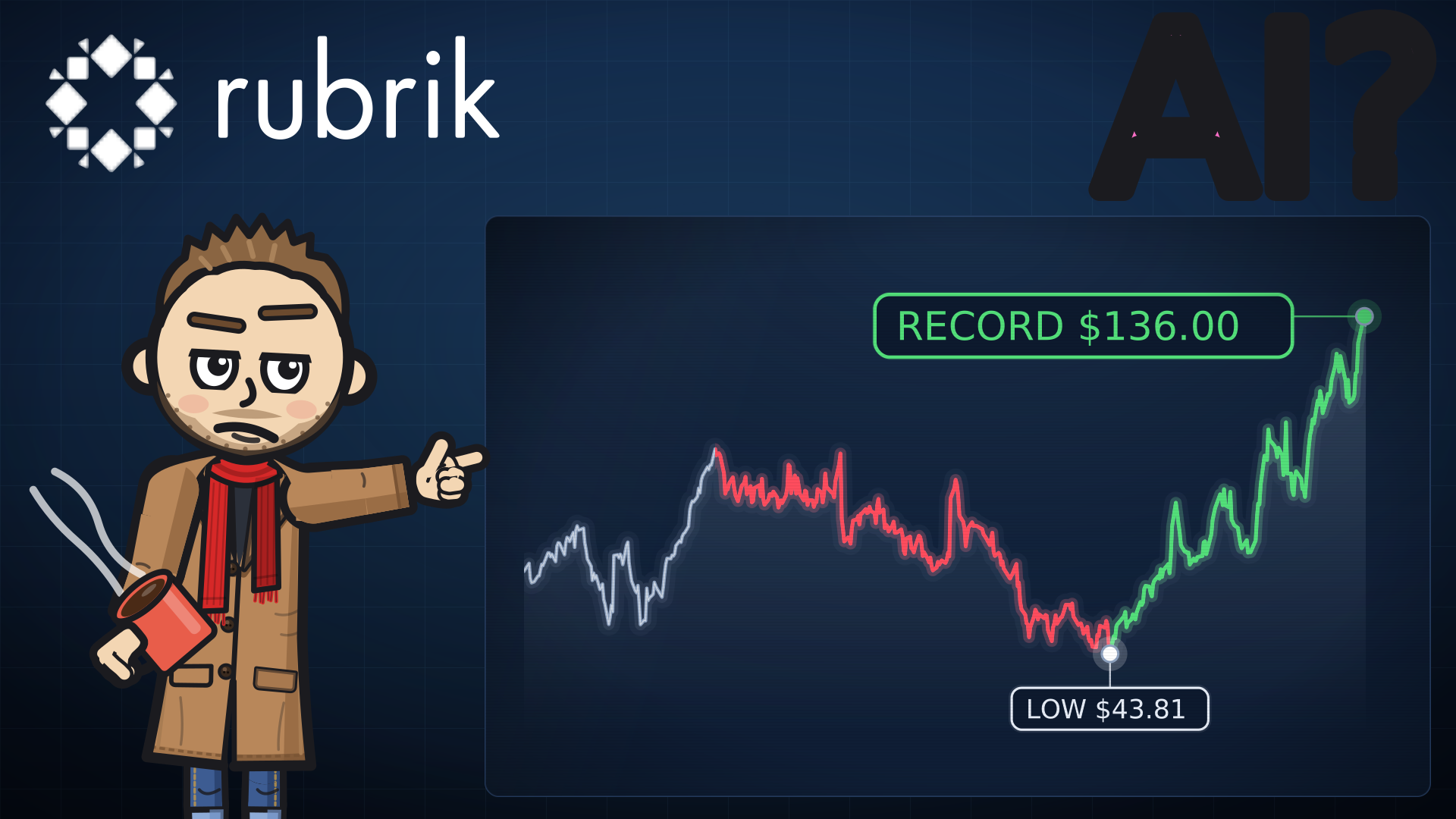 HYPE CHECK #1 · $RBRK
Rubrik Stock (RBRK) Up 210% Since April. Just Backup?
Up 210% since April. It calls itself "the Security and AI Operations Company," and its AI product has "over 15" customers. Gus checked what's under the label.
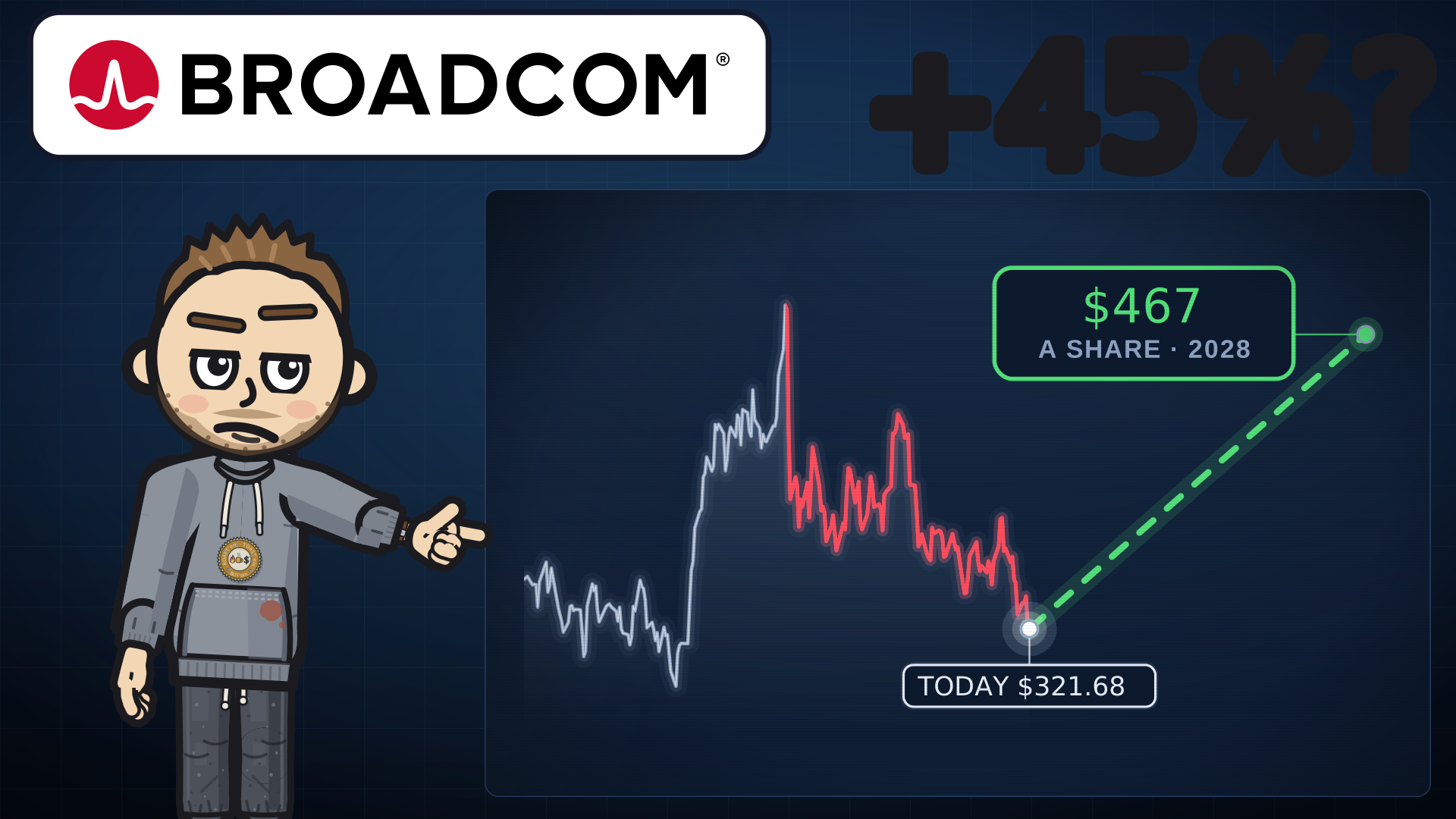 HYPE FUND #4 · $AVGO
Broadcom stock (AVGO) is 30% off. Is it a bargain?
AI sales grew 221% in a year. The stock is down 33% from its June top. What has to be true for $10,000 in Broadcom to beat an index fund? Gus did the math.
 HYPE FUND #3 · $PLTR
Too late to buy Palantir stock? The math behind $38 billion
Karp's goal: $38 billion in sales by 2030. Say he gets there. What's a Palantir share worth then, and does it beat an index fund? Gus did the math.
 HYPE FUND #2 · $SPCX
SpaceX stock: what are you paying $2 trillion for?
Only Starlink makes an operating profit. Last quarter the AI build cost $174 million a day. Musk says the AI satellites launch "next year."
 HYPE FUND #1 · $MU
Micron: the cheapest stock ever?
Micron is up 270% in 2026. Social media: "cheapest stock in all stock exchanges." Cheap is a number. Gus looked it up.
Chapters
- 0:00Alphabet bets on every AI horse. What do the odds have to pay?
- 0:38The 12.64% drop, and the line under Alphabet's $19.16 a share
- 3:15Horse one: Google Search, the default deals and AI Mode
- 7:08Horse two: Gemini, a cost line that grew 71%
- 9:12Horse three: Google Cloud, up 102%, and what it keeps per dollar
- 15:42Not cheap, then the cheapest since 2012: the headlines
- 17:31Horse four: the TPU. Can Google beat Nvidia?
- 21:24Horse five: the data centers, and who pays for them
- 27:44Google stock prediction: what a share is worth in 2031 against the index
- 35:07The Hype Fund buys Alphabet
- 36:08To the moon
Mentioned in the video
- AlphabetThe company (GOOGL): Google Search, YouTube, Google Cloud, Gemini, the TPU
- Sundar PichaiAlphabet's CEO; the earnings call
- Anat AshkenaziAlphabet's CFO; the spending guidance, the backlog, the margin headwind
- Philipp SchindlerGoogle's ads chief; AI Mode and what a search earns
- Thomas KurianGoogle Cloud's CEO; Anthropic, TPU margins
- Judge Amit MehtaUnited States v. Google: the 2024 ruling and the 2025 remedies
- SpaceXMost of Alphabet's paper gains; owned by The Hype Fund
- AnthropicRival, Google Cloud customer, holding and TPU buyer
- OpenAIChatGPT against Gemini; Microsoft's model license
- MetaAds next to search; the 2021 to 2022 build and the stock's fall
- Amazon (AWS)The cloud bar: growth from the same size, the margin on the same measure
- MicrosoftCloud growth from the same size; the margin that fell as capacity came in
- NvidiaThe cents a cloud with its own chip doesn't pay
- BroadcomDesigns the TPU with Alphabet; owned by The Hype Fund
- AppleThe iPhone default deal
- The Motley Fool"Triple-digit rate" and three once-in-a-decade buys
- TipRanks"Cheapest Valuation Since 2012"
Sources & links
Primary sources (SEC filings, company transcripts, the papers themselves) come first where they exist. "Secondary" means another site's report of it. Each group has a fixed link, e.g. #sources-the-bet.
The bet and the price 0:00
- Q3 2026 earnings call transcript: the spending guidance, the backlog, AI Mode, TPU system sales, the margin headwind
s206.q4cdn.com/479360582/files/doc…arnings_Transcript.pdf - GOOGL daily closes (the drop on Oct 29, 2026; price on Oct 30, 2026: $279.84)
query1.finance.yahoo.com/v8/finance/chart/GOOGL
The line under the profit 0:38
- 10-Q, Q3 2026: the paper gains on shares, segments, Alphabet-level costs, the backlog
sec.gov/Archives/edgar/data/165204…0084/goog-20260930.htm - Earnings release, Q3 2026: Search, Services and Google Cloud sales and operating profit
sec.gov/Archives/edgar/data/165204…ogexhibit991q32026.htm - Earnings release, Q3 2025: the base a year earlier, with the EU fine
sec.gov/Archives/edgar/data/165204…ogexhibit991q32025.htm
Horse one: search 3:15
- United States v. Google: memorandum opinion ("Google is a monopolist")
storage.courtlistener.com/recap/go…cd.223205.1033.0_2.pdf - United States v. Google: remedies opinion (payments continue, one year at a time)
storage.courtlistener.com/recap/go….dcd.223205.1436.0.pdf - 10-Q, Q3 2026: Meta's ad sales
sec.gov/Archives/edgar/data/132680…6773/meta-20260930.htm
Horse two: the model 7:08
- Form S-1: computing commitments, cash, the Google commitment and holding
sec.gov/Archives/edgar/data/213035…8/anthropicpbc-sx1.htm
Horse three: the cloud 9:12
- 10-Q, Q3 2026: AWS sales, operating margin and how depreciation is allocated
sec.gov/Archives/edgar/data/101872…0040/amzn-20260930.htm - 10-K 2023: AWS when it was the size Google Cloud is now
sec.gov/Archives/edgar/data/101872…0008/amzn-20231231.htm - 10-Q, Q1 fiscal 2027: Microsoft's cloud, growth and segment margin
sec.gov/Archives/edgar/data/789019…6133/msft-20260930.htm
The heckling: the headlines 15:42
- "If Alphabet does this on Oct. 28, the stock could skyrocket"
fool.com/investing/2026/10/21/if-a…28-the-stock-could-sk/ - "Alphabet Stock Hits Cheapest Valuation Since 2012"
tipranks.com/news/google-stock-hit…after-historic-selloff - "A Once-in-a-Decade Opportunity"
fool.com/investing/2025/04/24/a-on…y-alphabet-stock-look/ - "A Once-in-a-Decade Opportunity"
fool.com/investing/2025/07/07/once…alphabets-stock-looks/ - "Is Alphabet a Stock to Avoid or a Once-in-a-Decade Buy on the Dip?"
fool.com/investing/2026/10/29/is-a…decade-buy-on-the-dip/
The chip 17:31
- Nvidia 10-Q: gross margin
sec.gov/Archives/edgar/data/104581…0075/nvda-20260726.htm - The next phase of the Microsoft and OpenAI partnership: the license through 2032
blogs.microsoft.com/blog/2026/04/2…ft-openai-partnership/
The data centers 21:24
- Alphabet 10-K, fiscal 2025: "We engage in share repurchases"
sec.gov/Archives/edgar/data/165204…0018/goog-20251231.htm - Meta 10-K, 2022: purchases of plant, profit per share
sec.gov/Archives/edgar/data/132680…0013/meta-20221231.htm
The verdict, and the buy 27:44
- Alphabet investor events: past and coming report dates
abc.xyz/investor/events/default.aspx - The Hype Fund: every stock and its entry price
The Hype Fund page
Everything we read
The whole pile behind the episode: the filings, the calls and every link the research opened.
SEC filings 70
- 10-K, 2015
sec.gov/Archives/edgar/data/165204…00012/goog10-k2015.htm - 10-Q, Q2 2016
sec.gov/Archives/edgar/data/165204…032/goog10-qq22016.htm - 10-Q, Q3 2016
sec.gov/Archives/edgar/data/165204…038/goog10-qq32016.htm - 10-K, 2016
sec.gov/Archives/edgar/data/165204…008/goog10-kq42016.htm - 10-Q, Q2 2017
sec.gov/Archives/edgar/data/165204…026/goog10-qq22017.htm - 10-Q, Q3 2017
sec.gov/Archives/edgar/data/165204…042/goog10-qq32017.htm - 10-K, 2017
sec.gov/Archives/edgar/data/165204…007/goog10-kq42017.htm - 10-Q, Q2 2018
sec.gov/Archives/edgar/data/165204…027/goog10-qq22018.htm - 10-Q, Q3 2018
sec.gov/Archives/edgar/data/165204…035/goog10-qq32018.htm - 10-K, 2018
sec.gov/Archives/edgar/data/165204…004/goog10-kq42018.htm - 10-Q, Q2 2019
sec.gov/Archives/edgar/data/165204…023/goog10-qq22019.htm - 10-Q, Q3 2019
sec.gov/Archives/edgar/data/165204…032/goog10-qq32019.htm - 10-K, 2019
sec.gov/Archives/edgar/data/165204…00008/goog10-k2019.htm - 10-Q, Q2 2020
sec.gov/Archives/edgar/data/165204…0032/goog-20200630.htm - 10-Q, Q3 2020
sec.gov/Archives/edgar/data/165204…0050/goog-20200930.htm - 10-K, 2020
sec.gov/Archives/edgar/data/165204…0010/goog-20201231.htm - 10-Q, Q2 2021
sec.gov/Archives/edgar/data/165204…0047/goog-20210630.htm - 10-Q, Q3 2021
sec.gov/Archives/edgar/data/165204…0057/goog-20210930.htm - 10-K, 2021
sec.gov/Archives/edgar/data/165204…0019/goog-20211231.htm - 8-K, Feb 1, 2022
sec.gov/Archives/edgar/data/165204…0015/goog-20220201.htm - 10-Q, Q2 2022
sec.gov/Archives/edgar/data/165204…0071/goog-20220630.htm - 10-Q, Q3 2022
sec.gov/Archives/edgar/data/165204…0090/goog-20220930.htm - 10-K, 2022
sec.gov/Archives/edgar/data/165204…0016/goog-20221231.htm - 8-K, earnings release, Q3 2023
sec.gov/Archives/edgar/data/165204…ogexhibit991q32023.htm - 8-K, 2023
sec.gov/Archives/edgar/data/165204…3163590/d442583d8k.htm - 8-K, earnings release, Q4 2023
sec.gov/Archives/edgar/data/165204…ogexhibit991q42023.htm - 8-K, earnings release, Q1 2024
sec.gov/Archives/edgar/data/165204…ogexhibit991q12024.htm - 8-K, earnings release, Q2 2024
sec.gov/Archives/edgar/data/165204…ogexhibit991q22024.htm - 8-K, earnings release, Q3 2024
sec.gov/Archives/edgar/data/165204…ogexhibit991q32024.htm - 10-K, 2023
sec.gov/Archives/edgar/data/165204…0022/goog-20231231.htm - DEF 14A, proxy statement, 2024
sec.gov/Archives/edgar/data/165204…2/lgoog2024_def14a.htm - 8-K, 2024
sec.gov/Archives/edgar/data/165204…4154725/d837191d8k.htm - 8-K, 2024
sec.gov/Archives/edgar/data/165204…4157498/d787017d8k.htm - 8-K, 2024
sec.gov/Archives/edgar/data/165204…4160721/d805807d8k.htm - 8-K, 2024
sec.gov/Archives/edgar/data/165204…4238769/d627891d8k.htm - 8-K, earnings release, Q4 2024
sec.gov/Archives/edgar/data/165204…ogexhibit991q42024.htm - 8-K, earnings release, Q1 2025
sec.gov/Archives/edgar/data/165204…ogexhibit991q12025.htm - 8-K, earnings release, Q2 2025
sec.gov/Archives/edgar/data/165204…ogexhibit991q22025.htm - 8-K, earnings release, Q3 2025
sec.gov/Archives/edgar/data/165204…ogexhibit991q32025.htm - 10-K, 2024
sec.gov/Archives/edgar/data/165204…0014/goog-20241231.htm - DEF 14A, proxy statement, 2025
sec.gov/Archives/edgar/data/165204…/goog012701-def14a.htm - 10-Q, Q3 2025
sec.gov/Archives/edgar/data/165204…0091/goog-20250930.htm - FWP, bond offering term sheet, 2025
sec.gov/Archives/edgar/data/165204…100802/d806252dfwp.htm - FWP, bond offering term sheet, 2025
sec.gov/Archives/edgar/data/165204…103574/d946828dfwp.htm - 8-K, 2025
sec.gov/Archives/edgar/data/165204…5139948/d949049d8k.htm - 8-K, earnings release, Q2 2026
sec.gov/Archives/edgar/data/165204…ogexhibit991q22026.htm - 10-K, 2025
sec.gov/Archives/edgar/data/165204…0018/goog-20251231.htm - 8-K, Mar 4, 2026
sec.gov/Archives/edgar/data/165204…0026/goog-20260304.htm - 8-K, Mar 30, 2026
sec.gov/Archives/edgar/data/165204…0031/goog-20260330.htm - 10-Q, Q1 2026
sec.gov/Archives/edgar/data/165204…0048/goog-20260331.htm - DEF 14A, proxy statement, 2026
sec.gov/Archives/edgar/data/165204…0342/goog-20260424.htm - 8-K, Apr 7, 2026
sec.gov/Archives/edgar/data/165204…0034/goog-20260407.htm - 8-K, Jun 2, 2026
sec.gov/Archives/edgar/data/165204…0059/goog-20260602.htm - 10-Q, Q2 2026
sec.gov/Archives/edgar/data/165204…0071/goog-20260630.htm - 10-Q, Q3 2026
sec.gov/Archives/edgar/data/165204…0084/goog-20260930.htm - 8-K, earnings release, Q3 2026
sec.gov/Archives/edgar/data/165204…ogexhibit991q32026.htm - Schedule 13G, fund holding, 2026
sec.gov/Archives/edgar/data/165204…000583/primary_doc.xml - 424B5, bond prospectus, 2026
sec.gov/Archives/edgar/data/165204…3583/d108423d424b5.htm - Schedule 13G, fund holding, 2026
sec.gov/Archives/edgar/data/165204…055590/primary_doc.xml - 8-K, 2026
sec.gov/Archives/edgar/data/165204…26257724/d83560d8k.htm - DEFA14A, proxy material, 2026
sec.gov/Archives/edgar/data/165204…001/d36803ddefa14a.htm - 8-K, 2026
sec.gov/Archives/edgar/data/165204…26259830/d36818d8k.htm - 8-K, 2026
sec.gov/Archives/edgar/data/165204…26267578/d57679d8k.htm - 424B5, bond prospectus, 2026
sec.gov/Archives/edgar/data/165204…36798/d32286d424b5.htm - 424B5, bond prospectus, 2026
sec.gov/Archives/edgar/data/165204…6853/d140593d424b5.htm - FWP, bond offering term sheet, 2026
sec.gov/Archives/edgar/data/165204…338750/d159970dfwp.htm - 8-K, 2026
sec.gov/Archives/edgar/data/165204…6342390/d171253d8k.htm - Form 144, planned insider sale, 2026
sec.gov/Archives/edgar/data/165204…144X01/primary_doc.xml - Form 144, planned insider sale, 2026
sec.gov/Archives/edgar/data/165204…144X01/primary_doc.xml - Schedule 13G, fund holding, 2026
sec.gov/Archives/edgar/data/165204…000161/primary_doc.xml
Calls and interviews 38
- Alphabet Q4 2024 earnings call
youtube.com/watch?v=URIsVKPmhGg - Alphabet Q1 2025 earnings call
youtube.com/watch?v=SySgINoaI9A - Alphabet Q2 2025 earnings call
youtube.com/watch?v=BtXRNTgsgpU - Alphabet Q3 2025 earnings call
youtube.com/watch?v=hA1OEi6TRYU - Alphabet Q4 2025 earnings call
youtube.com/watch?v=mIK5-yi7a-c - Alphabet Q1 2026 earnings call
youtube.com/watch?v=LPJoiDiVkTI - Alphabet Q2 2026 earnings call
youtube.com/watch?v=LzExSq9DU9w - Alphabet Q3 2026 earnings call
youtube.com/watch?v=X9mmCagxJTo - Sundar Pichai on Decoder
youtube.com/watch?v=1IxG7ywSNXk - BBC Newscast: The Google Boss and the Massive AI Gamble
podcasts.files.bbci.co.uk/p05299nl.rss - Sundar Pichai, full BBC interview with Faisal Islam
youtube.com/watch?v=BYx63PKKPvg - Sundar Pichai on Cheeky Pint with John Collison
youtube.com/watch?v=bTA8sjgvA4c - Beyond the keynote with Sundar Pichai
youtube.com/watch?v=9C20esBUf-Q - Sundar Pichai on Hard Fork
youtube.com/watch?v=RgV57kDzcng - Sundar Pichai on Big Technology with Alex Kantrowitz
youtube.com/watch?v=F3ItSTZNtT0 - Sundar Pichai on Sources with Alex Heath
youtube.com/watch?v=fJBSNEFdm8c - Governor Brown signs SB 1298 on self-driving cars, with Sergey Brin
youtube.com/watch?v=XNhyt107c88 - Landon Swan on Alphabet, Schwab Network
youtube.com/watch?v=0OSbnrH9Ok8 - Building the real-world infrastructure for AI, with Google, Cisco and a16z
youtube.com/watch?v=OsLRf6r5U9E - All-In Podcast
youtube.com/watch?v=lpg9eSAYr0A - Waymo co-CEO Tekedra Mawakana
youtube.com/watch?v=ZJg0GqssCKs - Warren Buffett, full CNBC interview
youtube.com/watch?v=QQOWQcnNmr0 - Warren Buffett on Berkshire's investment in Alphabet
youtube.com/watch?v=vaHbb3-tHQA - Mad Money, Sep 3, 2026
youtube.com/watch?v=lgctD3yRLxE - Google launches Project Suncatcher
ondemand.npr.org/anon.npr-mp3/npr/…a_centers_in_space.mp3 - IMF Global Financial Stability Report briefing
youtube.com/watch?v=babRXh6zMSY - IMF World Economic Outlook briefing
youtube.com/watch?v=bhM2EYM2nXk - Mad Money, Oct 19, 2026
youtube.com/watch?v=prG81LiIgbQ - Ken Griffin on Bloomberg
youtube.com/watch?v=QWzQo74cA7U - Ken Griffin: AI "almost certainly" in a bubble (clip)
youtube.com/watch?v=6mWxb7sqC7U - Eric Schmidt on In Good Company
youtube.com/watch?v=U5YtR3OG5Uo - Blackstone Q3 2026 earnings call
youtube.com/watch?v=i9DuJsrSYf4 - Mark Cuban on The Diary of a CEO
youtube.com/watch?v=UutPoW9N-rA - Jim Cramer on the dotcom comparison
cnbc.com/video/2026/10/26/jim-cram…-to-todays-market.html - FOMC press conference
youtube.com/watch?v=hs8YWtNQQ40 - Gil Luria: split search from the cloud
youtube.com/watch?v=OWPjN618EIk - Joseph Carlson: Google Stock Is In Trouble
youtube.com/watch?v=hpr1U8WmhLs - Jim Cramer: Microsoft is a buy
youtube.com/watch?v=iyFux9B9KZk
Research links 1,091
The business 25
- blog.google/company-news/inside-go…emarks-at-omr-germany/
- blog.google/company-news/inside-go…abet-earnings-q2-2026/
- blog.google/company-news/inside-go…abet-earnings-q3-2026/
- blog.google/company-news/inside-go…abet-earnings-q4-2025/
- blog.google/products-and-platforms…c-open-web-every-year/
- blog.google/products-and-platforms…-cloud-search-g-suite/
- blog.google/products/ads-commerce/…he-future-of-shopping/
- blog.google/products/ads-commerce/google-marketing-live-2025/
- blog.google/products/ads-commerce/…ch-ai-brand-discovery/
- blog.google/products/ads-commerce/…r-strategic-consumers/
- blog.google/products/gemini/bard-gemini-advanced-app/
- blog.google/products/search/genera…oogle-search-may-2024/
- blog.google/products/search/google-search-ai-mode-update/
- blog.google/products/search/google…earch-video-breakouts/
- blog.google/products/search/our-la…ty-improvements-search
- data.sec.gov/submissions/CIK0001652044-submissions-001.json
- storage.courtlistener.com/recap/go…cd.223205.1033.0_1.pdf
- sec.gov/Archives/edgar/data/165204…0010/goog-20201231.htm
- sec.gov/Archives/edgar/data/165204…0022/goog-20231231.htm
- sec.gov/Archives/edgar/data/165204…0018/goog-20251231.htm
- sec.gov/Archives/edgar/data/165204…0080/goog-20261028.htm
- sec.gov/Archives/edgar/data/165204…0084/goog-20260930.htm
- sec.gov/Archives/edgar/data/213035…8/anthropicpbc-sx1.htm
- youtube.com/watch?v=URIsVKPmhGg
- youtube.com/watch?v=X9mmCagxJTo
The people who run it 36
- api.substack.com/feed/podcast/3525780.rss
- blog.google/company-news/inside-go…t-chapter-ai-momentum/
- blog.google/inside-google/company-…n-gemini-app-deepmind/
- data.sec.gov/submissions/CIK0000789019.json
- feeds.megaphone.fm/LI3617121267
- seekingalpha.com/news/4626327-goog…position-in-company-as
- seekingalpha.com/news/4632062-ex-g…-discovery-loop-report
- thenextweb.com/news/google-ai-powe…a-kavukcuoglu-hassabis
- benzinga.com/markets/tech/26/03/51…ion-equity-pay-package
- deccanchronicle.com/world/americas…ef-shifts-role-1976968
- fool.com/investing/2026/03/18/sund…-alphabet-waymo-googl/
- sec.gov/Archives/edgar/data/101872…/tm261382-1_def14a.htm
- sec.gov/Archives/edgar/data/104581…0036/nvda-20260512.htm
- sec.gov/Archives/edgar/data/106528…9286/d20613ddef14a.htm
- sec.gov/Archives/edgar/data/132680…5532/meta-20260416.htm
- sec.gov/Archives/edgar/data/165204…3163590/d442583d8k.htm
- sec.gov/Archives/edgar/data/165204…4154725/d837191d8k.htm
- sec.gov/Archives/edgar/data/165204…4157498/d787017d8k.htm
- sec.gov/Archives/edgar/data/165204…4160721/d805807d8k.htm
- sec.gov/Archives/edgar/data/165204…4238769/d627891d8k.htm
- sec.gov/Archives/edgar/data/165204…5139948/d949049d8k.htm
- sec.gov/Archives/edgar/data/165204…001/d36803ddefa14a.htm
- sec.gov/Archives/edgar/data/165204…26267578/d57679d8k.htm
- sec.gov/Archives/edgar/data/165204…2/lgoog2024_def14a.htm
- sec.gov/Archives/edgar/data/165204…/goog012701-def14a.htm
- sec.gov/Archives/edgar/data/165204…0342/goog-20260424.htm
- sec.gov/Archives/edgar/data/165204…0088/goog-20231018.htm
- sec.gov/Archives/edgar/data/165204…0026/goog-20260304.htm
- sec.gov/Archives/edgar/data/165204…0031/goog-20260330.htm
- sec.gov/Archives/edgar/data/165204…0034/goog-20260407.htm
- sec.gov/Archives/edgar/data/165204…gexhibit1003q12026.htm
- sec.gov/Archives/edgar/data/165204…0059/goog-20260602.htm
- sec.gov/Archives/edgar/data/320193…/aapl014016-def14a.htm
- sec.gov/Archives/edgar/data/789019…7849/d61756ddef14a.htm
- youtube.com/watch?v=F3ItSTZNtT0
- youtube.com/watch?v=fJBSNEFdm8c
The numbers 42
- 247wallst.com/investing/2026/10/29…-the-ai-spending-boom/
- abc.xyz/assets/investor/static/pdf…arnings_Transcript.pdf
- abc.xyz/investor/events/event-deta…LJwZrCQ9h/default.aspx
- data.sec.gov/api/xbrl/companyfacts/
- data.sec.gov/submissions/CIK0001181412.json
- data.sec.gov/submissions/CIK0001288776-submissions-001.json
- data.sec.gov/submissions/CIK0001288776.json
- efts.sec.gov/LATEST/search-index?q…2Alphabet%22&forms=S-1
- fintool.com/news/alphabet-15-billion-bond-sale-ai-capex
- s206.q4cdn.com/479360582/files/doc…arnings_Transcript.pdf
- advisorperspectives.com/articles/2…-bond-market-dominance
- investireoggi.it/?p=221404
- microsoft.com/en-us/microsoft-365
- sec.gov/Archives/edgar/data/101872…0040/amzn-20260930.htm
- sec.gov/Archives/edgar/data/118141…lorationtechnologi.htm
- sec.gov/Archives/edgar/data/118141…6880/spcx-20260930.htm
- sec.gov/Archives/edgar/data/128877…9312509029448/d10k.htm
- sec.gov/Archives/edgar/data/128877…028362/d452134d10k.htm
- sec.gov/Archives/edgar/data/128877…0/goog2013123110-k.htm
- sec.gov/Archives/edgar/data/128877…8/goog2014123110-k.htm
- sec.gov/Archives/edgar/data/132680…6773/meta-20260930.htm
- sec.gov/Archives/edgar/data/134143…9274/orcl-20260831.htm
- sec.gov/Archives/edgar/data/165204…00012/goog10-k2015.htm
- sec.gov/Archives/edgar/data/165204…008/goog10-kq42016.htm
- sec.gov/Archives/edgar/data/165204…007/goog10-kq42017.htm
- sec.gov/Archives/edgar/data/165204…004/goog10-kq42018.htm
- sec.gov/Archives/edgar/data/165204…00008/goog10-k2019.htm
- sec.gov/Archives/edgar/data/165204…0019/goog-20211231.htm
- sec.gov/Archives/edgar/data/165204…0016/goog-20221231.htm
- sec.gov/Archives/edgar/data/165204…ogexhibit991q32023.htm
- sec.gov/Archives/edgar/data/165204…ogexhibit991q42023.htm
- sec.gov/Archives/edgar/data/165204…ogexhibit991q12024.htm
- sec.gov/Archives/edgar/data/165204…ogexhibit991q22024.htm
- sec.gov/Archives/edgar/data/165204…ogexhibit991q32024.htm
- sec.gov/Archives/edgar/data/165204…ogexhibit991q42024.htm
- sec.gov/Archives/edgar/data/165204…ogexhibit991q32025.htm
- sec.gov/Archives/edgar/data/165204…0091/goog-20250930.htm
- sec.gov/Archives/edgar/data/165204…0048/goog-20260331.htm
- sec.gov/Archives/edgar/data/165204…0071/goog-20260630.htm
- sec.gov/Archives/edgar/data/165204…ogexhibit991q32026.htm
- sec.gov/Archives/edgar/data/789019…6133/msft-20260930.htm
- sec.gov/files/company_tickers.json
Earnings calls and quotes 60
- 247wallst.com/investing/2026/10/21…bbles-in-ai-right-now/
- event.webcasts.com/starthere.jsp?ei=1773132&tp_key=c7b64893df
- finviz.com/news/318239/michael-bur…-inflate-profits-by-20
- media.transistor.fm/4a499db4/4bd94cad.mp3
- ondemand.npr.org/anon.npr-mp3/npr/…a_centers_in_space.mp3
- podcasts.files.bbci.co.uk/p05299nl.rss
- quoteddata.com/2026/05/pershing-sq…vestment-in-microsoft/
- rss.buzzsprout.com/2400102.rss
- seekingalpha.com/news/4618329-trum…iation-for-google-fine
- seekingalpha.com/news/4656571-bofa…or-railroad-style-bust
- stocktwits.com/news-articles/marke…com-bubble/cZTGi6FRIRb
- benzinga.com/markets/equities/26/0…e-as-he-buys-microsoft
- benzinga.com/markets/tech/26/02/50…motorolas-1997-decline
- benzinga.com/markets/tech/26/02/50…-inflate-profits-by-20
- benzinga.com/markets/tech/26/08/60…perscaler-telecom-boom
- benzinga.com/markets/tech/26/09/61…st-heres-what-happened
- benzinga.com/markets/tech/26/10/62…vestment-railway-mania
- benzinga.com/markets/tech/26/10/62…dangerous-than-chatgpt
- benzinga.com/markets/tech/26/10/62…ot-com-bank-of-america
- benzinga.com/markets/tech/26/10/62…-big-tech-market-crash
- benzinga.com/markets/tech/26/10/62…-says-veteran-investor
- benzinga.com/trading-ideas/movers/…rt-alphabet-and-valero
- cnbc.com/video/2026/10/26/jim-cram…-to-todays-market.html
- eweek.com/enterprise-apps/global-c…n-wont-kill-fiber-biz/
- insidermonkey.com/blog/goog-stock-…investor-says-1503017/
- lightwaveonline.com/optical-tech/t…there-is-no-fibre-glut
- macrumors.com/2026/05/22/google-search-monopoly-appeal/
- placera.se/telegram/investor-bill-…ght-microsoft-20260515
- youtube.com/watch?v=0OSbnrH9Ok8
- youtube.com/watch?v=1IxG7ywSNXk
- youtube.com/watch?v=6mWxb7sqC7U
- youtube.com/watch?v=6VTSAs4Rsck
- youtube.com/watch?v=9C20esBUf-Q
- youtube.com/watch?v=babRXh6zMSY
- youtube.com/watch?v=bhM2EYM2nXk
- youtube.com/watch?v=bTA8sjgvA4c
- youtube.com/watch?v=BtXRNTgsgpU
- youtube.com/watch?v=BYx63PKKPvg
- youtube.com/watch?v=hA1OEi6TRYU
- youtube.com/watch?v=hpr1U8WmhLs
- youtube.com/watch?v=hs8YWtNQQ40
- youtube.com/watch?v=i9DuJsrSYf4
- youtube.com/watch?v=iyFux9B9KZk
- youtube.com/watch?v=lgctD3yRLxE
- youtube.com/watch?v=lpg9eSAYr0A
- youtube.com/watch?v=LPJoiDiVkTI
- youtube.com/watch?v=LzExSq9DU9w
- youtube.com/watch?v=mIK5-yi7a-c
- youtube.com/watch?v=OsLRf6r5U9E
- youtube.com/watch?v=OWPjN618EIk
- youtube.com/watch?v=prG81LiIgbQ
- youtube.com/watch?v=QQOWQcnNmr0
- youtube.com/watch?v=QWzQo74cA7U
- youtube.com/watch?v=RgV57kDzcng
- youtube.com/watch?v=SySgINoaI9A
- youtube.com/watch?v=U5YtR3OG5Uo
- youtube.com/watch?v=UutPoW9N-rA
- youtube.com/watch?v=vaHbb3-tHQA
- youtube.com/watch?v=XNhyt107c88
- youtube.com/watch?v=ZJg0GqssCKs
Dates and past earnings days 34
- abc.xyz/investor/events/default.aspx
- abc.xyz/investor/news/default.aspx
- data.sec.gov/submissions/CIK0001067983.json
- data.sec.gov/submissions/CIK0001652044.json
- data.sec.gov/submissions/CIK0002130357.json
- days.to/broadcom-earnings
- efts.sec.gov/LATEST/search-index
- investor.apple.com/investor-relations/default.aspx
- investor.atmeta.com/investor-events/default.aspx
- investor.nvidia.com/events-and-pre…entations/default.aspx
- investor.oracle.com/events-and-presentations/default.aspx
- investors.broadcom.com/news-and-events/events
- ir.aboutamazon.com/events/default.aspx
- query1.finance.yahoo.com/v8/finance/chart/
- query1.finance.yahoo.com/v8/finance/chart/GOOGL
- query1.finance.yahoo.com/v8/financ…1m&includePrePost=true
- federalreserve.gov/monetarypolicy/fomccalendars.htm
- law.cornell.edu/cfr/text/17/240.0-3
- law.cornell.edu/cfr/text/17/240.13d-2
- law.cornell.edu/cfr/text/17/240.13f-1
- law.cornell.edu/uscode/text/15/77f
- microsoft.com/en-us/investor/events/default
- nyse.com/markets/hours-calendars
- sec.gov/Archives/edgar/data/000173…o-08022026x8kxex99.htm
- sec.gov/Archives/edgar/data/118141…614/tm2628247d1_8k.htm
- sec.gov/Archives/edgar/data/118141…352289/primary_doc.xml
- sec.gov/Archives/edgar/data/118141…3G_X02/primary_doc.xml
- sec.gov/Archives/edgar/data/118141…000004/primary_doc.xml
- sec.gov/Archives/edgar/data/118141…6482/spcx-20261020.htm
- sec.gov/Archives/edgar/data/118141…009740/primary_doc.xml
- sec.gov/Archives/edgar/data/165204…0015/goog-20220201.htm
- sec.gov/corpfin/announcement/enhan…egistration-statements
- sec.gov/newsroom/whats-new/enhance…egistration-statements
- spacex.com/investors
Alphabet's own targets 36
- abc.xyz/investor/earnings/
- abc.xyz/investor/founders-letters/default.aspx
- amp.claimsjournal.com/news/national/2026/02/12/335668.htm
- blog.google/alphabet/intrinsic-joins-google/
- blog.google/alphabet/investor-presentation-june-2026/
- blog.google/innovation-and-ai/infr…xt-2026-sundar-pichai/
- blog.google/innovation-and-ai/sundar-pichai-io-2026/
- blog.google/technology/ai/io-2026-keynote-sundar-pichai/
- blog.google/technology/research/google-project-suncatcher/
- cloud.google.com/blog/topics/insid…-technology-conference
- droid-life.com/2026/10/14/android-…es-launch-in-november/
- fool.com/investing/2026/09/14/alph…-billion-business-is-a
- s206.q4cdn.com/479360582/files/doc…arnings_Transcript.pdf
- s206.q4cdn.com/479360582/files/doc…arnings_Transcript.pdf
- s206.q4cdn.com/479360582/files/doc…arnings_Transcript.pdf
- s206.q4cdn.com/479360582/files/doc…arnings_Transcript.pdf
- s206.q4cdn.com/479360582/files/doc…arnings_Transcript.pdf
- s206.q4cdn.com/479360582/files/doc…arnings_Transcript.pdf
- s206.q4cdn.com/479360582/files/doc…arnings_Transcript.pdf
- s206.q4cdn.com/479360582/files/doc…arnings_Transcript.pdf
- s206.q4cdn.com/479360582/files/doc…arnings_Transcript.pdf
- s206.q4cdn.com/479360582/files/doc…arnings_Transcript.pdf
- s206.q4cdn.com/479360582/files/doc…arnings_Transcript.pdf
- s206.q4cdn.com/479360582/files/doc…arnings_Transcript.pdf
- s206.q4cdn.com/479360582/files/doc…entation-June-2026.pdf
- s206.q4cdn.com/479360582/files/doc…arnings_Transcript.pdf
- s206.q4cdn.com/479360582/files/doc…munacopia-09-08-26.pdf
- s206.q4cdn.com/479360582/files/doc…hs-Slides-09-08-26.pdf
- s206.q4cdn.com/479360582/files/doc…26/Sep/8/Kurian-GS.pdf
- ts2.tech/en/google-cloud-says-ai-s…lphabets-entire-capex/
- bbc.co.uk/news/articles/cwy7vrd8k4eo
- bbc.com/news/articles/cwy7vrd8k4eo
- bloomberg.com/news/articles/2026-0…n-weekly-trips-in-2026
- cloudmagazin.com/en/2026/09/18/goo…o-five-year-contracts/
- droid-life.com/2026/10/14/android-…es-launch-in-november/
- kjzz.org/npr-top-stories/2026-10-0…-data-centers-in-space
The price 17
- 247wallst.com/investing/2026/09/15…ltiple-of-the-big-six/
- advantage.factset.com/hubfs/Websit…ingsInsight_103026.pdf
- data.sec.gov/api/xbrl/companyfacts/CIK
- data.sec.gov/submissions/CIK0000320193.json
- home.treasury.gov/resource-center/…=2026&page&_format=csv
- query1.finance.yahoo.com/v8/financ…1793500000&interval=1d
- seekingalpha.com/article/4946429-a…i-regulation-prospects
- seekingalpha.com/article/4959219-a…1x-pe-ratio-is-a-crime
- benzinga.com/markets/prediction-ma…1/google-stock-selloff
- fool.com/investing/2026/08/23/alph…er-than-the-sp-500-wh/
- fool.com/investing/2026/10/11/not-…soft-trades-at-big-te/
- insidermonkey.com/blog/jim-cramer-…complicate-the-case-18
- insidermonkey.com/blog/jim-cramer-…cate-the-case-1832553/
- insidermonkey.com/news/how-much-mu…ets-valuation-1847253/
- irs.gov/taxtopics/tc409
- multpl.com/s-p-500-pe-ratio
- spglobal.com/spdji/en/documents/ad…al/sp-500-eps-est.xlsx
Insiders, funds and short sellers 32
- 247wallst.com/investing/2026/08/17…kshire-is-also-buying/
- 247wallst.com/investing/2026/10/29…ocks-at-a-record-pace/
- api.finra.org/data/group/otcMarket…solidatedShortInterest
- api.nasdaq.com/api/quote/GOOGL/opt…put&money=all&type=all
- api.nasdaq.com/api/quote/GOOGL/sho…rest?assetClass=stocks
- data.sec.gov/api/xbrl/companyconce…SharesOutstanding.json
- data.sec.gov/api/xbrl/companyfacts/CIK0000789019.json
- dng-api.invesco.com/cache/v1/accou…ticker&productType=ETF
- seekingalpha.com/news/4649023-fox-…es-the-lowest-exposure
- benzinga.com/insights/short-seller…-recent-short-interest
- benzinga.com/markets/hedge-funds/2…bets-on-microsoft-meta
- benzinga.com/markets/tech/26/07/60…10-most-shorted-stocks
- fool.com/investing/2026/05/22/bill…dumped-alphabet-stock/
- fool.com/investing/2026/10/07/warr…-moneymaking-strategy/
- fool.com/investing/2026/10/17/greg…s-to-alphabet-and-del/
- insidermonkey.com/blog/bill-ackman…reaming-stock-1831802/
- invesco.com/us/financial-products/…on=download&ticker=QQQ
- lse.co.uk/news/ackmans-pershing-sq…t-c24hteo41y87iau.html
- marketbeat.com/instant-alerts/insi…0-in-stock-2026-10-30/
- sec.gov/Archives/edgar/data/1652044/
- sec.gov/Archives/edgar/data/165204…000583/primary_doc.xml
- sec.gov/Archives/edgar/data/165204…055590/primary_doc.xml
- sec.gov/Archives/edgar/data/165204…26257724/d83560d8k.htm
- sec.gov/Archives/edgar/data/165204…144X01/primary_doc.xml
- sec.gov/Archives/edgar/data/165204…144X01/primary_doc.xml
- sec.gov/Archives/edgar/data/165204…000161/primary_doc.xml
- sec.gov/cgi-bin/browse-edgar?actio…y&CIK=1652044&type=8-K
- sec.gov/data-research/sec-markets-data/form-13f-data-sets
- sec.gov/files/datastandardsinnovat…-31aug2026_form13f.zip
- sec.gov/files/structureddata/data/…-31aug2026_form13f.zip
- sec.gov/files/structureddata/data/…-31may2026_form13f.zip
- ssga.com/us/en/intermediary/librar…s-daily-us-en-spy.xlsx
The order book 17
- 247wallst.com/investing/2026/10/24…can-google-clouds-mass
- betanews.com/article/openai-plans-to-buy-google-tpu-chips/
- data.sec.gov/submissions/CIK0001730168.json
- finance.yahoo.com/markets/stocks/a…r-cloud-200436680.html
- news.google.com/rss/articles/CBMin…dhRHp1X1VPbEY2VG8?oc=5
- runtimewire.com/article/crux-ai-22…loan-blackstone-google
- seekingalpha.com/article/4929794-a…ion-backlog-doesnt-lie
- seekingalpha.com/news/4643513-goog…support-chip-purchases
- anthropic.com/news/google-broadcom-partnership-compute
- blackstone.com/news/press-releases…-create-new-tpu-cloud/
- datacenterdynamics.com/en/news/ope…e-googles-tpus-report/
- fool.com/investing/2026/09/25/sund…habets-cloud-backlog-h
- fool.com/investing/2026/10/07/alph…st-topped-500-billion/
- microsoft.com/en-us/investor/event…26/earnings-fy-2026-q2
- oracle.com/news/announcement/ai-wo…astructure-2026-10-27/
- sec.gov/Archives/edgar/data/165204…0014/goog-20241231.htm
- sec.gov/Archives/edgar/data/173016…26144028/d87999d8k.htm
Customers and suppliers 11
- blog.google/company-news/inside-go…tatement-google-apple/
- investors.terawulf.com/sec-filings…tm2523008d2_ex99-1.htm
- seekingalpha.com/news/4586580-anth…oud-chip-pact---report
- seekingalpha.com/news/4608459-goog…f-broadcom-qualcomm-gf
- seekingalpha.com/news/4643513-goog…-chip-purchases-report
- siliconangle.com/2026/05/19/google…ructure-joint-venture/
- googlecloudpresscorner.com/2026-04…-Google-Cloud-and-TPUs
- googlecloudpresscorner.com/2026-10…e-Cloud-Infrastructure
- marketbeat.com/articles/broadcoms-…ighlights-2-key-risks/
- sec.gov/Archives/edgar/data/173016…0080/avgo-20260802.htm
- thestar.com.my/tech/tech-news/2026…ta-information-reports
What normal looks like at its peers 73
- blogs.microsoft.com/blog/2025/11/1…trategic-partnerships/
- data.sec.gov/api/xbrl/companyfacts/CIK0001045810.json
- data.sec.gov/submissions/
- data.sec.gov/submissions/CIK0001326801.json
- data.sec.gov/submissions/CIK0001467858.json
- data.sec.gov/submissions/CIK0001577552.json
- fred.stlouisfed.org/graph/fredgrap…C0A0CM&cosd=2021-10-01
- fred.stlouisfed.org/graph/fredgrap…C0A0CM&cosd=2026-01-01
- query1.finance.yahoo.com/v8/financ…1793491200&interval=1d
- seekingalpha.com/article/4666190-a…rnings-call-transcript
- thestar.com.my/tech/tech-news/2024…ing-decade-long-effort
- bloomberg.com
- geekwire.com/2026/amazon-stock-sin…b-in-capital-spending/
- insidermonkey.com/blog/alphabet-in…l-transcript-1252290/3
- microsoft.com/en-us/microsoft-365/…es-and-pricing-update/
- sec.gov/Archives/edgar/data/
- sec.gov/Archives/edgar/data/101872…mzn-20260630xex991.htm
- sec.gov/Archives/edgar/data/101872…0026/amzn-20260630.htm
- sec.gov/Archives/edgar/data/101872…mzn-20260930xex991.htm
- sec.gov/Archives/edgar/data/101872…007580/primary_doc.xml
- sec.gov/Archives/edgar/data/104581…0075/nvda-20260726.htm
- sec.gov/Archives/edgar/data/104581…060177/primary_doc.xml
- sec.gov/Archives/edgar/data/12927/000119312504034751/d10k.htm
- sec.gov/Archives/edgar/data/12927/000119312505038602/d10k.htm
- sec.gov/Archives/edgar/data/12927/000119312506040952/d10k.htm
- sec.gov/Archives/edgar/data/1326801/
- sec.gov/Archives/edgar/data/132680…8526/meta-20260331.htm
- sec.gov/Archives/edgar/data/132909…2580/d179452dex991.htm
- sec.gov/Archives/edgar/data/134143…4905/orcl-20240831.htm
- sec.gov/Archives/edgar/data/146785…000029/gm-20221231.htm
- sec.gov/Archives/edgar/data/146785…000032/gm-20241231.htm
- sec.gov/Archives/edgar/data/146785…000013/gm-20251231.htm
- sec.gov/Archives/edgar/data/150629…q2-26xpressrelease.htm
- sec.gov/Archives/edgar/data/150629…0104/pins-20260630.htm
- sec.gov/Archives/edgar/data/150629…estpressrelease202.htm
- sec.gov/Archives/edgar/data/150629…q3-26xpressrelease.htm
- sec.gov/Archives/edgar/data/157755…220/tm2623667d1_6k.htm
- sec.gov/Archives/edgar/data/157755…tm2623667d1_ex99-1.htm
- sec.gov/Archives/edgar/data/157755…65926105208/index.json
- sec.gov/Archives/edgar/data/165204…032/goog10-qq22016.htm
- sec.gov/Archives/edgar/data/165204…038/goog10-qq32016.htm
- sec.gov/Archives/edgar/data/165204…026/goog10-qq22017.htm
- sec.gov/Archives/edgar/data/165204…042/goog10-qq32017.htm
- sec.gov/Archives/edgar/data/165204…027/goog10-qq22018.htm
- sec.gov/Archives/edgar/data/165204…035/goog10-qq32018.htm
- sec.gov/Archives/edgar/data/165204…023/goog10-qq22019.htm
- sec.gov/Archives/edgar/data/165204…032/goog10-qq32019.htm
- sec.gov/Archives/edgar/data/165204…0032/goog-20200630.htm
- sec.gov/Archives/edgar/data/165204…0050/goog-20200930.htm
- sec.gov/Archives/edgar/data/165204…0047/goog-20210630.htm
- sec.gov/Archives/edgar/data/165204…0057/goog-20210930.htm
- sec.gov/Archives/edgar/data/165204…0071/goog-20220630.htm
- sec.gov/Archives/edgar/data/165204…0090/goog-20220930.htm
- sec.gov/Archives/edgar/data/171344…gspressreleaseq226.htm
- sec.gov/Archives/edgar/data/171344…0100/rddt-20260630.htm
- sec.gov/Archives/edgar/data/171344…gspressreleaseq326.htm
- sec.gov/Archives/edgar/data/171344…0116/rddt-20260930.htm
- sec.gov/Archives/edgar/data/173016…6777/d152717dex991.htm
- sec.gov/Archives/edgar/data/173016…5077/d149683dex991.htm
- sec.gov/Archives/edgar/data/173016…0054/avgo-20260503.htm
- sec.gov/Archives/edgar/data/173016…o-08022026x8kxex99.htm
- sec.gov/Archives/edgar/data/176962…0366/crwv-20260630.htm
- sec.gov/Archives/edgar/data/789019…8967/msft-20240930.htm
- sec.gov/Archives/edgar/data/789019…100226/msft-ex99_1.htm
- sec.gov/Archives/edgar/data/789019…6321/msft-20250930.htm
- sec.gov/Archives/edgar/data/789019…323632/msft-ex99_1.htm
- sec.gov/Archives/edgar/data/789019…436122/msft-ex99_1.htm
- sec.gov/Archives/edgar/data/789019…436149/msft-ex99_1.htm
- sec.gov/Archives/edgar/data/789019/000119312526436149/R99.htm
- thestar.com.my/tech/tech-news/2026…id-ai-spending-worries
- tipranks.com/news/oracle-orcl-proj…-eases-margin-concerns
- valuethemarkets.com/cryptocurrency…nd-market-implications
- webull.com/news/15320861960659968
It has happened before: past cases 42
- data.sec.gov/submissions/CIK0001045810.json
- news.google.com/rss/articles/CBMi7…TNZaWxFbzRjZEtVVQ?oc=5
- news.google.com/rss/articles/CBMiu…NhUDAwLWpCZnVCSXc?oc=5
- benzinga.com/markets/equities/26/0…-as-usual-this-is-risk
- channeldive.com/news/welcome-to-channel-dive/804329/
- channelfutures.com/telephony-uc-collaboration/the-letter
- ecmag.com/magazine/articles/articl…s-dark-fibers-lie-wait
- marketwatch.com/story/has-the-tech…ily-like-2000-5bcefcb2
- sec.gov/Archives/edgar/data/100624…11701501896/a31752.txt
- sec.gov/Archives/edgar/data/100624…11702003045/a33915.htm
- sec.gov/Archives/edgar/data/100624…855/y43690e10-k405.txt
- sec.gov/Archives/edgar/data/101872…0005/amzn-20211231.htm
- sec.gov/Archives/edgar/data/101872…0004/amzn-20221231.htm
- sec.gov/Archives/edgar/data/101872…0008/amzn-20231231.htm
- sec.gov/Archives/edgar/data/101872…0004/amzn-20241231.htm
- sec.gov/Archives/edgar/data/101872…1001500087/d10k405.txt
- sec.gov/Archives/edgar/data/104581…0029/nvda-20240128.htm
- sec.gov/Archives/edgar/data/104581…0023/nvda-20250126.htm
- sec.gov/Archives/edgar/data/104581…0021/nvda-20260125.htm
- sec.gov/Archives/edgar/data/1061322/000095013001001603.txt
- sec.gov/Archives/edgar/data/106132…00950130-01-001603.txt
- sec.gov/Archives/edgar/data/106132…5013001001603/0001.txt
- sec.gov/Archives/edgar/data/106132…9312503090817/d10k.txt
- sec.gov/Archives/edgar/data/12927/…5/boeing10k_123102.htm
- sec.gov/Archives/edgar/data/132680…9302022-exhibit991.htm
- sec.gov/Archives/edgar/data/1326801/000132680122000108/
- sec.gov/Archives/edgar/data/132680…0013/meta-20221231.htm
- sec.gov/Archives/edgar/data/132680…0012/meta-20231231.htm
- sec.gov/Archives/edgar/data/24741/…74102000014/cng10k.txt
- sec.gov/Archives/edgar/data/50863/…3434/a2040883z10-k.htm
- sec.gov/Archives/edgar/data/50863/…9698/a2072777z10-k.htm
- sec.gov/Archives/edgar/data/50863/…698/a2072777zex-13.htm
- sec.gov/Archives/edgar/data/72911/…99/t26083ke10-k405.txt
- sec.gov/Archives/edgar/data/72911/…000168/t06646e10-k.htm
- sec.gov/Archives/edgar/data/789019…5122/msft-20230630.htm
- sec.gov/Archives/edgar/data/789019…3221001501099/d10k.txt
- sec.gov/Archives/edgar/data/858877…004345/f84358e10vk.htm
- sec.gov/Archives/edgar/data/858877…003692/f65797e10-k.txt
- sec.gov/Archives/edgar/data/858877…01095811-01-505065.txt
- sec.gov/Archives/edgar/data/858877…505065/f75710e10-k.txt
- sec.gov/Archives/edgar/data/868797…00889812-00-001155.txt
- sec.gov/cgi-bin/browse-edgar?company=winstar+communications
Competitors 78
- 247wallst.com/investing/2026/07/17…tter-in-house-silicon/
- 247wallst.com/investing/2026/10/15…taxi-monopoly-premium/
- 247wallst.com/investing/2026/10/27…icrosoft-treads-water/
- aisearch.similarweb.com/blog/chatg…-claude-vs-perplexity/
- aisearch.similarweb.com/blog/gen-ai-stats/
- blogs.microsoft.com/blog/2025/10/2…ft-openai-partnership/
- blogs.microsoft.com/blog/2026/04/2…ft-openai-partnership/
- cdn.simpleicons.org/
- daloopa.com/blog/analyst-pov/nvidi…big-4-earnings-preview
- ecosistemastartup.com/?p=118876
- ecosistemastartup.com/chatgpt-baja…-claude-ganan-terreno/
- gs.statcounter.com/search-engine-market-share
- gs.statcounter.com/search-engine-m…are/all/worldwide/2026
- gvwire.com/2026/09/16/openai-consi…-5-trillion-valuation/
- heise.de/-10215630
- insideevs.com/news/791245/waymo-rides-per-week-2026-doubled/
- ir.aboutamazon.com
- nzherald.co.nz/business/microsoft-…IFHHFBHL7PIC3XYHJOZKWU
- openai.com/index/accelerating-the-next-phase-ai/
- openai.com/index/our-approach-to-a…-and-expanding-access/
- openai.com/index/scaling-ai-for-everyone/
- rideai.substack.com/p/waymo-hits-the-big-million
- searchengineland.com/guide/chatgpt-stats
- seekingalpha.com/news/4655153-open…s-advertisers-top-100k
- stocktwits.com/news-articles/marke…1-b-people/cZxvrfNRBw2
- stocktwits.com/news-articles/marke…/cZxvrfNRBw2?.tsrc=rss
- storage.courtlistener.com/recap/go….dcd.223205.1436.0.pdf
- thenextweb.com/news/openai-valuati…0bn-round-revenue-70bn
- trendforce.com/news/2026/10/28/new…ing-pressure-on-nvidia
- trendforce.com/presscenter/news/20260225-12934.html
- waymo.com/blog/
- waymo.com/blog/shorts/safetydata-september26/
- waymo.com/safety/impact/
- benzinga.com/markets/tech/26/02/50…-focus-more-on-revenue
- benzinga.com/markets/tech/26/04/51…e-from-chatgpt-analyst
- benzinga.com/markets/tech/26/08/61…t-growing-product-ever
- benzinga.com/markets/tech/26/08/61…-million-revenue-bezos
- benzinga.com/news/26/10/62680566/m…rnings-call-transcript
- benzinga.com/tech/25/05/45646623/g…far-from-zero-sum-game
- cnbc.com/2026/10/21/openai-chatgpt-ads-26-countries.html
- courtlistener.com/docket/18552824/…d-states-v-google-llc/
- courtlistener.com/docket/18552824/united-states-v-google-llc/
- courtlistener.com/docket/18552824/…iled_before=2025-09-05
- datacenterdynamics.com/en/news/syn…re-as-amazon-declines/
- digitimes.com/news/a20251210PD211.html
- eweek.com/fr/news/chatgpt-hits-900m-weekly-users/
- fool.com/earnings/call-transcripts…nings-call-transcript/
- fool.com/earnings/call-transcripts…nings-call-transcript/
- fool.com/earnings/call-transcripts…nings-call-transcript/
- fool.com/investing/2026/08/18/goog…uarter-azure-grew-43-/
- insidermonkey.com/blog/meta-may-ov…ernstein-says-1828495/
- investors.com/news/technology/google-stock-meta-muse-ai/
- justice.gov/atr/media/1397241/dl
- microsoft.com/en-us/investor/event…26/earnings-fy-2026-q3
- microsoft.com/en-us/investor/event…26/earnings-fy-2026-q4
- microsoft.com/en-us/investor/event…27/earnings-fy-2027-q1
- nber.org/system/files/working_papers/w34255/w34255.pdf
- pcgamer.com/software/ai/microsoft-…-and-musks-outfits-too
- pewresearch.org/short-reads/2025/0…ppears-in-the-results/
- pymnts.com/?p=4293719
- sec.gov/Archives/edgar/data/131860…066738/exhibit9914.htm
- sec.gov/Archives/edgar/data/131860…6775/tsla-20260930.htm
- sec.gov/Archives/edgar/data/132680…0705/meta-20260630.htm
- sec.gov/Archives/edgar/data/132909…12526432580/index.json
- sec.gov/Archives/edgar/data/134143…7521/orcl-20260531.htm
- sec.gov/Archives/edgar/data/176962…0104/crwv-20251231.htm
- sec.gov/Archives/edgar/data/213303…846/sbenergy-sx1a2.htm
- sec.gov/Archives/edgar/data/2488/0…00018/amd-20251227.htm
- sec.gov/Archives/edgar/data/2488/0…00123/amd-20260627.htm
- sec.gov/Archives/edgar/data/320193…0079/aapl-20250927.htm
- sec.gov/Archives/edgar/data/320193…0020/aapl-20260627.htm
- sec.gov/cgi-bin/browse-edgar?actio…y&CIK=1018724&type=8-K
- srgresearch.com/articles
- srgresearch.com/articles/cloud-mar…nues-reach-168-billion
- tbsnews.net/node/1367561
- trendforce.com/presscenter/news/20260225-12934.html
- webull.com/news/15364638750483456
- winston.com/print/v2/content/11052…ving-search-market.pdf
The moat 23
- 247wallst.com/investing/2026/05/01…oly-like-market-share/
- 247wallst.com/investing/2026/09/03…ightmare-finally-over/
- agoodmovietowatch.com/the-complete…outube-tv-price-hikes/
- api.courthousenews.com/google-urge…rch-monopoly-remedies/
- engadget.com/ai/apples-siri-ai-wil…-gemini-153636649.html
- gs.statcounter.com/
- gs.statcounter.com/search-engine-market-share/all-worldwide
- gs.statcounter.com/search-engine-m…ll-worldwide/worldwide
- gvwire.com/2026/04/10/youtube-rais…first-time-in-3-years/
- openai.com/index/building-abundant-intelligence/
- seekingalpha.com/news/4640876-goog…-gemini-see-gains-bofa
- storage.courtlistener.com/recap/go…cd.223205.1033.0_2.pdf
- workspace.google.com/blog/product-…ing-businesses-with-AI
- benzinga.com/etfs/broad-u-s-equity…ig-on-this-space-stock
- justice.gov/atr/media/1454586/dl
- mediapost.com/publications/article/416087/
- mlex.com/mlex/antitrust/articles/2…k-for-harsher-remedies
- nielsen.com/data-center/the-gauge/
- nielsen.com/news-center/2026/tv-vi…er-and-school-resumes/
- phonearena.com/news/youtube-premiu…us-subscriber_id179602
- roic.ai/news/openais-chatgpt-surpa…subscribers-02-27-2026
- theregister.com/2025/11/20/aws_los…et_share_azure_google/
- thewrap.com/media-platforms/tv/you…sen-gauge-august-2026/
Market size 33
- clob.polymarket.com/prices-history…rval=max&fidelity=1440
- finance.yahoo.com/technology/ai/ar…-bubble-220014912.html
- gamma-api.polymarket.com/events?slug=ai-bubble-burst-by
- intuitionlabs.ai/articles/h100-rental-prices-cloud-comparison
- ppc.land/warc-forecasts-social-med…-3-to-394-6bn-in-2026/
- ramp.com/data/ai-index
- seekingalpha.com/news/4654454-blac…e-as-the-bigger-threat
- srgresearch.com/articles/cloud-mar…-neoclouds-inch-higher
- tribune.com.pk/story/2637032/in-ch…bble-has-already-burst
- amcompute.com/gpu-cloud-prices/h100
- bain.com/insights/new-innovation-i…echnology-report-2026/
- benzinga.com/news/26/10/62534753/b…ble-constrained-market
- businessday.co.za/world/americas/2…et-correction-and-war/
- census.gov/hfp/btos/data
- gartner.com/en/newsroom/press-rele…oint-5-percent-in-2026
- gartner.com/en/newsroom/press-rele…ent-by-the-end-of-2030
- gartner.com/en/newsroom/press-rele…mational-value-from-ai
- gartner.com/en/newsroom/press-rele…ng-7-point-35-trillion
- imf.org/-/media/files/publications…ckgroundanalysis11.pdf
- imf.org/-/media/files/publications…ctober/english/ch1.pdf
- imf.org/-/media/files/publications…er/english/execsum.pdf
- imf.org/-/media/files/publications…ctober/english/ch1.pdf
- imf.org/en/publications/gfsr/issue…ty-report-october-2026
- investing.com/analysis/the-real-ai…-in-the-debt-200689979
- marketwatch.com/story/polymarket-t…new-years-day-ad33258b
- mckinsey.com/capabilities/quantumb…sights/the-state-of-ai
- sec.gov/Archives/edgar/data/132680…1009/d127909ds3asr.htm
- sec.gov/Archives/edgar/data/132680…431036/d116268dfwp.htm
- sec.gov/Archives/edgar/data/132680…432549/d382225dfwp.htm
- sec.gov/Archives/edgar/data/132680…6405/d133631d424b5.htm
- sec.gov/Archives/edgar/data/132680…36410/d94886d424b5.htm
- sec.gov/Archives/edgar/data/132680…6438017/d183592d8k.htm
- wppmedia.com/news/report-this-year-next-year-midyear-2026
The opportunities 17
- abc.xyz/investor/Earnings/default.aspx
- abc.xyz/investor/events/event-deta…ings-Call/default.aspx
- abc.xyz/investor/events/event-deta…6_2nTIdGq/default.aspx
- abc.xyz/investor/events/event-deta…CjPPdDfmS/default.aspx
- aiweekly.co/node/10581
- blog.google/products/ads-commerce/ads-in-ai-mode-global/
- fbroker.kz/en/news/51473-anthropic…ng-an-october-ipo-en-2
- ppc.land/google-expands-ai-mode-to…tries-and-territories/
- s206.q4cdn.com/479360582/files/doc…et-earnings-slides.pdf
- seekingalpha.com/news/4659664-alph…e-on-its-earnings-call
- benzinga.com/markets/tech/26/10/62…y-ahead-of-q3-earnings
- fool.com/investing/2026/10/27/alph…even-bigger-anthropic/
- fool.com/investing/2026/10/28/why-…ts-quietest-advantage/
- indmoney.com/blog/us-stocks/anthro…-date-valuation-filing
- inside.com.tw/article/42543-anthro…nvestor-day-october-14
- insidermonkey.com/news/alphabet-go…mos-potential-1856117/
- seroundtable.com/google-expands-ads-ai-mode-42412.html
The risks 50
- 247wallst.com/investing/2026/08/22…i-booms-hidden-ledger/
- curia.europa.eu/juris/liste.jsf?num=C-738/22&language=en
- cyprus.representation.ec.europa.eu…kets-act-2026-07-23_en
- dkf1ato8y5dsg.cloudfront.net/uploa…eb2026-pbc-1467708.pdf
- ec.europa.eu/commission/presscorner/detail/en/ip_25_1992
- eur-lex.europa.eu/legal-content/EN…/?uri=CELEX:32022R1925
- eur-lex.europa.eu/legal-content/EN…?uri=CELEX:62022CJ0738
- europa.eu/newsroom/ecpc-failover/pdf/ip-26-1670_en.pdf
- fred.stlouisfed.org/graph/fredgrap…-01-01&coed=2026-10-31
- goldesel.de/aktien/news/alphabet-n…-kreditrisiko-im-fokus
- infocuria.curia.europa.eu/tabs/red…m=C-738/22&language=en
- news.google.com/rss/articles/CBMio…YzbE82M0RpOW9uUFE?oc=5
- ng.investing.com/news/stock-market…ancial-footing-1886237
- ppc.land/google-faces-six-year-wor…e-instead-of-adx-sale/
- seekingalpha.com/article/4937391-w…ts-debt-rating-upgrade
- seekingalpha.com/news/4598178-apol…for-anthropic---report
- seekingalpha.com/news/4615545-over…lphabet-s-century-bond
- seekingalpha.com/news/4625608-morg…c-data-center---report
- seekingalpha.com/news/4644566-spac…-suit-over-ai-slowdown
- storage.courtlistener.com/recap/go….dcd.223205.1462.0.pdf
- storage.courtlistener.com/recap/go…vaed.533508.1410.0.pdf
- storage.courtlistener.com/recap/go…vaed.533508.1857.0.pdf
- techpolicy.press/a-deep-dive-into-…ogles-ad-tech-business
- techpolicy.press/can-the-eu-still-break-up-google
- thenextweb.com/news/google-ad-exch…-structural-remedy-dma
- ai-cio.com/?p=106712
- alacrastore.com/s-and-p-credit-res…Notes-Rated-AA-3612219
- benzinga.com/markets/tech/25/12/49…ng-in-latest-crackdown
- benzinga.com/markets/tech/26/09/61…-were-kept-in-the-dark
- benzinga.com/news/legal/26/07/6023…-billion-klarna-ruling
- bloomberg.com/news/articles/2026-1…revive-ai-debt-jitters
- bloomberg.com/news/articles/2026-1…-buyers-far-underwater
- businessday.co.za/world/2026-10-19…giants-credit-outlook/
- claimsjournal.com/news/national/2026/10/02/340522.htm
- cnbc.com/2026/10/27/ai-debt-hyperscaler-earnings.html
- courtlistener.com/docket/68295091/united-states-v-google-llc/
- courtlistener.com/docket/68295091/…gle-llc/?order_by=desc
- dataprotection.ie/en/news-media/la…es-processing-location
- dataprotection.ie/en/news-media/press-releases
- etfcentral.com/news/moneyshow-char…ers-the-new-sovereigns
- fi-desk.com/?p=28633
- itiger.com/hans/news/2610693622
- itiger.com/news/1145150869
- justice.gov/opa/media/1403876/dl
- mlex.com/mlex/amp/articles/2507231
- mycpd2.moh.gov.my/expert-time/Alph…ost-AI-Spending-19-405
- placera.se/telegram/alphabet-googl…uppdatering-3-20260701
- sec.gov/Archives/edgar/data/165204…36798/d32286d424b5.htm
- sec.gov/Archives/edgar/data/165204…338750/d159970dfwp.htm
- tv4.se/artikel/tt-260701-pricerunn…arder-till-pricerunner
Laws and rules 38
- blog.google/around-the-globe/googl…e/eu-ai-code-practice/
- bratby.law/dma-specification-decisions-google/
- digital-markets-act.ec.europa.eu/c…ta-under-2026-07-16_en
- ec.europa.eu/commission/presscorner/detail/en/ip_25_1085
- eur-lex.europa.eu/legal-content/EN…/?uri=CELEX:32016R0679
- eur-lex.europa.eu/legal-content/EN…/?uri=CELEX:32026R1744
- eur-lex.europa.eu/legal-content/EN…ML/?uri=OJ:L_202401689
- leginfo.legislature.ca.gov/faces/b…?bill_id=202520260SB53
- news.google.com/rss/articles/CBMis…lVsTnJUYzRGeUxHOQ?oc=5
- seekingalpha.com/news/4658701-goog…r-app-market-practices
- storage.fasb.org/ASU%202016-01.pdf
- support.google.com/displayvideo/answer/13156165?hl=en
- support.google.com/google-ads/answer/10271660?hl=en
- support.google.com/google-ads/answer/9750227?hl=en
- addleshawgoddard.com/en/insights/i…ibus-formally-adopted/
- benzinga.com/markets/tech/26/09/61…ve-more-money-than-god
- benzinga.com/news/legal/26/07/6072…on-legal-threat-report
- congress.gov/bill/119th-congress/house-bill/2683
- congress.gov/bill/119th-congress/house-bill/2683/all-actions
- dataprotection.ie/en/news-media/latest-news
- dataprotection.ie/en/news-media/la…ocessing-location-data
- dataprotection.ie/en/news-media/pr…ocessing-location-data
- gov.uk/cma-cases/sms-investigation…h-advertising-services
- gov.uk/cma-cases/sms-investigation…ogles-mobile-platforms
- govinfo.gov/content/pkg/FR-2026-01-15/html/2026-00789.htm
- govinfo.gov/content/pkg/PLAW-119pu…tml/PLAW-119publ21.htm
- insidermonkey.com/news/google-is-c…e-bigger-risk-1841248/
- insidermonkey.com/news/googles-e40…risk-in-focus-1845869/
- irs.gov/pub/irs-drop/n-25-49.pdf
- jftc.go.jp/en/policy_enforcement/digital/index.html
- jftc.go.jp/en/policy_enforcement/smartphone/
- jftc.go.jp/en/policy_enforcement/smartphone/index.html
- jftc.go.jp/en/pressreleases/yearly-2025/March/250331.html
- law.cornell.edu/uscode/text/26/56A
- oecd.org/tax/beps/side-by-side-package-january-2026.pdf
- thommessen.no/en/news/oecd-side-by…ve-guidance-pillar-two
- whitehouse.gov/presidential-action…l-intelligence-policy/
- whitehouse.gov/presidential-action…nto-the-united-states/
Rates, markets and the economy 36
- 247wallst.com/investing/2026/08/31…ildout-more-expensive/
- 247wallst.com/investing/2026/10/29…s-but-one-saw-an-incre
- 247wallst.com/investing/2026/10/30…e-hits-hardware-stocks
- data.sec.gov/submissions/CIK0001506293.json
- finance.yahoo.com/markets/stocks/a…-micron-071618157.html
- fred.stlouisfed.org/graph/fredgraph.csv?id=DTWEXBGS
- news.google.com/rss/articles/CBMil…DhQTmFhTUE3Rkpxc29DaFE
- ofac.treasury.gov/recent-actions/20261019
- seekingalpha.com/news/4661064-pint…-of-538m-588m-as-eu-de
- taxation-customs.ec.europa.eu/news…uly-2028-2026-06-08_en
- therecord.media/iran-drone-strikes…azon-data-centers-gulf
- trendforce.com/research/download/RP260923EN
- benzinga.com/markets/market-summar…is-week-on-wall-street
- benzinga.com/markets/tech/26/08/61…gaming-consoles-report
- benzinga.com/markets/tech/26/10/62…r-hormuz-cables-report
- cnbc.com/2026/10/31/qatar-iran-us-talks-mediation.html
- consilium.europa.eu/en/press/press…els-as-of-1-july-2026/
- eia.gov/dnav/pet/hist/RBRTED.htm
- federalregister.gov/api/v1/documents.json
- federalregister.gov/documents/2026…t-and-their-derivative
- federalregister.gov/documents/2026…-export-administration
- federalregister.gov/documents/2026…ons-to-the-entity-list
- federalreserve.gov/mediacenter/files/FOMCpresconf20261028.pdf
- federalreserve.gov/newsevents/pres…/monetary20260916a.htm
- federalreserve.gov/newsevents/pres…/monetary20260917a.htm
- federalreserve.gov/newsevents/pres…/monetary20261028a.htm
- federalreserve.gov/releases/h10/hist/dat00_eu.htm
- federalreserve.gov/releases/h10/summary/dexuseu_nb.htm
- federalreserve.gov/releases/h10/summary/jrxwtfb_nb.htm
- retailgazette.co.uk/blog/2026/07/s…duty-on-cheap-parcels/
- sec.gov/Archives/edgar/data/150629…29326000151/index.json
- sec.gov/Archives/edgar/data/150629…0153/pins-20260930.htm
- sec.gov/Archives/edgar/data/165204…ogexhibit991q22026.htm
- state.gov/releases/office-of-the-s…ectual-property-theft/
- stockhub.kr/en/news/news_b7244c205001
- utilitydive.com/news/what-googles-…for-electricit/833290/
The critics 69
- 247wallst.com/investing/2026/07/23…g-a-massive-overbuild/
- au.investing.com/news/stock-market…-slowdown-93CH-4724298
- blog.citp.princeton.edu/2025/10/15…-300-billion-question/
- blog.dshr.org/2026/02/mind-gaap-again.html
- climateerinvest.blogspot.com/2025/…uzzle-at-heart-of.html
- datacenterdynamics.com/en/news/goo…s-have-100-utilization
- en.oninvest.com/article/bnp-pariba…o-weak-ai-monetization
- feeds2.benzinga.com/markets/equiti…12-year-depreciation-o
- finance.yahoo.com/markets/stocks/a…ed-wall-134755938.html
- finbold.com/michael-burry-issues-d…d-100-year-bond-plans/
- finews.com/news/english-news/73956…industry-1791896095786
- finviz.com/news/318239/michael-bur…ofits-by-20?sub4=Bonus
- michaeljburry.substack.com/
- news.google.com/rss/articles/CBMir…jRm13aWczNVM3aFVJ?oc=5
- news.google.com/rss/articles/CBMiy…tSXVjZkc3VFFqZlZ3?oc=5
- newsletter.analyticsdrift.com/p/th…illion-accounting-loop
- openclassactions.com/lawsuits/alph…ities-class-action.php
- pasqualepillitteri.it/en/news/1967…-prima-del-previsto-en
- rallies.ai/news/circular-financing…-monthly-compute-deals
- seekingalpha.com/article/4894693-a…ressuring-eps-are-here
- seekingalpha.com/article/4927553-a…se-never-been-stronger
- seekingalpha.com/article/4955216-a…re-q3-rating-downgrade
- seekingalpha.com/article/4957547-
- seekingalpha.com/article/4957547-a…d-sell-before-earnings
- seekingalpha.com/article/4958129-a…te-the-ai-bubble-burst
- seekingalpha.com/article/4959562-a…tters-rating-downgrade
- seekingalpha.com/article/4960337-i…ght-pins-to-llm-bubble
- siliconangle.com/2025/11/resetting-gpu-depreciation/
- thenextweb.com/news/gartner-ai-inf…n-write-down-neoclouds
- advisorperspectives.com/commentari…be-powerful-profitable
- amrtimes.com.au/business/cnbc/big-…ng-earnings-c-20655611
- ariva.de/news/what-does-alphabet-i…drop-mean-for-12180266
- benzinga.com/markets/earnings/25/1…-by-useful-life-tweaks
- benzinga.com/markets/earnings/26/1…-what-could-help-bulls
- benzinga.com/markets/equities/24/0…er-the-next-year-tech-
- benzinga.com/markets/equities/26/1…hat-the-coast-is-clear
- benzinga.com/markets/equities/26/1…-bubble-baseball-cards
- benzinga.com/markets/market-summar…h-a-working-brain-cell
- benzinga.com/markets/prediction-ma…ubble-anthropic-growth
- benzinga.com/markets/tech/25/11/48…r-has-got-it-all-wrong
- benzinga.com/markets/tech/26/02/50…ter-accounting-to-hide
- benzinga.com/markets/tech/26/05/52…-7-pick-save-the-trade
- benzinga.com/markets/tech/26/10/62…is-i-think-he-is-wrong
- benzinga.com/markets/tech/26/10/62…-beneath-the-ai-market
- benzinga.com/markets/tech/26/10/62…arns-of-profit-squeeze
- cnbc.com/2026/10/29/alphabet-q3-ea…-analyst-reaction.html
- cnbc.com/investingclub/2026/10/29/…ere-wed-buy-again.html
- computing.co.uk/news/2026/ai/ai-cr…inancial-stability-imf
- courtlistener.com/?q=%22Stewart+v.+Alphabet%22
- finews.com/news/english-news/73956…industry-1791896095786
- fool.com/investing/2026/10/29/is-a…decade-buy-on-the-dip/
- fool.com/investing/2026/10/29/is-a…source=iedfolrf0000001
- ft.com/content/0dbfe94f-2136-432c-b075-4587092dee58
- imf.org/en/publications/gfsr
- insidermonkey.com/blog/alphabet-go…s-da-davidson-1586792/
- insidermonkey.com/blog/alphabet-go…avidson-1586792/?amp=1
- investing.com/analysis/alphabet-ea…growth-in-q3-200690393
- kaohooninternational.com/?p=593316
- kitco.com/news/off-the-wire/2026-1…orrection-war-and-debt
- marketbeat.com/instant-alerts/anal…a-davidson-2026-10-29/
- neoteo.com/en/how-the-imf-says-ai-…d-spread-market-stress
- sec.gov/Archives/edgar/data/101872…0004/amzn-20251231.htm
- sec.gov/Archives/edgar/data/132680…3942/meta-20251231.htm
- sec.gov/Archives/edgar/data/132909…85391/d52736dex991.htm
- sec.gov/Archives/edgar/data/132909…6109289/d38065d20f.htm
- sec.gov/Archives/edgar/data/789019…3660/msft-20260630.htm
- tikr.com/blog/musk-expects-a-lot-o…weave-carries-the-risk
- tipranks.com/news/investors-want-a…yst-about-google-stock
- youmind.com/hi-IN/landing/x-viral-…ckwell-ai-depreciation
Rumors against the data 37
- 247wallst.com/investing/2026/06/18…acklog-to-460-billion/
- 247wallst.com/investing/2026/06/22…e-5-ai-hardware-stocks
- 247wallst.com/investing/2026/06/22…-5-ai-hardware-stocks/
- 247wallst.com/investing/2026/09/23…a-cap-in-the-ai-trade/
- 247wallst.com/investing/2026/10/29…quarter-to-pay-for-ai/
- 247wallst.com/investing/2026/10/30…rty-getting-dangerous/
- data.sec.gov/submissions/CIK0001065280.json
- data.sec.gov/submissions/CIK0001744489.json
- old.reddit.com/r/wallstreetbets/se…_sr=on&sort=top&t=week
- seekingalpha.com/article/4959549-a…tional-buy-opportunity
- seekingalpha.com/article/4959716-a…ty-takes-aim-at-nvidia
- seekingalpha.com/article/4960031-a…llar-servicenow-amazon
- seekingalpha.com/article/4960109-a…ays-capex-is-too-small
- seekingalpha.com/news/4658567-yout…han-disney-and-netflix
- siliconangle.com/?p=812556
- tbreak.com/google-spacex-920-million-monthly-ai-compute-deal/
- urgentcomm.com/ai-analytics/google…billion-for-ai-compute
- benzinga.com/markets/earnings/26/1…ay-history-500-billion
- benzinga.com/markets/tech/26/07/60…ropic-actually-powered
- fool.com/investing/2026/07/22/alph…in-this-ai-centric-ca/
- fool.com/investing/2026/07/27/alph…atter-right-now-follo/
- fool.com/investing/2026/09/24/alph…ld-double-it-on-paper/
- fool.com/investing/2026/10/11/alph…-million-rides-a-week/
- fool.com/investing/2026/10/14/berk…illion-stake-in-apple/
- fool.com/investing/2026/10/22/goog…llion-a-year-for-comp/
- fool.com/investing/2026/10/28/open…you-sell-nvidia-stock/
- fool.com/investing/2026/10/29/is-a…google-s-golden-goose/
- implicator.ai/google-puts-gemini-a…ng-paying-subscribers/
- insidermonkey.com/blog/a-judge-spa…-ai-war-chest-1827379/
- nasdaq.com/articles/alphabet-just-…ficial-intelligence-ai
- sec.gov/Archives/edgar/data/106528…0291/nflx-20260930.htm
- sec.gov/Archives/edgar/data/1067983/
- sec.gov/Archives/edgar/data/165204…ogexhibit991q12025.htm
- sec.gov/Archives/edgar/data/165204…ogexhibit991q22025.htm
- sec.gov/Archives/edgar/data/174448…00057/dis-20260627.htm
- sec.gov/cgi-bin/browse-edgar?actio…IK=1067983&type=13F-HR
- trendingtopics.eu/gemini-and-chatg…h-hit-1-billion-users/
The hype 23
- 247wallst.com/investing/2026/07/28…uld-and-im-loading-up/
- 247wallst.com/investing/2026/10/12…-be-worth-700-by-2030/
- 247wallst.com/investing/2026/10/16…alphabet-or-microsoft/
- 247wallst.com/investing/2026/10/29…ents-off-its-earnings/
- 247wallst.com/investing/2026/10/30…ngs-and-im-loading-up/
- beincrypto.com/google-alphabet-sto…st-post-earnings-drop/
- finbold.com/18-wall-street-analyst…targets-after-q3-miss/
- finbold.com/trading-expert-sets-da…tock-will-crash-by-45/
- fortune.com/2026/10/29/alphabet-wo…on-energy-sector-bofa/
- old.reddit.com/r/stocks/search?q=a…_sr=on&sort=top&t=week
- seekingalpha.com/article/4952477-a…nt-miss-this-garp-pick
- seekingalpha.com/article/4960207-a…g-opportunity-in-years
- fool.com/investing/2026/07/24/alph…tock-a-buy-on-the-dip/
- fool.com/investing/2026/10/14/pred…ing-soar-after-oct-28/
- fool.com/investing/2026/10/21/if-a…28-the-stock-could-sk/
- fool.com/investing/2026/10/22/will…at-s-strikingly-clear/
- fool.com/investing/2026/10/30/alph…ow-is-a-great-time-to/
- fool.com/investing/2026/10/30/big-…seven-a-screaming-buy/
- investing.com/analysis/alphabets-1…roof-from-ai-200690593
- marketbeat.com/instant-alerts/pric…ime-to-buy-2026-10-28/
- nasdaq.com/articles/down-76-4-week…buy-dip-alphabet-googl
- tipranks.com/news/google-stock-hit…after-historic-selloff
- tradingview.com/news/invezz:3e2f84…m-cramer-explains-why/
The headlines 33
- 247wallst.com/investing/2025/05/25…aditional-search-dead/
- 247wallst.com/investing/2026/07/02…most-valuable-company/
- 247wallst.com/investing/2026/07/17…ly-22-earnings-report/
- 247wallst.com/investing/2026/07/19…-so-i-keep-loading-up/
- 247wallst.com/investing/2026/07/21…s-now-officially-dead/
- 247wallst.com/investing/2026/07/23…stock-a-screaming-buy/
- 247wallst.com/investing/2026/07/24…-buying-over-and-over/
- 247wallst.com/investing/2026/07/28…s-earnings-correction/
- 247wallst.com/investing/2026/08/04…unted-alphabet-so-buy/
- 247wallst.com/investing/2026/09/16…he-skeptics-are-wrong/
- 247wallst.com/investing/2026/09/22…alphabet-accumulation/
- 247wallst.com/investing/2026/10/05…so-i-keep-hitting-buy/
- 247wallst.com/investing/2026/10/07…p-pulling-the-trigger/
- 247wallst.com/investing/2026/10/21…-so-i-continue-to-buy/
- data.sec.gov/api/xbrl/companyconce…haseOfCommonStock.json
- finbold.com/can-google-stock-make-…millionaire-in-a-year/
- finbold.com/google-stock-flashes-m…-after-historic-rally/
- seekingalpha.com/article/4785474-is-alphabets-business-dying
- seekingalpha.com/article/4813129-a…ed-to-never-sell-again
- seekingalpha.com/article/4888627-a…gaps-are-screaming-buy
- seekingalpha.com/article/4918764-a…rhage-rating-downgrade
- seekingalpha.com/article/4958900-a…rket-has-lost-its-mind
- seekingalpha.com/article/4959199-a…bled-im-buying-the-dip
- benzinga.com/trading-ideas/movers/…-stock-buyback-machine
- benzinga.com/trading-ideas/technic…ignal-bears-pick-it-up
- fool.com/investing/2025/04/24/a-on…y-alphabet-stock-look/
- fool.com/investing/2025/06/27/is-a…-stock-absurdly-cheap/
- fool.com/investing/2025/07/07/once…alphabets-stock-looks/
- fool.com/investing/2026/04/27/goog…-anthropic-investment/
- fool.com/investing/2026/06/22/reas…stock-never-sell-goog/
- fool.com/investing/2026/06/25/alph…ke-golden-opportunity/
- fool.com/investing/2026/07/19/alph…st-buy-before-july-22/
- fool.com/investing/2026/10/09/coul…ake-you-a-millionaire/
Wild ideas and moonshots 57
- 247wallst.com/investing/2026/09/18…phabet-hand-over-fist/
- 247wallst.com/investing/2026/10/16…rror-rate-by-40-times/
- abc.xyz/investor/founders-letters/2015/
- abc.xyz/investor/founders-letters/ipo-letter/default.aspx
- blog.google/innovation-and-ai/mode…er-satellite-response/
- blog.google/innovation-and-ai/tech…le-project-suncatcher/
- blog.google/innovation-and-ai/tech…e-willow-quantum-chip/
- blog.google/innovation-and-ai/tech…g-changes-google-plus/
- blog.google/innovation-and-ai/tech…curity/project-strobe/
- blog.google/products-and-platforms…ms/android/android-xr/
- blog.google/products-and-platforms…ia-streaming-strategy/
- blog.google/products/android/android-xr/
- blog.google/products/stadia/messag…ia-streaming-strategy/
- blog.google/technology/research/google-willow-quantum-chip/
- blog.google/technology/safety-secu…g-changes-google-plus/
- blog.google/technology/safety-security/project-strobe/
- blog.x.company/loon-draft-c3fcebc11f3f
- deepmind.google/blog/gemini-roboti…to-the-physical-world/
- deepmind.google/discover/blog/gemi…to-the-physical-world/
- edition.cnn.com/2012/09/25/tech/in…driving-car-california
- group.softbank/en/news/press/20170609
- killedbygoogle.com/
- quantumai.google/roadmap
- qz.com/isomorphic-labs-series-b-fu…-drug-discovery-051226
- reportify.cn/news/1211202984919437312
- seekingalpha.com/news/4653723-alph…ing-in-toronto-in-2028
- techcrunch.com/2026/02/25/alphabet…ntrinsic-joins-google/
- waymo.com/blog/2026/02/waymo-raise…lion-investment-round/
- wdez.com/?p=946509
- whtc.com/2026/05/12/google-backed-…driven-drug-discovery/
- wing.com/
- barchart.com/story/news/8315614/go…hanger-for-googl-stock
- barchart.com/story/news/8479924/go…ll-have-a-10-year-wait
- benzinga.com/markets/earnings/26/10/62683676/
- benzinga.com/markets/earnings/26/1…loss-to-over-2-billion
- benzinga.com/markets/tech/26/09/61…catcher-launches-oct-1
- engadget.com/loon-shutdown-014334705.html
- fool.com/investing/2026/08/11/alph…n-into-spacex-back-in/
- fool.com/investing/2026/09/04/sund…alphabet-self-driving/
- fool.com/investing/2026/09/21/alph…nshots-keep-the-growt/
- fool.com/investing/2026/09/24/goog…based-ai-data-centers/
- google.com/glass/start/
- intrinsic.ai/blog
- investing.com/news/stock-market-ne…trial-timeline-4456134
- isomorphiclabs.com/articles
- isomorphiclabs.com/articles/isomor…ernal-investment-round
- kqed.org/news/12017519/after-losin…velop-cruise-robotaxis
- npr.org/2025/12/06/nx-s1-5635614/waymo-school-buses-recall
- pcworld.com/article/461442/googles…r-ordinary-people.html
- sec.gov/Archives/edgar/data/128877…19312504073639/ds1.htm
- sec.gov/cgi-bin/browse-edgar?actio…K=0001652044&type=10-K
- thurrott.com/hardware/339507/samsu…nster-and-warby-parker
- wunc.org/2026-10-01/google-launche…-data-centers-in-space
- x.company/projects/
- x.company/projects/glass/
- x.company/projects/loon/
- yourstory.com/ai-story/isomorphic-…iscovery-series-b-2026
What viewers ask 5
Gaps we went back for 83
- app.researchpool.com/provider/mood…nsecured-no-OmWzyDcgjU
- app.researchpool.com/provider/mood…tings-to-ne-mIo0LqUR97
- blog.dshr.org/2025/10/depreciation.html
- cio.com/article/4236629/ai-datacen…ue-through-2030-2.html
- corporate.vanguard.com/content/cor…es-to-bond-market.html
- data.sec.gov/submissions/CIK0001018724.json
- efts.sec.gov/LATEST/search-index?q…oup%20PBC%22&forms=S-1
- gs.statcounter.com/search-engine-market-share/all-w
- news.bgov.com/artificial-intellige…own-risk-gartner-warns
- newsletter.analyticsdrift.com/p/the-ai-boom-s-2-tri
- openai.com/en-US/index/accelerating-the-next-phase-ai/
- seekingalpha.com/news/4657431-hype…-p-global-s-mark-habib
- alacrastore.com/s-and-p-credit-research/Alphabet-Inc-3504530
- alacrastore.com/s-and-p-credit-res…Notes-Rated-AA-3562995
- alacrastore.com/s-and-p-credit-res…Notes-Rated-AA-3360023
- alacrastore.com/s-and-p-credit-res…Notes-Rated-AA-3470607
- alacrastore.com/s-and-p-credit-res…Notes-Rated-AA-3556333
- alacrastore.com/s-and-p-credit-res…Notes-Rated-AA-3607063
- alacrastore.com/s-and-p-credit-res…Notes-Rated-AA-3514545
- alacrastore.com/s-and-p-credit-res…Second-Quarter-3604096
- alacrastore.com/s-and-p-credit-res…Revenue-Growth-3595223
- benzinga.com/markets/prediction-ma…ustralian-bond-sale-as
- benzinga.com/trading-ideas/long-id…spacex-investment-loss
- cloudmagazin.com/2026/09/18/kurian…ayback-gegen-gpu-zeit/
- finanzen.at/anleihen/alphabet_incl…eihe-2126-xs3285675040
- gmt8press.com/content/detail/386754
- insurancejournal.com/news/international/2026/03/17/862128.htm
- itiger.com/hant/news/2610693622
- itiger.com/news/2568113604
- itiger.com/news/2610944454
- lpl.com/research/blog/ais-new-fron…ment-grade-credit.html
- pulse.bot/real-estate/news/moodys-…a00-b9dd-46d4ea06cd42/
- pws.io/hidden-ai-costs-big-tech-hy…ta-center-leases-repor
- researchaffiliates.com/publication…owerful-and-profitable
- sec.gov/Archives/edgar/data/101872…/amzn-20131231x10k.htm
- sec.gov/Archives/edgar/data/101872…/amzn-20141231x10k.htm
- sec.gov/Archives/edgar/data/101872…/amzn-20151231x10k.htm
- sec.gov/Archives/edgar/data/101872…/amzn-20161231x10k.htm
- sec.gov/Archives/edgar/data/101872…/amzn-20171231x10k.htm
- sec.gov/Archives/edgar/data/101872…/amzn-20181231x10k.htm
- sec.gov/Archives/edgar/data/101872…/amzn-20191231x10k.htm
- sec.gov/Archives/edgar/data/101872…0004/amzn-20201231.htm
- sec.gov/Archives/edgar/data/101872…0008/amzn-20230331.htm
- sec.gov/Archives/edgar/data/101872…0012/amzn-20230630.htm
- sec.gov/Archives/edgar/data/101872…0018/amzn-20230930.htm
- sec.gov/Archives/edgar/data/101872…0083/amzn-20240331.htm
- sec.gov/Archives/edgar/data/101872…0130/amzn-20240630.htm
- sec.gov/Archives/edgar/data/101872…0161/amzn-20240930.htm
- sec.gov/Archives/edgar/data/101872…0036/amzn-20250331.htm
- sec.gov/Archives/edgar/data/101872…0086/amzn-20250630.htm
- sec.gov/Archives/edgar/data/101872…0123/amzn-20250930.htm
- sec.gov/Archives/edgar/data/101872…0014/amzn-20260331.htm
- sec.gov/Archives/edgar/data/134143…017365/d901407dfwp.htm
- sec.gov/Archives/edgar/data/134143…5215807/d49252dfwp.htm
- sec.gov/Archives/edgar/data/165204…100802/d806252dfwp.htm
- sec.gov/Archives/edgar/data/165204…103574/d946828dfwp.htm
- sec.gov/Archives/edgar/data/165204…3583/d108423d424b5.htm
- sec.gov/Archives/edgar/data/165204…6853/d140593d424b5.htm
- sec.gov/Archives/edgar/data/789019…4423/msft-20230331.htm
- sec.gov/Archives/edgar/data/789019…4855/msft-20230930.htm
- sec.gov/Archives/edgar/data/789019…8814/msft-20231231.htm
- sec.gov/Archives/edgar/data/789019…8288/msft-20240331.htm
- sec.gov/Archives/edgar/data/789019…7843/msft-20240630.htm
- sec.gov/Archives/edgar/data/789019…0491/msft-20241231.htm
- sec.gov/Archives/edgar/data/789019…1046/msft-20250331.htm
- sec.gov/Archives/edgar/data/789019…17025100226/index.json
- sec.gov/Archives/edgar/data/789019…0235/msft-20250630.htm
- sec.gov/Archives/edgar/data/789019…310206/d527745d10k.htm
- sec.gov/Archives/edgar/data/789019…289961/d722626d10k.htm
- sec.gov/Archives/edgar/data/789019…272806/d918813d10k.htm
- sec.gov/Archives/edgar/data/789019…662209/d187868d10k.htm
- sec.gov/Archives/edgar/data/789019…7207/msft-20251231.htm
- sec.gov/Archives/edgar/data/789019…1507/msft-20260331.htm
- sec.gov/Archives/edgar/data/789019…12526323632/index.json
- sec.gov/Archives/edgar/data/789019…/msft-10k_20170630.htm
- sec.gov/Archives/edgar/data/789019…/msft-10k_20180630.htm
- sec.gov/Archives/edgar/data/789019…/msft-10k_20190630.htm
- sec.gov/Archives/edgar/data/789019…/msft-10k_20200630.htm
- sec.gov/Archives/edgar/data/789019…/msft-10k_20210630.htm
- sec.gov/Archives/edgar/data/789019…/msft-10k_20220630.htm
- sec.gov/cgi-bin/browse-edgar?compa…atom&action=getcompany
- state.gov/releases/office-of-the-spokesman/
- theregister.com/a/5302856
Angles we tried 6
- data.sec.gov/api/xbrl/companyfacts/CIK0001652044.json
- benzinga.com/markets/tech/26/10/62…8-trillion-commitments
- fool.com/investing/2026/10/29/alph…soft-broadcom-and-amd/
- sec.gov/Archives/edgar/data/165204…26259830/d36818d8k.htm
- sec.gov/Archives/edgar/data/165204…6342390/d171253d8k.htm
- sec.gov/cgi-bin/browse-edgar?company=anthropic
Opened along the way 78
- 247wallst.com/investing/2026/09/03…-the-antitrust-nightma
- abc.xyz/investor/
- abc.xyz/investor/events/event-deta…SdAbrhXSk/default.aspx
- abc.xyz/investor/founders-letters/2004-ipo-letter/
- alacrastore.com
- api.nasdaq.com/api/quote/GOOGL/opt…lput&money=at&type=all
- barchart.com
- benzinga.com/etfs/broad-u-s-equity…h-share-ark-bets-big-o
- benzinga.com/markets/earnings/26/10/62708126/placeholder
- benzinga.com/markets/prediction-ma…ndersea-cables-digital
- benzinga.com/markets/tech/26/10/62…new-ai-threat-why-gene
- benzinga.com/markets/tech/26/10/62…venue-surges-alphabet-
- cnbc.com/2026/10/29/alphabet-q3-earnings-analysts.html
- data.sec.gov/submissions/CIK0001329099.json
- efts.sec.gov/LATEST/search-index?q…pic%20PBC%22&forms=S-1
- efts.sec.gov/LATEST/search-index?q=%22Anthropic%22&forms=S-1
- efts.sec.gov/LATEST/search-index?q…08-01&enddt=2026-10-31
- efts.sec.gov/LATEST/search-index?q…hnologies%22&forms=8-K
- en.aletihad.ae/amp/news/ai/4682521…1-billion-active-users
- europa.eu/newsroom/ecpc-failover/pdf/ip-25-1992_en.pdf
- feature.theinformation.com/article…rs-seven-months-target
- feeds.buzzsprout.com/2400102.rss
- feeds.transistor.fm/cheeky-pint-with-john-collison
- fool.com/investing/2026/10/17/greg…nvestors-should-watch/
- fortune.com/2026/06/05/is-ai-a-bub…eptic-covello-profits/
- gamma-api.polymarket.com/public-se…burst&limit_per_type=8
- google.com/search?q=placeholder
- gs.statcounter.com/chart.php?devic…onthYear=2026-10&csv=1
- gs.statcounter.com/chart.php?devic…onthYear=2026-10&csv=1
- gs.statcounter.com/search-engine-m…#monthly-201501-202610
- gs.statcounter.com/search-engine-market-share/all/worldwide
- gs.statcounter.com/search-engine-m…onthYear=2026-10&csv=1
- home.treasury.gov/news/press-releases
- insidermonkey.com/blog/a-judge-spa…-ai-war-chest-1820000/
- itunes.com/dtds/podcast-1.0.dtd
- news
- news.google.com/rss/articles/CBMilgFBVV95cUxQOWU0bl
- old.reddit.com/r/investing/search?…_sr=on&sort=top&t=week
- old.reddit.com/r/stocks/search?q=G…_sr=on&sort=top&t=week
- open.live.bbc.co.uk/mediaselector/…http/vpid/p0mhd9np.mp3
- openai.com/news/
- pdst.fm/e/tracking.swap.fm/track/t….fm/AMPP8673427150.mp3
- podcast.247wallst.com/
- polymarket.com/event/ai-bubble-burst-by
- pscrb.fm/rss/p/prfx.byspotify.com/…a5e1872f813a15532a.mp3
- pymnts.com/news/artificial-intelli…i-becomes-daily-habit/
- query1.finance.yahoo.com/v8/financ…1800000000&interval=1d
- query1.finance.yahoo.com/v8/financ…1793000000&interval=1d
- s206.q4cdn.com/479360582/files/doc_events
- s206.q4cdn.com/479360582/files/doc_financials/x
- sec.gov/
- sec.gov/Archives/edgar/data/1061322/000095013001001603/
- sec.gov/Archives/edgar/data/1326801
- sec.gov/Archives/edgar/data/1326801/000132680122000105/
- sec.gov/Archives/edgar/data/1652044
- sec.gov/Archives/edgar/data/1652044/000165204426000048/
- sec.gov/Archives/edgar/data/50863/000091205702009698/
- sec.gov/Archives/edgar/data/858877/000109581101505065/
- sec.gov/cgi-bin/browse-edgar?actio…K=0001652044&type=10-Q
- sec.gov/cgi-bin/browse-edgar?actio…IK=0001652044&type=8-K
- sec.gov/cgi-bin/browse-edgar?actio…de&count=5&output=atom
- sec.gov/cgi-bin/browse-edgar?actio…de&count=4&output=atom
- sec.gov/cgi-bin/browse-edgar?compa…getcompany&output=atom
- sec.gov/files/structureddata/data/…-28feb2026_form13f.zip
- sec.gov/files/structureddata/data/…-30nov2025_form13f.zip
- seekingalpha.com/article/4918764
- seekingalpha.com/news/4657431-hype…han-the-market-realize
- stocktwits.com/news-articles/marke…rberg-says-company-gea
- stocktwits.com/news-articles/markets/equity/meta-s-muse-hits%
- storage.courtlistener.com/recap
- storage.courtlistener.com/recap/go…ov.uscourts.dcd.223205
- storage.courtlistener.com/recap/go…ed.533508.1858.0_1.pdf
- techrepublic.com/article/news-openai-1-billion-users/
- terawulf.com/wp-content/themes/ter…assets/images/logo.svg
- therecord.media/
- www
- youtube.com/@CNBCtelevision/videos
- youtube.com/channel/UCmUpRBjnuYswt…ery=google+search+dead

Transcript
Full transcript
0:00 Alphabet bets on every AI horse. What do the odds have to pay?
If you were filthy rich like Alphabet, and could bet on every horse in a race against your peers, what would the odds have to pay when you win? The horses: chip, model, cloud, the way it reaches users, and data centers. We know the stake: $195 to $205 billion this year. Is it enough if only some of them win?
Say the chip goes bust. Does that loss eat the win on the others? And what has to be true for you to make money on the stock? The full research, with links and sources, is at shortcircuitcreations.com. Read it at your own pace. So anyways.
0:38 The 12.64% drop, and the line under Alphabet's $19.16 a share
The drop they mean: twelve point six four percent in one day. Alphabet's biggest since two thousand four.
The report hit after the close. That evening's low came during the call, when the CFO said next year's spending will "increase significantly."
Alphabet's profit per share over twelve months: nineteen dollars and sixteen cents. That's the reported number. It should mean the business is booming. So read the line under it. Eight dollars and twenty-one cents of that is the market writing up shares Alphabet owns in other companies. Mostly SpaceX. A paper gain, on shares Alphabet still holds. The holdings are real, on the books.
But the horses didn't earn it. The horses themselves earned ten dollars and ninety-five cents a share in twelve months.
Who earned it? For that we leave per share and count in billions. The line is operating profit: what a business keeps from its sales after the cost of running it, before tax and before the paper gains. Two businesses report one. Services, that's search and YouTube: thirty-nine point one six billion dollars last quarter. That's ads on search, and every other horse eats from it. The cloud: eleven point one two billion. If the cloud wins, the stake comes back as cloud profit. That's the horse the payout runs through. The other three have no line of their own. The model and the chip report nothing, the chip's loss lands in the cloud's number, and the data centers are the cost every horse runs on.
So the horse that pays for the bet today is search. Now the stake. One hundred ninety-five to two hundred five billion dollars this year, Alphabet's guidance. Next year, "increase significantly."
Now a full year. The last twelve months of operating profit, all five horses together. After the losses in Alphabet's other bets and the costs it carries for the whole group: one hundred fifty-six point nine eight billion. So the stake is one hundred twenty-four point two two to one hundred thirty point five nine percent of a year's profit. More than the stable makes, on every horse at once.
The stake comes back out of what the horses earn. So, per share: the latest quarter against the same quarter a year ago, with last year's EU fine taken out of the base. The horses earned eight point one zero percent more. The whole rise is one step, into the first of the last four quarters. Since then: two sixty-seven to two sixty-seven. For you to make money on the stock, and for the stake to come back sooner, that number has to climb. Keep that number.
First, the horse that carries the income today: the way it reaches users.
3:15 Horse one: Google Search, the default deals and AI Mode
Search brought in under half of Alphabet's sales last quarter. First time ever.
Search last quarter: sixty-three point three five billion dollars, up eleven point nine nine percent. The horse is the road to the users. Search is what the road brings in. Two questions on this horse: does the road hold, and does the pace hold. The road first. "Our year-over-year query growth rate is the highest it's been in the last five years." Pichai, on the call.
What speaks against it: Meta. Its ads brought in sixty-three point oh six billion, up twenty-five point nine two percent against search's eleven point nine nine. Meta sells to people scrolling. Search sells to people looking to buy.
The court last year: "No existing rival has wrested market share from Google." Where I land: the road holds today. More searches, and no rival has taken share. Part of the road is bought: the default spot. Those deals went to court in Washington, and in twenty twenty-four the judge wrote: "Google is a monopolist, and it has acted as one to maintain its monopoly."
The court's finding: the default deals carried roughly fifty percent of US searches.
The court let the payments continue. But every deal now runs one year at a time. If the deals renew, the stable keeps the income behind all five horses. If the iPhone deal goes, Google's forecast in court says sixty to eighty percent of iPhone searches go with it. But holding the road and keeping the pace are two different things. And the stake needs the pace.
The pace. Search grew nineteen point one three percent in the first quarter this year. Then sixteen point seven six. Then eleven point nine nine. Three quarters, three lower numbers. Asked about it on the call, the ads chief Schindler: "the strong growth in AI mode queries had an impact because of the lower monetization we were seeing in AI mode."
So AI Mode brings more searches, and each one earns less. More searches is Pichai's record. Less money per search is what AI Mode does to it. Same thing, two sides.
For the stake, holding isn't the bar. Search is the income under it, so this pace has to turn back up from eleven point nine nine. More searches alone won't do it; what each one earns has to grow too. Now the profit side of the same horse. Services, the search horse's profit: plus five point eight eight percent. Its sales grew ten point six three.
So on this horse, costs grew faster than sales, and the margin fell. Two quarters in a row the profit came in below the quarter before, while sales rose.
Against that: this year's legal costs are still in the five point eight eight. Take them out and Services is plus nine point five percent, the upper case, on a split Alphabet doesn't give. Over twelve months, fine out of the base, Services grew seventeen point six zero. That carries the nine months before this one. Five point eight eight is the strict one. One quarter is one quarter, for search as for the cloud.
Where I land: for the stake, the base holds, and the climb it needs didn't come from this horse. In fifteen years of investing, the quarter where costs outrun sales is the one I circle. The next quarter tells you whether it's a habit. What can go wrong on this horse is two things. The money per search falls faster than the searches grow. Or a default deal goes.
Either one lands in the same place: the income every other horse eats from. Say the chip goes bust; this is the income that would have to cover it. That matters most for one outcome: the one where the cloud doesn't grow, and the stable has to carry the whole stake on its own.
Next horse: the model, Gemini. It's the one changing what a search is worth, and it has no number of its own.
7:08 Horse two: Gemini, a cost line that grew 71%
Gemini. Google ships it like bloatware: inside search, inside the cloud, inside the app. So whatever it earns hides in those lines. What the report does show on its own line is the cost.
Alphabet's company-level costs, "primarily" its "shared AI research and development": seven point six six billion dollars last quarter. Up seventy-one point three six percent on a year earlier. That line sits outside both Services and the cloud. So the cloud's margin and search's margin are both counted before the model is paid for.
Back to the pace, the horses' profit per share, two sixty-seven to two sixty-seven. This line is a weight on it: it grew seventy-one point three six percent in a year, while the per-share profit grew eight point one zero. For the pace to climb, either this line stops growing or the other horses outgrow it.
Against the rivals, Google's own count, in court: Google's clanker, one hundred forty million questions a day. ChatGPT, one point two billion. Eight point five seven times. That count is from March last year.
Against that: Gemini does bring in money, through the cloud. The CFO: "Google Cloud has generated tens of billions of dollars in AI revenues year-to-date." No split for Gemini.
Now who buys there. The rival Alphabet has put money into, Anthropic, has filed to list. Anthropic has promised computing purchases of five hundred ten point six billion dollars, part of them conditional, against one hundred thirty-one point seven billion in cash. Google is one of the sellers. A customer whose promises are bigger than its cash, and the stable has bet on the horse that could beat it.
So the model shows up only in the other horses' numbers. Win, and you see it in search and the cloud. Lose, and the cost line is still here, with nothing across from it. And one question it leaves at the cloud: whether what the cloud sells is worth its price. Next horse: the cloud, where Gemini is sold and where the payout runs.
9:12 Horse three: Google Cloud, up 102%, and what it keeps per dollar
The cloud. The lift the last two horses didn't give came from here: cloud sales up one hundred two point five seven percent, to thirty point seven one billion dollars in the quarter. This is the line it all lands on.
What it keeps. Operating profit: eleven point one two billion. Set that against the sales and you get the operating margin: of every dollar the cloud sold, thirty-six point two one cents stayed as profit.
What speaks for it. The order book. Backlog is contracts signed and not yet delivered, so not yet sales. For the cloud alone: five hundred sixty point eight billion dollars.
The CFO, Ashkenazi, on the call: "We expect to recognize just over 55% of the total backlog as revenues over the next 24 months." Fifty-five percent of five sixty point eight is three hundred eight point four four billion, over eight quarters. Spread flat, the signed work alone is one point two six times last quarter's cloud sales, every quarter, for two years.
So the outcome the search horse pointed at, where the cloud doesn't grow and the stable carries the stake alone, is the one this paper argues against for two years. It's signed.
And the growth rivals held from this size. Google Cloud's last twelve months of sales: ninety-three point one seven billion. AWS, Amazon's cloud, started from the same size in twenty twenty-three and has grown twenty-three point two eight percent a year since. Microsoft's cloud as a whole started there four years ago: twenty-three point seven six a year. The rivals' growth, held from this size, is the bar, not the hundred and two.
What speaks against it. First, what's inside the hundred and two. Ashkenazi again: "TPU system sales were also a meaningful contributor." The fourth horse, the chip, sold as hardware. It's booked here, in the cloud's line, when the systems are delivered. In lumps.
How big a lump? No number. What we can read is the quarter before TPU systems started selling: the first quarter, cloud sales up sixty-three point three six percent. So the hundred and two has hardware in it, and the company won't say how much.
Which brings up the base. Run the rivals' growth forward five years from two bases. From the twelve months: two hundred seventy-three point one billion in twenty thirty-one. From last quarter times four: three hundred sixty-five point eight. Ninety-two point seven billion apart. For two years the signed work alone runs above the low curve. Past that, the quarter has the hardware in it, in a lump. One quarter is one quarter, for the cloud as for search.
Second, the margin. The question the model left here: is what the cloud sells worth its price. Thirty-six point two one cents per dollar, and AWS keeps thirty-eight point six five. They're not the same measure. Amazon's filing: depreciation on shared equipment, the yearly cost of machines already bought, is "allocated to all segments based on usage." So AWS's thirty-eight carries its share of the common cost. Alphabet's shared AI research, the seven point six six billion from the last horse, sits outside the cloud's line. The cloud's thirty-six is counted before it.
Put it in, by share of sales. The cloud is twenty-four point zero seven percent of Alphabet's sales, so it carries that share of the seven point six six. Take that off the cloud's profit and the margin is thirty point two two. The gap to AWS is eight point four three points, not two point four four. The thirty-six is the line the company reports; the thirty is what it's worth next to AWS.
When two companies print almost the same margin, the first thing I check is who left which cost outside the line.
Then where the lift came from. Twenty-three point seven one to thirty-six point two one in a year. The segment note: compensation, the staff cost, fell by thirteen point seven nine points of sales. The other costs, where the machines and the TPU inventory sit, rose one point two nine points. So the lift is people spread over more sales, lumps included.
And the machines are about to cost more. The fifth horse: since the very end of last quarter the cloud runs partly on rented capacity. Ashkenazi: "We expect margin headwinds in the near term as we utilize this capacity." The thirty-six is from before the headwind. The next quarter is the first with the rented capacity in it for its full length.
Rented racks because your own data center isn't built are the most expensive capacity there is. You pay the landlord's margin on top of the power and the gear. Alphabet's word for it is "bridging strategy". The bridge is rented.
Microsoft's cloud segment, as its capacity came in: operating margin fell. Against that: AWS held. Depreciation went from twelve point nine zero to twenty point zero seven percent of AWS's sales in two years, and the margin still rose, thirty-eight point zero six to thirty-eight point six five, because every other cost fell. So it can be done.
Third, who signed the order book. The last horse left a question here: a customer whose promises are bigger than its cash. Anthropic's filing: at least one hundred fourteen point five billion dollars to Google, through twenty thirty-three, "regardless of actual usage". If all of that sits in the cloud's backlog, it's twenty point four two percent of it.
Same company, three lines. One: the order book. Two: the holding. Anthropic's filing says Google holds more than five percent of it and put in ten billion in May. Three: the chip. Kurian on the call: "In addition to our work with Anthropic, both directly and via Broadcom." Customer, holding, chip buyer. One company.
What can go wrong on this horse is two things. The sales come and the margin doesn't: the order book delivers, on rented capacity, at fewer cents per dollar than today. Or the customer on three lines stops paying, and the order book, the holding and the chip's buyer fall on the same day. Either one lands in the same place: this horse's margin. The stake comes back as cloud profit, and cloud profit is sales times margin. Back to the pace, two sixty-seven to two sixty-seven per share: for it to climb, this horse's profit has to grow. The margin is the open number.
That's the horse the headlines saw. The number they saw was the hundred and two.
15:42 Not cheap, then the cheapest since 2012: the headlines
One week before the report. The Motley Fool, October twenty-first: "If Google Cloud can grow at a triple-digit rate (which I think it will), the stock price could skyrocket, making Alphabet a phenomenal stock to buy now." Triple-digit rate: delivered. The hundred and two. Skyrocket: biggest drop since two thousand four, eight days later.
Same article, a few lines up: "I wouldn't consider it cheap either." Nine days later. TipRanks, the morning after the drop: "Alphabet Stock Hits Cheapest Valuation Since 2012." Same stock. Not cheap at the Fool on the twenty-first; cheapest since twenty twelve at TipRanks on the thirtieth. Their word, both times. Willy-nilly recommendations. Haha hahaha!
And the Fool, the day of the drop, asking if it's "a Once-in-a-Decade Buy on the Dip?" Same site, April twenty twenty-five: "A Once-in-a-Decade Opportunity." July twenty twenty-five: "A Once-in-a-Decade Opportunity." Three decades in eighteen months.
TipRanks, further down: what makes it cheapest "is artificially suppressed due to non-cash investment gains over the past 12 months." Non-cash gains: the paper gain on shares, the line under the profit. In the article. Not in the headline. So the cheap headline skips one line. The horses showed it: paper gains on shares, not horses earning.
These clowns are welcome to stay on their own platforms. Less graffiti in public restrooms. And the hundred and two has a line too: hardware, in lumps, amount not given. "Triple-digit" has a chip in it, and whether it carries the win or eats it is still open.
17:31 Horse four: the TPU. Can Google beat Nvidia?
The chip. I asked it at the start: say the chip goes bust, does that loss eat the win on the others. This is that horse.
The TPU, Alphabet's own chip from the start, pays two ways. Inside Alphabet's own data centers, where Gemini and the cloud run on it. And as systems sold to customers: the lumps from the hundred and two. Both land in the cloud's line. Kurian, asked about margins: "we don't break out margins for individual products."
What speaks for it. The mechanism. Nvidia's gross margin, in its own filing: of every dollar Nvidia sells for, seventy-five cents is left after the product is made. A cloud with its own chip doesn't pay for those cents. It still pays the design and the same factories and memory everyone buys from. How much that saves, Alphabet doesn't say.
And the structure. Count where each rival has a line of its own, across the five layers on screen: own beside bought or rented still counts, a license doesn't. Alphabet has its own line on all five. Microsoft's model is licensed from OpenAI, through twenty thirty-two. Five of five is Alphabet alone. So if the chip delivers, the cents it skips stay in the house; no chip seller's margin sits between the chip and the cloud.
What speaks against it. The cost is in this year's margin and most of the sales are in next year's. The cloud's own filing on its profit: "partially offset by increases in inventory and related costs associated with the sale of TPU systems". That's the other-costs line in the cloud, the one that rose. So the thirty-six cents per dollar carries the chip's cost now, and the "significant majority" of the chip's sales is booked in twenty twenty-seven. Which way the margin moves when the lumps come depends on what the systems are sold at, and that's the number nobody gets.
And the systems can come back. The risk section, with words new this quarter: "contingent repurchase obligations for certain hardware and embedded software at prices below original cost". A number for one part only: six point six billion dollars, for systems a customer hands on to someone else. The rest has no total. The company's answer, same filing: "we do not believe counterparties have an economic incentive to exercise their option." Any system that comes back is a cost on the margin.
A chip you design yourself is cheaper per unit only when it's busy. In a data center you pay for the floor you lease and the power you reserved; an idle rack bills like a busy one. The filing's words for chips that wait are "excess capacity or inventory". So the chip's edge is a question of how full the racks are, and that number is one more Alphabet doesn't give.
So, the question from the start: say the chip goes bust. Going bust here is the advantage never showing up. The systems sell thin, at a margin nobody outside can see; or they come back below cost; or the cloud runs on bought GPUs and rented racks at the rented price. Then the cents per dollar the cloud keeps are the fifth horse's cents.
Does the loss eat the win on the others? The chip has no line to lose in. Its loss and its win are both margin points on the cloud's thirty-six cents. It eats the win if the systems sell below the cloud's own margin: each point comes off the thirty-six. It carries the win if they sell above it and the data centers skip Nvidia's cents: points on top. Either way it lands on the margin the whole stake stands on, and nowhere else.
The direction shows in the cloud's line once the lumps land, from twenty twenty-seven.
And the chip in Alphabet's own data centers only saves anything if the data centers are built and full. The data centers are the fifth horse.
21:24 Horse five: the data centers, and who pays for them
The data centers. The horse the other four run on, and the stake from the start, this year's, stands on it. What it buys, from the CFO: servers and network gear, and buildings, each written off over its own number of years.
Who earns the money today. Operating profit last quarter: Services, search and YouTube, against the cloud. The shared AI research and the moonshots cost nine point seven zero billion that quarter, eighty-seven point two three percent of the cloud's profit. So today the data centers stand on search's profit, and the cloud's pays for the lab.
What speaks for it: who paid so far. Nine months of this year: cash from operations one hundred twenty-seven point one five billion, capital spending one hundred thirty-one point nine five. So operations covered ninety-six point three six percent of the build; the rest, four point eight zero billion, is all the build needed from outside.
What speaks against it. First, the bill that hasn't started. Depreciation, the yearly cost of machines already bought, starts the day a thing goes into service. On the balance sheet: "assets not yet in service", one hundred forty-five point two seven billion dollars. Thirty-eight point nine six percent of all the buildings and machines Alphabet owns, with no depreciation on it yet.
What the pile costs when it starts. Take one year of this build, two hundred billion, split the way the CFO split last quarter: sixty-five percent machines over six years, thirty-five percent buildings over seven to forty. That's twenty-three point four two to thirty-one point six seven billion dollars a year in new depreciation. Alphabet's whole depreciation over the last twelve months was twenty-eight point zero billion. So each year of this build adds a second bill the size of today's. And next year's build is "significantly" bigger.
Against the stable's profit. A year's operating profit, all five horses: one hundred fifty-six point nine eight billion. The new bill is fourteen point nine two to twenty point one seven percent of it, every year, before the new data centers earn a dollar. That's the weight the two sixty-seven per share has to lift.
And the clock starts before the data center earns. I said it about the chip: an idle rack bills like a busy one. The data center has a second clock. A data center is never full the day the power comes on; the racks arrive for months after, and the customers after them. The depreciation runs from day one at the full rate. So the first year of every data center is a bill against a floor that's still filling, and the only thing that shortens that year is customers signed before the concrete. The order book says two years of them are.
Second, the paper. Alphabet used to buy back its shares. This year it sold paper instead. Nine months: debt, common shares and preferred stock raised one hundred forty-seven point one five billion dollars, against a build that needed four point eight zero from outside. The shares, in the filing: "primarily intended to be used to meet tax obligations". Buybacks: zero. Last year's annual report: "We engage in share repurchases". This quarter: "We have historically engaged in share repurchases".
The debt went from forty-nine point zero nine billion at the start of the year to one hundred twenty-seven point four nine at the end of September. In the new paper: a bond in sterling that matures a hundred years out, and preferred shares. And the share count, which hadn't grown since twenty eighteen, grew one point seven zero percent in nine months. Interest and a preferred dividend come out before the two sixty-seven, and more shares split it.
Against that, straight away. Cash and securities without the listed shares: one hundred seventy-four point seven one billion, against the one twenty-seven point four nine of debt. Forty-seven point two two billion more cash than debt, still. So the lenders aren't the risk. The owners' share is: new shares sold by a company with the cash not to.
And the cash flow that paid ninety-six point three six percent, read closer. Free cash flow, cash from operations less the build, last quarter: minus nine point zero seven billion, with a fine inside it. And the fourth quarter: the guidance leaves at least sixty-three billion of spending for it, and the best quarter of cash from operations Alphabet has had was fifty-two point four zero. So the fourth quarter's build is bigger than any quarter's cash. It comes out of the cash, or out of more paper.
Then what it looks like when one of these companies builds too much, from the one case with a receipt. Meta, twenty twenty-one to twenty twenty-two. Purchases of plant went from eighteen point five seven to thirty-one point one nine billion. Earnings per share fell thirty-seven point six two percent. The share fell seventy-six point seven four percent, from the top in September twenty twenty-one to the bottom in November twenty twenty-two. Meta's fall had more in it than data centers. Spending still went up while profit per share went down.
So what can go wrong on this horse. Not a crash in the news. A year of data centers that finds no customer at the price in the plan, and gets depreciated for six years anyway, at the full rate, year after year. The chip's cents never show up because the racks are empty, the rented bridge bills on top, and the cloud's margin takes it. What one year of build with nothing coming back does to the two sixty-seven is a number this stake turns on.
So the data centers are the cost every other horse runs on. Alphabet can afford them: net cash, and a cloud with two years signed. What it risks isn't the company. It's the margin and the owners' share: the new depreciation against a year's profit, per year of build, and the paper sold beside the build this year.
The build comes back as profit or it doesn't come back at all. Five horses, one stake, and the build has to come back on the two lines we've read all along: what the cloud keeps per dollar, and how fast Services grows. Those two decide what the two sixty-seven becomes.
27:44 Google stock prediction: what a share is worth in 2031 against the index
Those two lines, in one table. Today the stock is two seventy-nine eighty-four. The bar it has to clear is the index: the S&P 500's price over the last five years, put on this stock from today, is four hundred eighty-five dollars in twenty thirty-one. Every price from here on stands next to that one.
The assumptions, said out loud. The cloud sells three hundred sixty-five point eight billion in twenty thirty-one, the high base from the cloud horse. The shared AI research and the moonshots cost what they cost today. And the share count keeps growing one point seven zero percent a year, the rate of this year's nine months, no buybacks. The shares Alphabet holds sit outside the table, both directions.
Rows: what the cloud keeps of every dollar, the margin the cloud horse left open: today's thirty-six cents, forty above it, thirty and twenty below. Columns: how fast Services grows: the quarter's five point eight eight and nine point five from the search horse, and eight between them. Twelve boxes. Each one is what the share earns in twenty thirty-one, and what that's worth. Read the middle column, Services at eight, from the bottom. The number we kept was two sixty-seven a quarter. In twenty thirty-one, a year's worth: cloud at twenty cents, the share earns sixteen seventy-three. Four hundred eighteen dollars. At thirty: eighteen ninety-seven. Four seventy-four. At thirty-six, last quarter's margin: twenty dollars thirty-six. Five oh nine.
Every box is above today's two seventy-nine eighty-four. Beating the index is the harder bar: six of the twelve boxes clear it, and the line between them runs through the margin. On Services at eight the cloud has to keep thirty-one point nine cents. Two dials, on the high base.
Whether it's enough if only some of them win depends on which ones. Take the cloud out of the race: it keeps selling what it sells today, and the stable carries the stake alone. Services at five point eight eight: three forty-one. Above today's price. At the twelve months' seventeen point six zero: five sixty-five. To reach the index with the cloud standing still, Services has to grow fourteen percent a year for five years.
We don't think it does. Search's pace: two falls in a row, and last quarter Services' profit grew slower than its sales. Against that: over twelve months it did seventeen point six zero, above the fourteen. On the growth we believe, some horses winning is enough only if the cloud is one of them.
If the chip goes bust, the table has a row for it: the bottom one. The cloud sells the same and keeps twenty cents instead of thirty-six, because it buys Nvidia's chips and rents the racks at the rented price. Anchor: the cloud's margin a year ago was twenty-three point seven one. On Services at eight: above today's price, under the index. The row counts the margin only; the chip's sales gone, and the systems coming back, aren't in it, and those make it worse.
Whether that loss eats the win on the others: it eats the index. Ten points of margin, the thirty-cent row to twenty, are fifty-six dollars a share, four seventy-four to four eighteen, and every point between is five dollars and sixty cents. That's what the fourth horse is in this race: five sixty a share per margin point, either direction.
Where we land. The cloud wins the sales. It keeps thirty cents of every dollar, down from thirty-six. Services grows eight: the quarter's five point eight eight with the legal costs in, nine point five with them out, and eight sits between. Eighteen ninety-seven a share in twenty thirty-one, and the share is worth four hundred seventy-four dollars. Right around the index.
We think the sales come, because "just over 55%" of the order book is due inside twenty-four months, and that alone runs above today's quarter for two years. So we take the quarter as the base, one hundred twenty-two point eight billion: for two years it's signed. From there the cloud has to grow twenty-four point four zero percent a year, above what the rivals held, from a base none of them has grown from. Run the rivals' growth from the twelve months instead, and the cloud sells two seventy-three point one, and the share is worth four thirty-two. The base is the third dial.
We think the margin slides to thirty, because the company itself says headwind, and the headwind has four parts we've read. The rented racks bill from this quarter on, at the landlord's margin. The depreciation on this year's build hasn't started, and when it starts it runs at the full rate from day one. The lift to thirty-six came out of the staff share, with TPU hardware in the sales line in lumps. And Microsoft's cloud margin fell when its capacity came in. Burning myself on hype taught me to read one good quarter as one good quarter. I don't carry a thirty-six cent margin for five years.
Against that. AWS held its margin while its depreciation climbed seven point one seven points of sales, because every other cost fell, and Google Cloud has done it once already, twenty-three point seven one to thirty-six point two one in a year. The cloud is at thirty-six today, and the line it has to hold for the index is thirty-one point nine. We're calling it under a line it stands above right now. We'd like to be wrong.
It goes both ways, and the table says how far. If it keeps going the way it is, thirty-six cents: five oh nine to five thirty-five, above the index, unless Services brakes to the quarter's five point eight eight: four seventy-five. On our thirty, Services sets it: four forty-one to five hundred, and at eight point six a year the stock meets the index, inside the quarter's span. And the fifth horse: one year of data centers with nothing coming back costs twenty-two to fifty-six cents a share a year for six years. On our row, four sixty to four sixty-nine.
And what the odds have to pay, when you're rich enough to back every horse: the stake comes back as cloud profit, nowhere else. Today the cloud earns forty-four point five billion a year. On the thirty-cent row in twenty thirty-one it earns one hundred nine point seven. That's the payout on our row, next to the stake: one ninety-five to two hundred five billion this year.
One thing under every box. All of these prices assume the market keeps paying for profit close to what it pays today. Meta, twenty twenty-one to twenty twenty-two: profit per share down thirty-seven point six two percent. The stock, down seventy-six point seven four.
So, is the strategy sound? For the company, yes. Five horses, the build paid out of operations, net cash, two years of cloud signed. Alphabet can afford to back every horse in this race, and it's the only one with a line on all five.
The number to watch. The fourth quarter report, by last year's calendar: profit per share without the paper gains, against two sixty-seven. Above it, the pace turned up. At it, no climb in a year. Below, two quarters down in a row. One quarter, first reading, nothing more. What shows whether we were wrong takes longer: the cloud's margin against thirty-one point nine, and Services' growth against eight, report after report.
The lesson this stock taught me: the number that looked like growth was a different number every time. Nineteen sixteen a share had paper gains in it. The step a year ago had fines in the base. The hundred and two has hardware in it, booked in lumps. Read the line under the number before you believe the number.
35:07 The Hype Fund buys Alphabet
Our money is already tied to Alphabet from two sides. The Hype Fund owns SpaceX, and Alphabet's reported profit moves with that stock. And it owns Broadcom, which designs the chip with Alphabet.
After this video, the Hype Fund buys Alphabet. Same money as every other pick, measured against the S&P 500 on the same days, and you see the loss as plainly as the gain. We think four seventy-four, right around the index. The fund buys it anyway. That's the experiment. Margin above thirty-one point nine, Services above eight, and the stock beats the index: the experiment earns. Both under, it trails the index, and that shows too.
The whole research, every link, is on the site; the link is in the description. Ask me again when the fourth quarter lands.
36:08 To the moon
To the moon! Haha hahaha!
Gus never tells anyone what to buy or sell. Facts about companies come from the sources above. The roasting is satire.
Disclosure: Gus didn't own Alphabet when he made this video. The Hype Fund buys it after the video: it joined The Hype Fund on Nov 4, 2026 at $289.93. The fund already owns SpaceX, whose price moves Alphabet's reported profit, and Broadcom, which designs the TPU with Alphabet.