Is IonQ a good stock to buy?
Gus's math says the price is a one-in-25 ticket. At $32.62 IonQ is worth about $16 billion. Priced like a grown tech company, that needs $2.66 billion of sales in 2030: 32% a year for four years from the pro forma line's $871.3 million, all of it organic, with the operating margin going from minus 334% to plus 34%. Of companies selling $450 to $700 million a year, one in 25 grows 30% a year for four years. The record third quarter doesn't show that pace. With everything IonQ bought counted in both years, sales were $215.8 million against $217.3 million a year earlier. The $564 million profit came from warrants that book a falling stock as a gain, while the business lost $433.1 million. The Hype Fund buys IonQ after the video anyway. The number that settles it is the fourth quarter's pro forma growth against 32%, in the annual report due in February.
Price: Yahoo Finance close, Nov 6, 2026. "Napkin math" = Gus's calculation on the filed numbers. The price math uses 26 times profit (the median of Texas Instruments, Microsoft, Nvidia and GlobalFoundries), Texas Instruments' net margin of 34.25% and 10% a year for waiting. The base rate is from The Base Rate Book (Credit Suisse, 2016).
Why did IonQ report a profit?
Because its stock fell. In the third quarter of 2026 IonQ stock fell 18%, and IonQ reported a net profit of $564 million. The business lost $433.1 million in the same three months. The profit came from one line, the warrants, and the quarterly report says which way it moves: when IonQ's stock goes down, the books count that as a gain. The profit headline and a shareholder's account move in opposite directions.
Why is IonQ stock so hyped?
Because a working quantum computer breaks the encryption everything runs on. Gus has worked in cybersecurity for years and believes that part. It's early, and early is what the hype sells: by the time the machines work, the price has already moved. Gus's radar counted 188 headlines on IonQ in seven days, from 24 sites, about one an hour. The first thing Google fills in after "is ionq" is "a good stock to buy". A year of holding it looks different. $10,000 in IonQ on Nov 6, 2025 was $5,680 on Nov 6, 2026, and the same $10,000 in an S&P 500 fund was $11,088.
- Barron's via Yahoo Finance, Nov 5, 2026, the day of the report
IonQ Wants to Be the Nvidia of Quantum. Its Latest Numbers Back Up the Swagger.
- The Motley Fool, Nov 7, 2026, the day after the jump
Could Investing $10,000 in IonQ Stock Make You a Millionaire?
Why did IonQ stock jump after earnings?
Mostly because quantum stocks jumped. IonQ rose 23% the day after the report, to $32.62 on Nov 6, 2026. Rigetti rose 19% and D-Wave 18% the same day without a report, so most of the jump was the sector's. The headlines read the report as a turn to profit: "Stock Jumps After Q3 Earnings Turn Profitable". The same week, Gus's radar logged six banks cutting their price targets on IonQ and none raising.
- Simply Wall St on Yahoo Finance, Nov 6, 2026
IonQ (IONQ) Stock Jumps After Q3 Earnings Turn Profitable
- RTTNews on Nasdaq, Nov 5, 2026, the evening of the report
IonQ Swings To Q3 Profit; Raises FY26 Revenue Outlook
- Same article, third paragraph
The results reflect an $896.2 million gain ... warrant liabilities
Where did IonQ's 336% revenue growth come from?
Half of it from a chip factory. IonQ sold $173.8 million in the third quarter of 2026, up 336% from $39.9 million a year earlier. The quarterly report splits the sales by business, and one line is SkyWater, a chip foundry IonQ bought on July 31: $83.5 million. That is half the record and 62% of the increase, from a purchase that closed a month into the quarter. $53.8 million of SkyWater's part is "CMOS foundry", making ordinary chips for other companies, so nearly a third of IonQ is a contract chip plant with one big tenant. Infineon was 43% of SkyWater's sales in 2025, under a take-or-pay contract to mid-2029, so Infineon pays whether it takes the chips or not. Guaranteed money, and none of it quantum.
- IonQ's Q3 2026 press release, on the full-year outlook
an industry record of more than half a billion dollars
- IonQ's annual report for 2025
the world's first and only quantum platform company
- IonQ's quarterly report from August 2026, the first new risk factor
we are entering into a line of business with which we have no prior experience
Is IonQ growing?
Owned both years, no. The 10-Q's "Pro Forma Results of Operations" shows sales as if IonQ had owned everything it bought this year since the start of last year: $215.8 million in the third quarter of 2026 against $217.3 million in the third quarter of 2025. Flat, so the record was bought. The quantum part is growing. Take out SkyWater and this year's smaller purchases, and IonQ's own sales were at most $84.9 million, up to 113% from a year earlier. That is a real business growing fast, at $85 million a quarter, inside a company priced at $16 billion. If IonQ's sales rose that much and the total stood still, Gus thinks the business IonQ bought went backwards.
| Quarter | Pro forma sales |
|---|---|
| Q3 2025 | $217.3M |
| Q3 2026 | $215.8M |
| Change | −0.68% |
Source: IonQ 10-Q, Q3 2026, Pro Forma Results of Operations
Why did IonQ drop the word organic from its outlook?
The filings don't say. In August the outlook for 2026 was $280 to $290 million, and the press release said IonQ "continues to expect strong organic growth of 100% year-on-year", with nothing from SkyWater in it. In November the outlook is $505 to $515 million, with "110% year-on-year in its quantum computing revenue." The word organic is gone. Gus thinks organic is a number IonQ would have to put next to the total, and in November that's $85 million next to a $174 million quarter: an eighty-five-million-dollar quarter wearing a half-billion-dollar headline.
- IonQ's Q2 2026 press release, Aug 5, 2026: outlook $280 to $290 million
IonQ continues to expect strong organic growth of 100% year-on-year
- Same press release
this financial outlook does not reflect any contribution from the SkyWater acquisition
- IonQ's Q3 2026 press release, Nov 5, 2026: outlook $505 to $515 million
110% year-on-year in its quantum computing revenue
Why does IonQ make a profit when its stock falls?
Because of the warrants it sold with its shares. In July 2025 IonQ sold shares to Heights Capital Management, in October 2025 to an entity Heights manages, and added warrants: the right to buy more shares later at a fixed price, $99.88 and $155.00. One clause lets Heights demand the warrants' value in cash if IonQ gets bought, and Gus reads that clause as the reason the warrants sit on the books as a debt, re-marked every quarter. It works like owing someone a share instead of a dollar: the day the share drops, IonQ owes less, and the books call that a profit. In the third quarter of 2026 the line gained $896.2 million, and the 10-Q gives the reason in one sentence: "driven by changes in our stock price." The rule bites both ways. In the second quarter of 2026 the stock rose 85%, and the same line booked a $1.6 billion loss.
- IonQ's 10-Q, Q3 2026, on the $896.2 million gain
driven by changes in our stock price
Why did IonQ sell shares to Heights Capital?
Because the money was cheap. In early 2025 IonQ sold $358.3 million of shares on the open market at 3.84 cents of cost per dollar raised, and stopped. Heights put up $1 billion and then $2 billion, each in a day, above the market price, at 2.28 and 1.15 cents per dollar. Gus would take that deal too. He just wouldn't read the profit line that comes with it.
| Raise | Amount | Cost per dollar raised | Source |
|---|---|---|---|
| Shares on the open market, early 2025 | $358.3M | 3.84¢ | 10-K, 2025 |
| Heights, Jul 2025, with warrants at $99.88 | $1B | 2.28¢ | IonQ, Jul 2025 |
| Heights, Oct 2025, with warrants at $155.00 | $2B | 1.15¢ | IonQ, Oct 2025 |
Do other companies book warrant gains like IonQ?
About six in a hundred have the line. In the second quarter of 2026, 283 of 4,965 companies filing results with the SEC had one, and that count is generous: it includes companies holding someone else's warrants. IonQ's line that quarter was the biggest of all 283, and the headlines said IonQ lost $1.9 billion. IonQ's press release calls the line "the non-cash mark-to-market impact of warrants" and gives the number without it. Adjusted EBITDA is the company's measure of the loss with the warrant line and other items it says aren't its core operations taken out: a loss of $133.6 million in the third quarter of 2026. The company agrees the profit isn't the business. The headlines didn't ask.
- IonQ's Q3 2026 press release
the non-cash mark-to-market impact of warrants
Will IonQ report a profit again in the fourth quarter?
If the stock stays down, yes. The warrant line follows the stock, which sits below $44.81, the level where the line turns. At $32.62, the formula IonQ uses to price the warrants, which lands within 2% of IonQ's September number, gives the fourth quarter a gain of $704.5 million. Every quarter the stock goes up, IonQ books a loss. Under the warrants is the business, in the operating loss: $75.7 million in the first quarter of 2025, $433.1 million in the third quarter of 2026, bigger six quarters in a row. That's the line that doesn't know what the stock did.
| Quarter | IonQ stock in the quarter | Operating loss | Warrant line | Net profit or loss |
|---|---|---|---|---|
| Q1 2025 | −47.16% | −$75.7M | +$38.5M | −$32.3M |
| Q2 2025 | +94.70% | −$160.6M | −$39.6M | −$176.8M |
| Q3 2025 | +43.12% | −$168.8M | −$881.8M | −$1,055.0M |
| Q4 2025 | −27.04% | −$228.6M | +$949.6M | +$753.7M |
| Q1 2026 | −35.75% | −$271.5M | +$1,057.6M | +$805.4M |
| Q2 2026 | +84.74% | −$337.2M | −$1,649.1M | −$1,867.7M |
| Q3 2026 | −17.65% | −$433.1M | +$896.2M | +$564.0M |
Source: IonQ's quarterly filings (SEC XBRL); prices from Yahoo Finance
Why did IonQ stop guiding adjusted EBITDA?
The guidance disappeared in August without a reason given. In February and May the company guided an adjusted EBITDA loss for 2026 "between ($330) million and ($310) million", with SkyWater left out. Three months after it went, "organic" went the same way. Those were the two lines a reader could hold the quantum business to. Gus reads a dropped line as one somebody doesn't want to be measured on.
- Feb 25, 2026Adjusted EBITDA loss for 2026 guided "between ($330) million and ($310) million".
- May 6, 2026Same guidance, SkyWater left out.
- Aug 5, 2026The adjusted EBITDA guidance is gone. "Organic growth of 100%" is still there.
- Nov 5, 2026"Organic" is gone from the outlook too.
Has a warrant profit like IonQ's happened before?
Yes, in 2022. Vertiv, Enovix, EVgo and Cano Health all booked a profit on the same line over an operating loss, three of them in a quarter their stock fell 44% to 53%. Vertiv went on to an operating profit and stood at $183 on Nov 6, 2026. Enovix and EVgo kept losing and stood at $2.76 and $1.83. Cano Health went bankrupt in February 2024. Vertiv's operating loss in its profit quarter was $45.2 million. IonQ's is $433.1 million and still growing, so Gus puts IonQ on the Enovix side of the list today. The way off it is an operating loss that shrinks, and that's the line Gus reads in February.
| Company | After the warrant profit | Price, Nov 6, 2026 | Source |
|---|---|---|---|
| Vertiv | Went on to an operating profit | $183 | Vertiv (SEC XBRL) |
| Enovix | Kept losing | $2.76 | Enovix (SEC XBRL) |
| EVgo | Kept losing | $1.83 | EVgo (SEC XBRL) |
| Cano Health | Bankrupt, February 2024 | — | Cano Health 8-K |
Who is IonQ's biggest customer?
IonQ doesn't name it. The 10-Q says a single customer was 30% of third-quarter sales, new this quarter, in the United States. Two lines are that size: the plant's contract chips at 30.92% of sales and the quantum computers at 30.45%. Gus thinks it's the plant's, because the customer appeared the quarter the plant did. If he's right, the biggest customer in the record quarter buys chips, and that's a chip customer inside a quantum valuation.
What does IonQ need to be worth $16 billion?
About $2.66 billion of sales in 2030 at a grown chipmaker's margin. At $32.62 IonQ is worth $16 billion, a company that loses more than it sells and bought this year's growth. Priced like a grown tech company, at 26 times profit, $16 billion needs a $621 million net profit. At Texas Instruments' margin, 34.25 cents on the dollar, that's $1.81 billion in sales. The strict way, 10% a year for waiting, makes it $2.66 billion in 2030. The pro forma line over the last twelve months runs at $871.3 million, so the price needs 32% a year for four years, organic, and the operating margin from minus 334% to plus 34%.
| Step | Number |
|---|---|
| IonQ's market value at $32.62 | $16.1B |
| Net profit that gives at 26 times profit | $621.4M |
| Sales that give it at Texas Instruments' margin, 34.25% | $1.81B |
| Sales in 2030 with 10% a year for waiting | $2.66B |
| Pro forma sales, last twelve months | $871.3M |
| Organic growth needed, a year for four years | 32% |
| Operating margin, last twelve months | −333.94% |
Source: Napkin math on IonQ's 10-Q, Q3 2026
Watch this part 10:55What is the bull case for IonQ stock in 2030?
Quantum is winner-take-most, BCG's words, and IonQ is the Nvidia of it. The Quantum Insider's bull case has the industry selling $9.5 billion in 2030. Forecasts here have run two to five times too high, and Gus takes it anyway. His logical bull case gives IonQ half of that $9.5 billion at Texas Instruments' margin, with SkyWater's profit on top and 3% a year in new shares to pay staff. IonQ is then a $44 billion company in 2030 and the stock goes from $32.62 to just under $78: $10,000 becomes $23,800, 2.38 times the money. The same $10,000 in the S&P 500 for those four years is $14,700. The ceiling, IonQ selling all of it at Nvidia's price, is a $143 billion company and the stock at $217: 6.6 times, $10,000 in and $66,400 out. The half is Gus's assumption.
The bull market: The Quantum Insider, $9.5 billion of industry sales in 2030 in its bull case. The logical bull case: half of it at Texas Instruments' 34.25% margin, SkyWater's last twelve months of sales at GlobalFoundries' 13.03% margin, 25.94 times profit, 3.25% more shares a year for staff pay, the 2026 warrants exercised. The ceiling: all of it at Nvidia's 14.85 times sales.
Watch this part 11:58Does IonQ have the cash for the bull case?
No. On the bull case's path, in both versions, the cash is gone in 2028, two years before the first profit in 2030. Last year IonQ paid for growth with 39% more shares. Do that every year to 2030, instead of the 3%, and the logical bull case hands $10,000 back as $7,300. A Treasury bond pays $12,000 over the same years.
Can IonQ grow like Amazon or Palantir?
It could, and the buyers of those two still waited years. Amazon in 1999 and Palantir in 2020 stood where IonQ stands, losing money at 30 to 39 times sales, and both grew 33% a year for five years, the pace this price needs. Three years in, the Amazon buyer's $10,000 was $1,771 and the Palantir buyer's $7,291. Palantir made it: $75,500 after five years. Neither did the 58% a year that the 2.38 times needs. Of companies selling $450 to $700 million, one in 25 grows 30% a year for four years. One in 50 does 45% or more.
| Company | Growth a year, five years | $10,000 after three years | After five years | Source |
|---|---|---|---|---|
| Amazon, from Dec 1999 | 33.38% | $1,771 | — | Amazon 10-K 1999 |
| Palantir, from 2020 | 32.58% | $7,291 | $75,500 | Palantir (SEC XBRL) |
Does IonQ's $16 billion price add up?
Gus's math says no. The price alone needs the one-in-25 growth from a business that stood still in the third quarter. The best version, 2.38 times the money, needs the one-in-50 growth, the margin turning from minus 334% to plus 34%, and cash that runs out two years early. And IonQ picks whether its growth or its shareholders' dilution pays for it. Gus calls the price a ticket. He's wrong if the fourth quarter of 2026 grows 32% or more over the fourth quarter of 2025, with the factory in both years, and the operating loss comes in under the third quarter's $433.1 million.
How long will IonQ's cash last?
Under three years at the third quarter's pace. IonQ has just under $3.7 billion: $1.7 billion on September 30 and $2 billion from the October raise. Free cash flow ran at $1.3 billion a year in the third quarter, and the loss is growing, so under three years is the most it gets. On the bull case's path it's 2028. The company does hit its numbers: it beat its first guidance of the year four years in a row, 2022 through 2025, by 7% to 53%. The 53% is 2025 and counted deals, "organic and inorganic"; the committee that sets the bonus counted the year without them, just under 13%. Even the bonus committee wanted the organic number. What the cash buys is years. IBM says it will deliver "the first large-scale, fault-tolerant quantum computer by 2029."
- IBM's quantum roadmap
the first large-scale, fault-tolerant quantum computer by 2029
Does IonQ hit its qubit roadmap?
So far, yes: every qubit target from 2022 through 2025 was hit, one of them a full year early. The 2026 target changed what it counts. The 2021 roadmap, in the SPAC filing, says "256 algorithmic qubits in 2026." Algorithmic qubits is IonQ's measure of what the machine can do. The 2025 roadmap says "256 Physical Qubits 12 Logical Qubits" for 2026, and physical qubits is how many were built. IonQ kept the number and changed what it counts, and "algorithmic qubit" appears zero times in its seven press releases of 2026. The date will hold. Read the word in front of the number.
- The 2021 roadmap, in the SPAC prospectus
256 algorithmic qubits in 2026
- The 2025 roadmap, for 2026
256 Physical Qubits 12 Logical Qubits
What did Heights Capital get in IonQ's October 2026 offering?
Shares and a bet on the stock doubling. On October 14, 2026 Heights came back for a third round in fifteen months: $40 per package, one share plus two more warrants, this time at $69.46. That's 100 million more shares if the stock gets there. IonQ gets the cash and a line that books every fall in the stock as profit. The case for IonQ is real, and Gus thinks time is the whole case, because every other line in the filing, the operating loss, the dilution and the customers holding IonQ's shares, gets worse while the clock runs.
Is Gus buying IonQ stock?
The Hype Fund buys it after the video, and Gus's math says no. Gus calls the price a one-in-25 ticket. That's the experiment: the fund buys what the headlines buy and measures it against the S&P 500 in percent. Gus has worked in cybersecurity and believes quantum is coming. He doesn't believe this price knows who gets there first.
Watch this part 17:01When is IonQ's next earnings report?
The annual report for 2026, in February: the 25th if IonQ keeps last year's date. It gives the full year, 2026 against 2025, and the full year is tilted. SkyWater bought a factory from Infineon in June 2025, so the Infineon factory sits in this year's first half and is missing from last year's, and the nine months IonQ has reported say up more than half. Gus subtracts the nine months from the full year. What's left is the fourth quarter, with the Infineon factory in both years. Clear 32%, and the growth is IonQ's and the record was theirs. Flat again, and the record was SkyWater's. Next to it, the same subtraction on two lines: the operating loss against $433.1 million, and adjusted EBITDA against a loss of $133.6 million, the one that says whether the business moved.
- Nov 5, 2026Q3 report: $173.8 million of sales, a $564 million profit from the warrant line, an operating loss of $433.1 million. Pro forma sales: flat.
- Nov 6, 2026IonQ up 23% to $32.62, Rigetti and D-Wave up with it.
- Feb 25, 2027The 10-K for 2026, if IonQ keeps last year's date. Full year minus nine months = the fourth quarter, factory in both years: pro forma growth against 32%.
- Same reportThe operating loss against $433.1 million. Adjusted EBITDA against −$133.6 million.
- Same reportIf the stock stays down, the warrant line gives another profit, and the headline is the one to trust least: it gets better the worse a shareholder's year went.
Is IonQ on track?
Gus's conditions from the video, checked after every IonQ report. Next: the annual report for 2026, around February 25, 2027. The number to watch is the fourth quarter's pro forma growth, factory in both years, against 32%.
| What has to be true | Episode Nov '26 | 2026 | 2027 | 2028 | 2030 | ||||||
|---|---|---|---|---|---|---|---|---|---|---|---|
| Q4 | Q1 | Q2 | Q3 | Q4 | Q1 | Q2 | Q3 | Q4 | |||
| Pro forma sales grow 32% a yearagainst the same quarter a year before, everything IonQ bought counted in both years; Q3: $215.8M against $217.3M | −0.68% | next | |||||||||
| Operating loss under the third quarter'sagainst $433.1M in Q3 2026; $75.7M in Q1 2025, bigger six quarters in a row | −$433.1M | next | |||||||||
| Adjusted EBITDA lossthe company's own measure, the warrant line taken out, against a loss of $133.6M in Q3 2026 | −$133.6M | next | |||||||||
| Share count grows 3% a yearagainst a year before; the bull case counts 3% for staff pay, last year it was 39% | +39.49% | next | |||||||||
| The cash lasts to 2028$1.66B on September 30 and $1.99B from the October raise, against $1.3B a year of free cash flow at Q3's pace | $3.65B | ||||||||||
| The 2030 math$77.56 a share on the logical bull case, 2.38 times; $47.79 if it goes like the S&P 500 | $32.62 | Settled once, with the report for 2030. The logical bull case: half of the $9.5 billion bull market, SkyWater on top, 3% new shares a year. $10,000 becomes $23,776; in the S&P 500 it becomes $14,651. The ceiling, IonQ selling all of it at Nvidia's price: $216.62. Both run out of cash in 2028. With 39% more shares a year, the logical bull case gives $7,270. | 2030 | ||||||||
| Gus didn't sellThe Hype Fund still holds it. Biggest fall since it bought: −1% | $35.41 | next | |||||||||
From IonQ's quarterly reports to the SEC (10-Q and 10-K): pro forma sales from the note on the acquisitions, the fourth quarter as the full year minus nine months; the operating loss; adjusted EBITDA from the earnings release; the share count from the cover against a year earlier. The 2030 row and the cash row are napkin math on the episode's numbers. Gus's trades are on the Hype Fund page.
More episodes
 HYPE CHECK #2 · $RDDT
Reddit (RDDT): Who Needs Enemies With Friends Like Google?
Reddit grew 53% and the stock fell 29% the next day. Google's AI summaries keep the click, and Reddit answers with a login wall. Gus read the filings.
 HYPE FUND #5 · $GOOGL
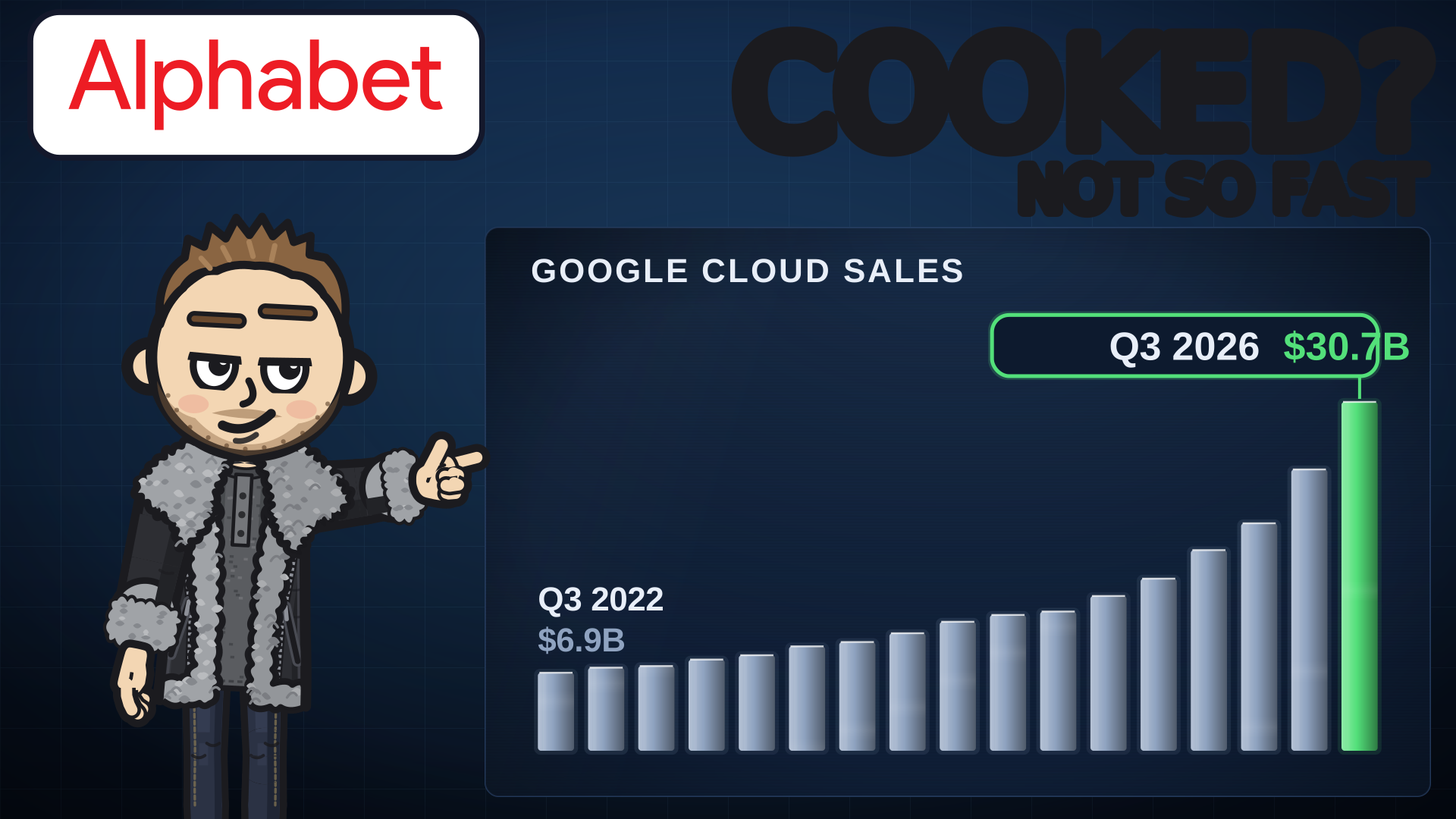
$482 Billion Gone in a Day. Is Google Cooked? (Not So Fast)
Alphabet is betting $195 to $205 billion this year on five horses: chip, model, cloud, the way it reaches users, and data centers. Is it enough if only some of them win? Gus did the math against the S&P 500.
 HYPE CHECK #1 · $RBRK
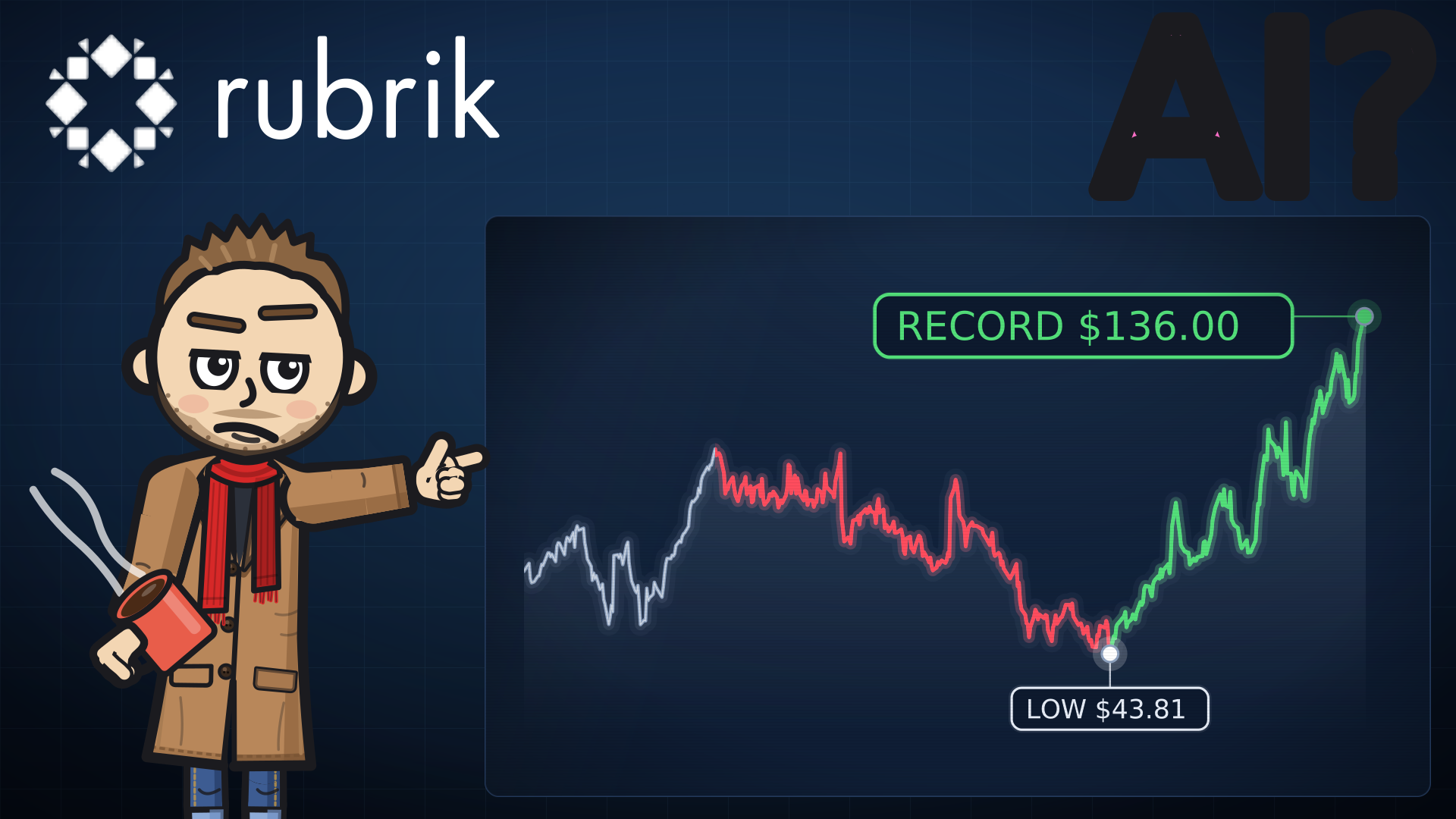
Rubrik Stock (RBRK) Up 210% Since April. Just Backup?
Up 210% since April. It calls itself "the Security and AI Operations Company," and its AI product has "over 15" customers. Gus checked what's under the label.
 HYPE FUND #4 · $AVGO
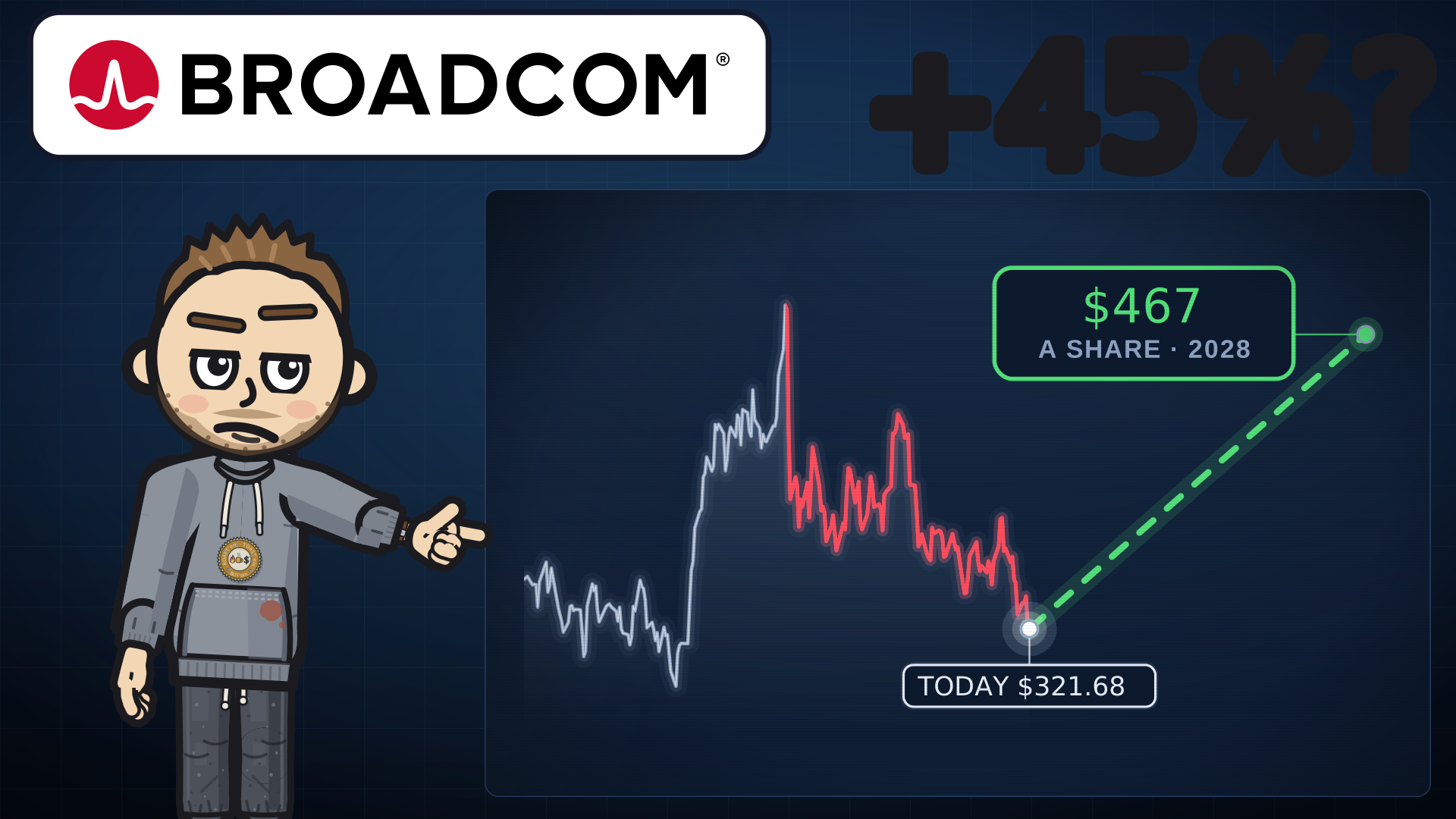
Broadcom stock (AVGO) is 30% off. Is it a bargain?
AI sales grew 221% in a year. The stock is down 33% from its June top. What has to be true for $10,000 in Broadcom to beat an index fund? Gus did the math.
 HYPE FUND #3 · $PLTR
Too late to buy Palantir stock? The math behind $38 billion
Karp's goal: $38 billion in sales by 2030. Say he gets there. What's a Palantir share worth then, and does it beat an index fund? Gus did the math.
 HYPE FUND #2 · $SPCX
SpaceX stock: what are you paying $2 trillion for?
Only Starlink makes an operating profit. Last quarter the AI build cost $174 million a day. Musk says the AI satellites launch "next year."
 HYPE FUND #1 · $MU
Micron: the cheapest stock ever?
Micron is up 270% in 2026. Social media: "cheapest stock in all stock exchanges." Cheap is a number. Gus looked it up.
Chapters
- 0:00IonQ made $564 million because its stock fell
- 0:38Why IonQ is Hype Fund #6: quantum, cybersecurity and the hype
- 1:53Where the 336% record came from: SkyWater
- 3:14Is IonQ growing? The pro forma line says flat
- 4:55Why IonQ profits when its stock falls: the warrants
- 8:28Has this happened before? Vertiv, Enovix, EVgo, Cano Health
- 9:21Who pays for the record quarter?
- 10:55What does $16 billion need to be true? IonQ stock forecast 2030
- 12:56The cash, and Amazon and Palantir at the same price
- 14:30IonQ's side of the table: cash, guidance, IBM's 2029
- 15:41The qubit roadmap, and Heights comes back
- 17:01The Hype Fund buys IonQ, and what I read in February
- 19:13The scorecard
- 19:43To the moon
Mentioned in the video
- IonQThe company (IONQ): quantum computers, networking, and since July 2026 the SkyWater chip foundry
- SkyWater TechnologyChip foundry IonQ bought on July 31, 2026: half the record quarter
- InfineonSkyWater's biggest customer, 43% of its 2025 sales, take-or-pay to mid-2029
- Heights Capital ManagementBought IonQ's offerings in July 2025, October 2025 and October 2026, with warrants
- University of ChicagoIonQ customer, $16.0 million in Q3 2026; received 2.1 million IonQ shares in Nov 2025
- Rigetti, D-WaveQuantum stocks that jumped with IonQ on Nov 6, 2026, without a report
- Vertiv, Enovix, EVgo, Cano HealthWarrant profits over an operating loss in 2022, and what came after
- Boston Consulting Group"winner-take-most"
- The Quantum InsiderThe bull case: $9.5 billion of quantum industry sales in 2030
- Texas Instruments, NvidiaThe margin and the price the 2030 math borrows
- Amazon, PalantirGrew 33% a year for five years from where IonQ stands; the buyers waited
- IBM"the first large-scale, fault-tolerant quantum computer by 2029"
Sources & links
Primary sources (SEC filings, company transcripts, the papers themselves) come first where they exist. "Secondary" means another site's report of it. Each group has a fixed link, e.g. #sources-the-profit.
The profit and the price 0:00
- 10-Q, Q3 2026: the warrant line ("driven by changes in our stock price"), the operating loss, the segments, pro forma sales, the biggest customer, related parties, the buyback obligation
sec.gov/Archives/edgar/data/182492…9829/ionq-20260930.htm - Earnings release, Q3 2026: sales, net profit, adjusted EBITDA, the outlook ("an industry record")
sec.gov/Archives/edgar/data/182492…449779/ionq-ex99_1.htm - IONQ daily closes (the third quarter, Nov 6, 2026: $32.62)
query1.finance.yahoo.com/v8/finance/chart/IONQ - IonQ quarter by quarter: operating loss, warrant line, net (XBRL)
data.sec.gov/api/xbrl/companyfacts/CIK0001824920.json
The hype and the jump 0:38
- "IonQ Wants to Be the Nvidia of Quantum. Its Latest Numbers Back Up the Swagger."
finance.yahoo.com/m/daf77303-800e-…-to-be-the-nvidia.html - "IonQ Swings To Q3 Profit; Raises FY26 Revenue Outlook"
nasdaq.com/articles/ionq-swings-q3…s-fy26-revenue-outlook - "IonQ (IONQ) Stock Jumps After Q3 Earnings Turn Profitable"
finance.yahoo.com/markets/stocks/a…umps-q3-231605383.html - "IonQ Soars 10% on Beat and Raised Guidance to 'An Industry Record' Above $500 Million"
tikr.com/blog/ionq-soars-10-on-bea…cord-above-500-million - "Could Investing $10,000 in IonQ Stock Make You a Millionaire?"
fool.com/investing/2026/11/07/coul…-stock-make-you-a-mil/
The record quarter and SkyWater 1:53
- 10-Q, Q2 2026: the first new risk factor ("no prior experience")
sec.gov/Archives/edgar/data/182492…1001/ionq-20260630.htm - 10-K, 2025: "the world's first and only quantum platform company", the open-market share sales of early 2025
sec.gov/Archives/edgar/data/182492…1562/ionq-20251231.htm - SkyWater 10-K, 2025: Infineon 43% of sales, the take-or-pay contract
sec.gov/Archives/edgar/data/181997…0009/skyt-20251228.htm
The outlook and the word organic 3:14
- Earnings release, Q2 2026: outlook $280 to $290 million, "strong organic growth of 100%", no SkyWater
sec.gov/Archives/edgar/data/182492…335040/ionq-ex99_1.htm - Earnings release, Q4 2025: the adjusted EBITDA guidance for 2026
sec.gov/Archives/edgar/data/182492…071520/ionq-ex99_1.htm - Earnings release, Q1 2026: the same adjusted EBITDA guidance
sec.gov/Archives/edgar/data/182492…208923/ionq-ex99_1.htm
The warrants 4:55
- "IonQ Announces Pricing of $1.0 Billion Equity Offering": Heights, warrants at $99.88
investors.ionq.com/news/news-detai…-Offering/default.aspx - "IonQ Announces Pricing of $2.0 Billion Equity Offering": an entity Heights manages, warrants at $155.00
investors.ionq.com/news/news-detai…-Offering/default.aspx - Every company's warrant line, Q2 2026: 283 of 4,965
data.sec.gov/api/xbrl/frames/us-ga…ants/USD/CY2026Q2.json
Has this happened before? 8:28
- Vertiv: the 2022 warrant profit and the operating loss
data.sec.gov/api/xbrl/companyfacts/CIK0001674101.json - Enovix: the 2022 warrant profit and the operating loss
data.sec.gov/api/xbrl/companyfacts/CIK0001828318.json - EVgo: the 2022 warrant profit and the operating loss
data.sec.gov/api/xbrl/companyfacts/CIK0001821159.json - Cano Health: the 2022 warrant profit
data.sec.gov/api/xbrl/companyfacts/CIK0001800682.json - Cano Health 8-K: the bankruptcy filing
sec.gov/Archives/edgar/data/180068…4023512/d733561d8k.htm
What $16 billion needs 10:55
- Texas Instruments: the net margin, 34.25%
data.sec.gov/api/xbrl/companyfacts/CIK0000097476.json - Nvidia: the price-to-sales of the ceiling, 14.85
data.sec.gov/api/xbrl/companyfacts/CIK0001045810.json - "Long-Term Forecast for Quantum Computing Still Looks Bright": winner-take-most
bcg.com/publications/2024/long-ter…ing-still-looks-bright - How big is the quantum computing market? The bull case: $9.5 billion in 2030
thequantuminsider.com/datasets/gui…ntum-computing-market/ - Historical returns on stocks, bonds and bills, 1928–2025: the S&P 500 line
pages.stern.nyu.edu/~adamodar/New_…atafile/histretSP.html - Daily Treasury par yield curve rates, 2026
home.treasury.gov/resource-center/…=2026&page&_format=csv
They could win: Amazon, Palantir and the base rate 12:56
- Amazon 10-K, 1999
sec.gov/Archives/edgar/data/1018724/0000891020-00-000622.txt - Palantir: sales and losses from 2020
data.sec.gov/api/xbrl/companyfacts/CIK0001321655.json - The Base Rate Book: sales growth by size class (one in 25, one in 50)
mjbaldbard.wordpress.com/wp-conten…te-books-2015-2016.pdf
IonQ's side of the table 14:30
- Proxy statement 2026: the bonus committee's 2025 revenue without the deals
sec.gov/Archives/edgar/data/182492…7487/ionq-20260430.htm - IBM quantum roadmap: "the first large-scale, fault-tolerant quantum computer by 2029"
ibm.com/quantum-computing/roadmap - Prospectus 2021 (the SPAC): "256 algorithmic qubits in 2026"
sec.gov/Archives/edgar/data/182492…44892/d70340d424b3.htm - Technology update webinar: "256 Physical Qubits 12 Logical Qubits" for 2026
s28.q4cdn.com/828571518/files/doc_…binar-Presentation.pdf - "IonQ Announces Pricing of $2.0 Billion Equity Offering": the third round, warrants at $69.46
investors.ionq.com/news/news-detai…-Offering/default.aspx - 8-K: the October 2026 offering, $40 per package
sec.gov/Archives/edgar/data/182492…4230/ionq-20261014.htm
Everything we read
The whole pile behind the episode: IonQ's filings, its call transcripts and slides, and every link the research opened.
SEC filings 41
- 8-K, Mar 8, 2021
sec.gov/Archives/edgar/data/182492…1072373/d142872d8k.htm - 424B3, prospectus, Aug 12, 2021
sec.gov/Archives/edgar/data/182492…44892/d70340d424b3.htm - 8-K, earnings release, Q4 2021
sec.gov/Archives/edgar/data/182492…6676/d311301dex991.htm - 8-K, earnings release, Q1 2022
sec.gov/Archives/edgar/data/182492…1772/d354501dex991.htm - 8-K, earnings release, Q2 2022
sec.gov/Archives/edgar/data/182492…1244/d351828dex991.htm - 8-K, earnings release, Q3 2022
sec.gov/Archives/edgar/data/182492…4591/d405820dex991.htm - 8-K, earnings release, Q4 2022
sec.gov/Archives/edgar/data/182492…5543/d489796dex991.htm - 8-K, earnings release, Q1 2023
sec.gov/Archives/edgar/data/182492…2034/d466863dex991.htm - 8-K, earnings release, Q2 2023
sec.gov/Archives/edgar/data/182492…041321/ionq-ex99_1.htm - 8-K, earnings release, Q3 2023
sec.gov/Archives/edgar/data/182492…061111/ionq-ex99_1.htm - 8-K, earnings release, Q4 2023
sec.gov/Archives/edgar/data/182492…022062/ionq-ex99_1.htm - 8-K, earnings release, Q1 2024
sec.gov/Archives/edgar/data/182492…055629/ionq-ex99_1.htm - 8-K, earnings release, Q2 2024
sec.gov/Archives/edgar/data/182492…092737/ionq-ex99_1.htm - 8-K, earnings release, Q3 2024
sec.gov/Archives/edgar/data/182492…122264/ionq-ex99_1.htm - 8-K, earnings release, Q4 2024
sec.gov/Archives/edgar/data/182492…027713/ionq-ex99_1.htm - 8-K, earnings release, Q1 2025
sec.gov/Archives/edgar/data/182492…065685/ionq-ex99_1.htm - 424B5, prospectus, Jul 7, 2025
sec.gov/Archives/edgar/data/182492…5901/d872422d424b5.htm - 8-K, Jul 9, 2025
sec.gov/Archives/edgar/data/182492…25156889/d35359d8k.htm - 8-K, earnings release, Q2 2025
sec.gov/Archives/edgar/data/182492…104021/ionq-ex99_1.htm - 10-Q, Q2 2025
sec.gov/Archives/edgar/data/182492…4066/ionq-20250630.htm - 8-K, Aug 6, 2025
sec.gov/Archives/edgar/data/182492…5174493/d946730d8k.htm - 8-K, Sep 4, 2025
sec.gov/Archives/edgar/data/182492…371/eh250674366_8k.htm - 8-K, Oct 14, 2025
sec.gov/Archives/edgar/data/182492…25238353/d36977d8k.htm - 8-K, earnings release, Q3 2025
sec.gov/Archives/edgar/data/182492…266878/ionq-ex99_1.htm - 10-Q, Q3 2025
sec.gov/Archives/edgar/data/182492…6942/ionq-20250930.htm - 8-K, Jan 26, 2026
sec.gov/Archives/edgar/data/182492…26021616/d10479d8k.htm - 8-K, earnings release, Q4 2025
sec.gov/Archives/edgar/data/182492…071520/ionq-ex99_1.htm - 10-K, 2025
sec.gov/Archives/edgar/data/182492…1562/ionq-20251231.htm - 8-K, Mar 25, 2026
sec.gov/Archives/edgar/data/182492…4402/ionq-20260319.htm - 424B3, prospectus, Mar 31, 2026
sec.gov/Archives/edgar/data/182492…34933/d88629d424b3.htm - DEF 14A, proxy statement, 2026
sec.gov/Archives/edgar/data/182492…7487/ionq-20260430.htm - 8-K, earnings release, Q1 2026
sec.gov/Archives/edgar/data/182492…208923/ionq-ex99_1.htm - 10-Q, Q1 2026
sec.gov/Archives/edgar/data/182492…1876/ionq-20260331.htm - 8-K, earnings release, Q2 2026
sec.gov/Archives/edgar/data/182492…335040/ionq-ex99_1.htm - 10-Q, Q2 2026
sec.gov/Archives/edgar/data/182492…1001/ionq-20260630.htm - 8-K, Aug 28, 2026
sec.gov/Archives/edgar/data/182492…4694/ionq-20260824.htm - 8-K, Sep 8, 2026
sec.gov/Archives/edgar/data/182492…4388/ionq-20260908.htm - 8-K, Oct 13, 2026
sec.gov/Archives/edgar/data/182492…9609/ionq-20261009.htm - 8-K, Oct 16, 2026
sec.gov/Archives/edgar/data/182492…4230/ionq-20261014.htm - 8-K, earnings release, Q3 2026
sec.gov/Archives/edgar/data/182492…449779/ionq-ex99_1.htm - 10-Q, Q3 2026
sec.gov/Archives/edgar/data/182492…9829/ionq-20260930.htm
Call transcripts and presentations 6
- IonQ webinar, the roadmap (slides)
s28.q4cdn.com/828571518/files/doc_…binar-Presentation.pdf - IonQ Analyst Day 2025 (slides)
s28.q4cdn.com/828571518/files/doc_…-09-12-vFinal-Copy.pdf - IonQ Q2 2026 earnings call (transcript)
s28.q4cdn.com/828571518/files/doc_…st-2026-4_30-PM-ET.pdf - IonQ Investor Day 2026 (slides)
s28.q4cdn.com/828571518/files/cont…-vFINAL-2026-09-08.pdf - IonQ Investor Day 2026 (transcript)
s28.q4cdn.com/828571518/files/doc_…t-8-2026-Corrected.pdf - IonQ Q3 2026 earnings call (transcript)
s28.q4cdn.com/828571518/files/cont…nQ-Transcript-3Q26.pdf
Research links 180
The filings and the numbers 31
- data.sec.gov/api/xbrl/companyfacts/CIK0001824920.json
- data.sec.gov/submissions/CIK0001824920.json
- event.choruscall.com/mediaframe/we…tml?webcastid=Y3TmULnK
- investors.ionq.com/
- investors.ionq.com/events-and-presentations/default.aspx
- investors.ionq.com/news-events/events
- investors.ionq.com/news/news-detai…er-5-2026/default.aspx
- sec.gov/Archives/edgar/data/1824920/000119312525266878/
- sec.gov/Archives/edgar/data/182492…266878/ionq-ex99_1.htm
- sec.gov/Archives/edgar/data/1824920/000119312525266942/
- sec.gov/Archives/edgar/data/1824920/000119312526021616/
- sec.gov/Archives/edgar/data/1824920/000119312526071520/
- sec.gov/Archives/edgar/data/182492…071520/ionq-ex99_1.htm
- sec.gov/Archives/edgar/data/1824920/000119312526071562/
- sec.gov/Archives/edgar/data/182492…1562/ionq-20251231.htm
- sec.gov/Archives/edgar/data/1824920/000119312526208923/
- sec.gov/Archives/edgar/data/182492…208923/ionq-ex99_1.htm
- sec.gov/Archives/edgar/data/1824920/000119312526211876/
- sec.gov/Archives/edgar/data/1824920/000119312526335040/
- sec.gov/Archives/edgar/data/182492…335040/ionq-ex99_1.htm
- sec.gov/Archives/edgar/data/1824920/000119312526341001/
- sec.gov/Archives/edgar/data/182492…1001/ionq-20260630.htm
- sec.gov/Archives/edgar/data/1824920/000119312526419609/
- sec.gov/Archives/edgar/data/182492…419609/ionq-ex99_1.htm
- sec.gov/Archives/edgar/data/1824920/000119312526424230/
- sec.gov/Archives/edgar/data/182492…4230/ionq-20261014.htm
- sec.gov/Archives/edgar/data/1824920/000119312526449779/
- sec.gov/Archives/edgar/data/182492…449779/ionq-ex99_1.htm
- sec.gov/Archives/edgar/data/1824920/000119312526449829/
- sec.gov/Archives/edgar/data/182492…9829/ionq-20260930.htm
- sec.gov/files/company_tickers.json
The hype 15
- 247wallst.com/investing/2026/11/03…r-ready-for-a-rebound/
- finance.yahoo.com/m/daf77303-800e-…-to-be-the-nvidia.html
- finance.yahoo.com/markets/stocks/a…umps-q3-231605383.html
- seekingalpha.com/news/4667809-ionq…027-capacity-sells-out
- benzinga.com/trading-ideas/movers/…capacity-and-quantum-s
- fool.com/investing/2026/09/08/ionq…n-t-quantum-computing/
- fool.com/investing/2026/10/15/ionq…ybook-why-the-stock-c/
- fool.com/investing/2026/10/15/pred…0-per-share-in-2027-i/
- fool.com/investing/2026/10/18/pred…onq-could-10x-by-2035/
- fool.com/investing/2026/10/22/is-i…llionaire-maker-stock/
- fool.com/investing/2026/11/07/coul…-stock-make-you-a-mil/
- investors.com/news/technology/ionq…ing-acquisition-spree/
- marketbeat.com/articles/ionqs-reco…that-change-the-story/
- tikr.com/blog/ionq-sinks-15-in-a-w…ous-vote-of-confidence
- tikr.com/blog/ionq-soars-10-on-bea…cord-above-500-million
Bought growth: SkyWater and the other deals 24
- data.sec.gov/api/xbrl/companyfacts/CIK0001819974.json
- data.sec.gov/submissions/CIK0000313616.json
- data.sec.gov/submissions/CIK0001819974.json
- efts.sec.gov/LATEST/search-index?q=
- s28.q4cdn.com/828571518/files/cont…nQ-Transcript-3Q26.pdf
- sec.gov/Archives/edgar/data/1819974/000181997425000052/
- sec.gov/Archives/edgar/data/181997…0052/skyt-20250928.htm
- sec.gov/Archives/edgar/data/1819974/000181997426000009/
- sec.gov/Archives/edgar/data/181997…0009/skyt-20251228.htm
- sec.gov/Archives/edgar/data/1819974/000181997426000014/
- sec.gov/Archives/edgar/data/181997…0014/skyt-20260329.htm
- sec.gov/Archives/edgar/data/1819974/000181997426000031/
- sec.gov/Archives/edgar/data/181997…0031/skyt-20260628.htm
- sec.gov/Archives/edgar/data/1824920/000095017025104066/
- sec.gov/Archives/edgar/data/182492…4066/ionq-20250630.htm
- sec.gov/Archives/edgar/data/182492…6942/ionq-20250930.htm
- sec.gov/Archives/edgar/data/1824920/000119312526134933/
- sec.gov/Archives/edgar/data/182492…34933/d88629d424b3.htm
- sec.gov/Archives/edgar/data/182492…1876/ionq-20260331.htm
- sec.gov/Archives/edgar/data/313616…00062/dhr-20251231.htm
- sec.gov/Archives/edgar/data/313616…dhr-20261021xex991.htm
- sec.gov/Archives/edgar/data/882835…00009/rop-20251231.htm
- sec.gov/Archives/edgar/data/882835…6q3earningsrelease.htm
- sec.gov/Archives/edgar/data/97745/…00018/tmo-20251231.htm
Who pays IonQ 6
- data.sec.gov/submissions/CIK0001045810.json
- investors.ionq.com/news/news-detai…-the-U-S-/default.aspx
- ionq.com/news/ionq-announces-usd22…attanooga-tennessee-as
- thequantuminsider.com/2025/04/25/i…um-hub-in-chattanooga/
- sec.gov/Archives/edgar/data/104581…0075/nvda-20260726.htm
- sec.gov/Archives/edgar/data/181997…24/d134181ddefm14a.htm
The warrants and the profit 17
- data.sec.gov/api/xbrl/companyfacts/CIK0001838359.json
- data.sec.gov/api/xbrl/companyfacts/CIK0001907982.json
- investors.ionq.com/news/news-detai…-Offering/default.aspx
- investors.ionq.com/news/news-detai…-Offering/default.aspx
- investors.ionq.com/news/news-detai…-Offering/default.aspx
- news.google.com/rss/articles/CBMi1…lac294cjEwdGlwN0htRHh1
- query1.finance.yahoo.com/v8/finance/chart/IONQ
- query1.finance.yahoo.com/v8/financ…1704153600&interval=1d
- nasdaq.com/articles/ionq-swings-q3…s-fy26-revenue-outlook
- sec.gov/Archives/edgar/data/1824920/000119312525155901/
- sec.gov/Archives/edgar/data/182492…5901/d872422d424b5.htm
- sec.gov/Archives/edgar/data/1824920/000119312525156889/
- sec.gov/Archives/edgar/data/182492…36448/d72969d424b5.htm
- sec.gov/Archives/edgar/data/182492…36452/d68634d424b5.htm
- sec.gov/Archives/edgar/data/1824920/000119312525238353/
- sec.gov/Archives/edgar/data/182492…1072/d162787d424b5.htm
- sec.gov/Archives/edgar/data/182492…1074/d165327d424b5.htm
The price 7
- data.sec.gov/api/xbrl/companyfacts/CIK0000097476.json
- data.sec.gov/api/xbrl/companyfacts/CIK0000789019.json
- data.sec.gov/api/xbrl/companyfacts/CIK0001045810.json
- data.sec.gov/api/xbrl/companyfacts/CIK0001709048.json
- data.sec.gov/api/xbrl/companyfacts/CIK0001758009.json
- data.sec.gov/submissions/CIK0001838359.json
- stooq.com/q/d/l/?s=qubt.us&d1=20251105&d2=20261106&i=d
Market size 19
- cacm.acm.org/research/disentanglin…ing-quantum-advantage/
- conteudos.meo.pt/empresarial/Docum…ology-monitor-2026.pdf
- news.google.com/rss/articles/CBMip…0RwX1I1V2hoUFFrVQ?oc=5
- newsroom.ibm.com/2025-06-10-IBM-Se…rlds-First-Large-Scale
- s28.q4cdn.com/828571518/files/cont…-vFINAL-2026-09-08.pdf
- s28.q4cdn.com/828571518/files/doc_…t-8-2026-Corrected.pdf
- thequantuminsider.com/datasets/gui…ntum-computing-market/
- bcg.com/publications/2024/long-ter…ing-still-looks-bright
- benzinga.com/25/03/44433571/jensen…getti-ionq-d-wave-qubt
- benzinga.com/trading-ideas/movers/…ing-into-nvidias-orbit
- cnbc.com/2025/01/08/quantum-stocks…-to-30-years-away.html
- cnbc.com/2026/10/15/morgan-stanley…-market-top-stock.html
- hpcuserforum.com/wp-content/upload…atus-and-Prospects.pdf
- hpcwire.com/2024/06/10/nvidia-ship…23-according-to-study/
- ibm.com/quantum-computing/roadmap
- mckinsey.com/capabilities/mckinsey…mmercial-tipping-point
- quantinuum.com/press-releases/quan…ntum-computing-by-2030
- reuters.com/technology/google-says…five-years-2025-02-05/
- sec.gov/Archives/edgar/data/182492…2373/d142872dex992.htm
Competitors 27
- blog.google/technology/research/google-willow-quantum-chip/
- investors.rigetti.com/news-releases
- ir.dwavequantum.com/news-events/press-releases
- ir.quantinuum.com/
- news.microsoft.com/source/features…for-quantum-computing/
- quantumai.google/roadmap
- constellationr.com/index%2Ephp/ins…-5-revenue-growth-2026
- ibm.com/roadmaps/quantum/
- nasdaq.com/articles/ibm-q2-earning…reset-and-lower-growth
- rigetti.com/news/rigetti-computing…-call-on-august-6-2026
- sec.gov/Archives/edgar/data/1652044/000165204426000084/
- sec.gov/Archives/edgar/data/1758009/000121390026087267/
- sec.gov/Archives/edgar/data/1758009/000121390026098032/
- sec.gov/Archives/edgar/data/1758009/000162828026055218/
- sec.gov/Archives/edgar/data/1838359/000110465926091979/
- sec.gov/Archives/edgar/data/1838359/000110465926091993/
- sec.gov/Archives/edgar/data/1838359/000110465926105662/
- sec.gov/Archives/edgar/data/1907982/000190798226000127/
- sec.gov/Archives/edgar/data/1907982/000190798226000129/
- sec.gov/Archives/edgar/data/1907982/000190798226000141/
- sec.gov/Archives/edgar/data/2110105/000162828026056743/
- sec.gov/Archives/edgar/data/2110105/000162828026060934/
- sec.gov/Archives/edgar/data/2110105/000162828026071000/
- sec.gov/Archives/edgar/data/51143/000005114326000093/
- sec.gov/Archives/edgar/data/51143/000005114326000095/
- sec.gov/Archives/edgar/data/773840/000077384026000143/
- sec.gov/Archives/edgar/data/789019/000119312526436133/
IonQ's own targets 21
- s28.q4cdn.com/828571518/files/doc_…st-2026-4_30-PM-ET.pdf
- s28.q4cdn.com/828571518/files/doc_…-09-12-vFinal-Copy.pdf
- s28.q4cdn.com/828571518/files/doc_…binar-Presentation.pdf
- barrons.com
- itiger.com/news/2537162948
- itiger.com/news/2537923536
- sec.gov/Archives/edgar/data/1824920/
- sec.gov/Archives/edgar/data/1824920/000095014225002371/
- sec.gov/Archives/edgar/data/1824920/000095017024022062/
- sec.gov/Archives/edgar/data/1824920/000095017025027713/
- sec.gov/Archives/edgar/data/1824920/000119312521072373/
- sec.gov/Archives/edgar/data/1824920/000119312521244892/
- sec.gov/Archives/edgar/data/182492…44892/d70340d424b3.htm
- sec.gov/Archives/edgar/data/1824920/000119312522086676/
- sec.gov/Archives/edgar/data/1824920/000119312523085543/
- sec.gov/Archives/edgar/data/1824920/000119312525174493/
- sec.gov/Archives/edgar/data/1824920/000119312526124402/
- sec.gov/Archives/edgar/data/1824920/000119312526197487/
- sec.gov/Archives/edgar/data/182492…7487/ionq-20260430.htm
- sec.gov/Archives/edgar/data/1824920/000119312526384388/
- tikr.com/blog/ionq-stock-grew-reve…ere-the-stock-could-go
What viewers ask 6
- suggestqueries.google.com/complete…lient=firefox&ds=yt&q=
- trends.google.com/trends/explore?d…&geo=US&q=IonQ%20stock
- trends.google.com/trends/explore?geo=US&q=IonQ%20stock
- youtube.com/results?search_query=IonQ+stock
- youtube.com/results?search_query=ionq+stock&sp=CAM%253D
- youtube.com/results?search_query=is+ionq+profitable
Opened along the way 7
- azure.microsoft.com/en-us/solutions/quantum-computing/
- finviz.com/news/406984/ionq-to-rep…lts-on-november-5-2026
- itiger.com/hans/news/2537923536
- news.google.com/rss/articles/CBMix…LNnhmczhDQ0MtM0sw?oc=5
- query1.finance.yahoo.com/v8/financ…1735776000&interval=1d
- s28.q4cdn.com/828571518/files
- stooq.com/q/d/l/?s=ionq.us&d1=20241226&d2=20250103&i=d
Transcript
Full transcript
0:00 IonQ made $564 million because its stock fell
IonQ looks like a winner in the quarters its shareholders lose. Third quarter: the stock fell 18%, and IonQ reported a profit of $564 million. The business lost $433 million in the same three months. The profit came from one line, and the filing says which: IonQ's own stock went down, and the books count that as a gain.
I think that's the first thing to know about this stock, because the profit headline and your account move in opposite directions.
I've been buying stocks since 2010 and I'm about to own one built that way.
0:38 Why IonQ is Hype Fund #6: quantum, cybersecurity and the hype
Why IonQ is Hype Fund number six. I've worked in cybersecurity for years, and quantum changes how that whole field thinks, because a working quantum computer breaks the encryption everything runs on. It's early, very early, and I think early is the point: by the time the machines work the price has already moved. That's the story the hype sells, and I believe it.
So how hyped is it? My radar counted 188 headlines on IonQ in seven days, from 24 sites. One an hour, guys. Willy-nilly. And the first thing Google fills in after "is ionq" is "a good stock to buy".
$10,000 in IonQ a year ago is $5,680 today. The same $10,000 in an S&P 500 fund is $11,088. That's the hopium. The stock jumped 23% the day after the report. Rigetti jumped 19 and D-Wave 18 the same day without a report, so most of the jump was the sector's, and on my radar this week six banks cut their targets and none raised.
The buyers are buying the headline; the pros are walking the other way.
1:53 Where the 336% record came from: SkyWater
So where did a 336% record come from? IonQ sold $173.8 million in the third quarter, up from $39.9 million a year ago, and the press release calls the full-year outlook "an industry record of more than half a billion dollars".
The quarterly report splits the sales by business, and one line is SkyWater, a chip foundry IonQ bought on July 31: $83.5 million. Half the record, guys, and 62% of the increase, came in through a purchase that closed a month into the quarter. What did they buy? $53.8 million of SkyWater's part is "CMOS foundry": making ordinary chips for other companies.
So nearly a third of IonQ is a contract chip plant, and I think that's the strangest thing about this stock: you buy a quantum computer company and you get a chip factory with one big tenant.
Infineon was 43% of SkyWater's sales last year, under a take-or-pay contract to mid-2029, so Infineon pays whether it takes the chips or not. Guaranteed money, and none of it quantum. The annual report calls IonQ "the world's first and only quantum platform company."
The quarterly report from August, first new risk factor: "we are entering into a line of business with which we have no prior experience." Oh dear God. [laughs]
3:14 Is IonQ growing? The pro forma line says flat
Is the whole company growing, then? The filing answers it. "Pro Forma Results of Operations": sales as if IonQ had owned everything it bought this year since the start of last year. Third quarter 2026: $215.8 million. Third quarter 2025: $217.3 million. Flat, guys. Owned both years, the company didn't grow. Flat means the record was bought.
You're going to say, Gus, the quantum part is growing. It is. Take out SkyWater and this year's smaller purchases and IonQ's own sales were at most $84.9 million, up to 113% from a year ago.
That's a real business growing fast. It's also $85 million a quarter at a price of $16 billion. And if IonQ's own sales went up that much and the total stood still, I think the thing they bought went backwards.
Now the word that left. In August the outlook was $280 to 290 million, and the press release said IonQ "continues to expect strong organic growth of 100% year-on-year" and that "this financial outlook does not reflect any contribution from the SkyWater acquisition."
In November the outlook is $505 to 515 million, with "110% year-on-year in its quantum computing revenue." The word organic is gone. Why strike a word you were proud of in August? I think because organic is a number you'd have to put next to the total, and in November that's $85 million standing next to a $174 million quarter. It's an eighty-five-million-dollar quarter wearing a half-billion-dollar headline.
4:55 Why IonQ profits when its stock falls: the warrants
Why would a company sign a deal that counts its own stock falling as profit? In July 2025 IonQ sold shares to Heights Capital Management, in October to an entity Heights manages, and threw in warrants: the right to buy more shares later at a fixed price, $99.88 and $155.00.
One clause: if IonQ gets bought, Heights can demand the warrants' value in cash. That clause, the way I read it, is why the warrants sit on the books as a debt, re-marked every quarter. It's like owing someone a share instead of a dollar: the day the share drops, you owe less, and the books call that a profit. Sounds like a genius accounting trick. It isn't.
It's the rule, and it bites both ways: the quarter the stock rose 85%, the same line booked a $1.6 billion loss. So why take it? The price of the money. IonQ sold shares on the open market in early 2025, $358.3 million at 3.84 cents of cost per dollar raised, and stopped.
Heights put up $1 billion and then $2 billion, each in a day, above the market price, at 2.28 and 1.15 cents per dollar. I'd take that deal too. I just wouldn't read the profit line that comes with it. In the third quarter that line gained $896.2 million, and the quarterly report says why in one sentence: "driven by changes in our stock price."
The second quarter went the other way, and the headlines said IonQ lost $1.9 billion. You're going to say plenty of companies have this line. Honestly, I had no idea, so I checked. Six in a hundred do, 283 of 4,965 on the whole market in the second quarter, and that count is generous, it includes companies holding someone else's warrants.
IonQ's line that quarter was the biggest of all 283. The press release itself calls it "the non-cash mark-to-market impact of warrants" and gives the number without it. Adjusted EBITDA is the company's own measure of the loss, with the warrant line and other items it says aren't its core operations taken out: a loss of $133.6 million. The company agrees the profit isn't the business. The headlines didn't ask.
Where does the line go from here? It follows the stock, which sits below $44.81, the level where the line turns. At $32.62, the formula IonQ uses to price the warrants, which lands within 2% of their September number, gives the fourth quarter a gain of $704.5 million. Here's the funny part.
I want this stock to go up. I'm about to own it, and up is when I get richer, even if it's only on paper. But every quarter it goes up, IonQ books a loss. Under the warrants is the business, in the operating loss: $75.7 million in the first quarter of 2025, $433.1 million now, bigger six quarters in a row.
The company is in the operating loss, the line that doesn't know what the stock did. And a second line left the outlook this year. In February and May the company guided an adjusted EBITDA loss for the year, "between ($330) million and ($310) million", with SkyWater left out. In August it was gone. Three months later, "organic" went the same way.
Two lines gone in one year, both the ones you could hold the quantum business to. I read a dropped line as one somebody doesn't want to be measured on.
8:28 Has this happened before? Vertiv, Enovix, EVgo, Cano Health
Has this happened before? In 2022 Vertiv, Enovix, EVgo and Cano Health all booked a profit on the same line over an operating loss, three of them in a quarter their stock fell 44 to 53%. Vertiv went on to an operating profit and is at $183 today. Enovix and EVgo kept losing and are at $2.76 and $1.83. Cano Health went bankrupt in February 2024.
Which one does IonQ look like? Vertiv's operating loss in its profit quarter was $45.2 million. IonQ's is $433.1 million and still growing.
I think IonQ is on the Enovix side of that list today, because the way off it is an operating line that shrinks, and IonQ's is going the other way. That's the line I'm reading in February.
9:21 Who pays for the record quarter?
Who's actually paying for the record quarter? A single customer was 30% of it. New this quarter, in the United States, not named. Two lines are that size: the plant's contract chips, 30.92%, and the computers, 30.45%.
I think it's the plant's, because the customer appeared the quarter the plant did. If I'm right, the biggest customer in the record quarter buys chips, and that's a chip customer inside a quantum valuation.
A quarter of the quantum platform sales came from customers that hold IonQ stock or IonQ money. The University of Chicago, $16.0 million in the quarter, received 2.1 million IonQ shares last November for a licence, a research service and naming rights. Companies IonQ has invested in: $7.0 million.
And certain computer contracts let the buyer sell computing time back to IonQ "for fixed amounts paid over time", so the computer is revenue today and the time is IonQ's cost for years;
the total IonQ could be obliged to buy back is $114.8 million.
So part of what IonQ sells, IonQ may have to buy back later. I've never seen a store do that with a customer. Nothing in the filing says any of this is wrong. I read it because the price treats every quantum dollar as a dollar from a stranger, and these strangers hold IonQ's shares, IonQ's money, or IonQ's obligation to buy back.
10:55 What does $16 billion need to be true? IonQ stock forecast 2030
What does $16 billion need to be true? That's IonQ, guys, a company that loses more than it sells and bought this year's growth. The bull case: quantum is winner-take-most, BCG's words, and IonQ is the Nvidia of it. The Quantum Insider's bull case: the industry sells $9.5 billion in 2030. Forecasts here have run two to five times too high; I'll take it.
Run it backwards. Priced like a grown tech company, 26 times profit, $16 billion needs a $621 million net profit. At Texas Instruments' margin, 34.25 cents on the dollar, that's $1.81 billion in sales.
The strict way, 10% a year for waiting, makes it $2.66 billion in 2030. The pro forma line over the last twelve months runs at $871.3 million, so that's 32% a year for four years, organic, and the margin from minus 334% to plus 34.
Say they win. Half of that $9.5 billion is IonQ's, same margin, SkyWater on top. That's the logical bull case; the half is my assumption.
If they pull it off on their own, SkyWater's profit in, 3% a year in new shares to pay staff, IonQ is a $44 billion company in 2030 and the stock goes from $32.62 to just under $78. Your $10,000 is $23,800, 2.38 times your money. The same $10,000 in the S&P 500 for those four years: $14,700.
The ceiling, IonQ selling all of it at Nvidia's price: a $143 billion company, the stock at $217. That's a 6.6x: your $10,000 is $66,400. That's the dream, guys, and it's a real one: $10,000 in, $66,400 out, and the math gets there. Hold that number.
12:56 The cash, and Amazon and Palantir at the same price
Now the cash. On that path, in both versions, it's gone in 2028, two years before the first profit, and last year IonQ paid for growth with 39% more shares. Do that every year to 2030, instead of the 3%, and the logical bull case hands your $10,000 back as $7,300; a Treasury bond pays $12,000.
You're going to say, Gus, they could win. They could. Amazon in 1999 and Palantir in 2020 stood right here, losing money at 30 to 39 times sales, and both grew 33% a year for five years, the pace this price needs.
Three years in, the Amazon buyer's $10,000 was $1,771, the Palantir buyer's $7,291. Palantir made it: $75,500 after five years. Neither did the 58% a year the 2.38 needs. Of companies selling $450 to 700 million, one in 25 grows 30% a year for four years. One in 50 does 45 or more.
So does $16 billion add up? No. I think you're buying a ticket, because the price alone needs the one-in-25 growth from a business that stood still, the best version needs the one-in-50, the margin turn and the cash gone two years early, and IonQ picks whether its growth or your shares pay.
I'm wrong if the fourth quarter grows 32% or more over last year's, factory in both years, with the operating loss under the third quarter's. That's the price.
14:30 IonQ's side of the table: cash, guidance, IBM's 2029
So what's on IonQ's side of the table? Cash, first. IonQ has just under $3.7 billion: $1.7 billion on September 30 and $2 billion from the October raise.
At the third quarter's pace of free cash flow, $1.3 billion a year, that's under three years. The loss is growing, so that's the most years you get, and on the bull case's own path it's 2028. Second, the company hits its numbers.
It beat its first guidance of the year four years in a row, 2022 through 2025, by 7% to 53%. The 53 is 2025 and counted deals, "organic and inorganic"; the committee that sets the bonus counted the year without them: just under 13.
Even the bonus committee wanted the organic number. What the cash buys is the years. IBM says it will deliver "the first large-scale, fault-tolerant quantum computer by 2029."
I bought the hype in my first years as an investor and paid for it, so I know what this price asks of me: pay today for the year on the slide.
15:41 The qubit roadmap, and Heights comes back
IonQ's dates have a good history: every qubit target from 2022 through 2025 was hit, one of them a full year early. So how do you read the next one? The 2021 roadmap, in the SPAC filing: "256 algorithmic qubits in 2026."
Algorithmic qubits is IonQ's own measure of what the machine can do. The 2025 roadmap: "256 Physical Qubits 12 Logical Qubits" for 2026. Physical qubits is how many you built. They kept the number and changed what it counts, and "algorithmic qubit" appears zero times in this year's seven press releases. So the date will hold. Read the word in front of the number.
On October 14 Heights came back for a third round in fifteen months: $40 per package, one share plus two more warrants, this time at $69.46. That's 100 million more shares if the stock gets there.
Heights gets shares and a bet on the stock doubling; IonQ gets the cash and a line that books every fall in the stock as profit.
So the case for IonQ is real, and I think time is the whole case, because every other line in the filing, the operating loss, the dilution, the customer holding IonQ's shares, gets worse while the clock runs.
17:01 The Hype Fund buys IonQ, and what I read in February
My math says this price is a one-in-25 ticket. My math says no. The Hype Fund buys it anyway. That's the experiment: the fund buys what the headlines buy, and we measure it against the S&P 500 in percent. IonQ joins the Hype Fund today.
And here's the part that's mine. I said it at the start: I've worked in cybersecurity, so I believe quantum is coming. What I don't believe is that this price knows who gets there first.
The number I read is the pro forma line, the one that said flat. The annual report comes in February, the 25th if they keep last year's date, and it gives the full year, 2026 against 2025. Don't read the full year.
The nine months we already have say up more than half, and that number is tilted: SkyWater itself bought a factory from Infineon in June 2025, so the Infineon factory sits in this year's first half and is missing from last year's.
So take the full year and subtract the nine months. What's left is the fourth quarter, and there both years have the Infineon factory in them. That's the quarter that can prove me wrong: clear 32%, and the growth is IonQ's and the record was theirs.
If it says flat again, the record was SkyWater's, and $16 billion is paying for a business that doesn't grow and a stock that has to keep falling to show a profit.
Next to it, the same subtraction on two lines: the operating loss against $433 million, which grows on its own with a full quarter of SkyWater and this year's other purchases in it, and IonQ's adjusted EBITDA against a loss of $134 million, the one that says whether the business moved.
And the headline. If the stock stays down, IonQ turns a profit again in February, and the finfluencers write it again. I think that headline is the one to trust least on this stock, because it gets better the worse your year went. "An industry record of more than half a billion dollars." The pro forma line says whose record.
19:13 The scorecard
Last week tech crashed, and my stocks took a real hit. Fine. The plan runs three years, so we've got time. For those keeping score at home: Alphabet, the fund's buy before IonQ, is ahead of the S&P 500 since the day it joined. The full scorecard runs on the site. So does the whole research, every link; the link is in the description.
February grades IonQ. It grades my math too.
19:43 To the moon
To the moon! Haha hahaha!
Gus never tells anyone what to buy or sell. Facts about companies come from the sources above. The roasting is satire.
Disclosure: Gus didn't own IonQ when he made this video. The Hype Fund buys it after the video: it joined The Hype Fund on Nov 9, 2026 at $35.41. The fund already owns Alphabet, Broadcom, Palantir, SpaceX and Micron.